

420
W. NELLEN:
probably not less than 85 species occurred in the samples from area I. Eleven + fiftyseven
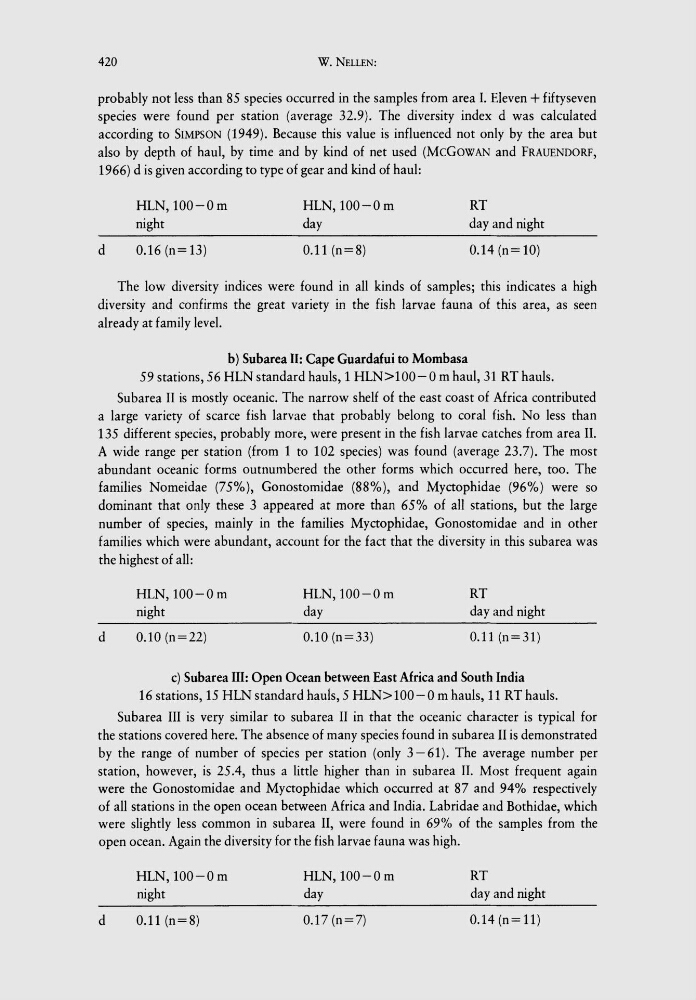
species were found per station (average 32.9). The diversity index d was calculated
according to SIMPSON (1949). Because this value is influenced not only by the area but
also by depth of haul, by time and by kind of net used (McGowAN and FRAUENDORF,
1966) d is given according to type of gear and kind of haul:
d
HLN,100-0m
night
0.16 (n=13)
HLN, 100-Om
day
0.11 (n=8)
RT
day and night
0.14 (n= 10)
The low diversity indices were found in all kinds of samples; this indicates a high
diversity and confirms the great variety in the fish larvae fauna of this area, as seen
already at family level.
b) Subarea II: Cape Guardafui to Mombasa
59 stations, 56 HLN standard hauls, 1 HLN>100- 0 m haul, 31 RT hauls.
Subarea II is mostly oceanic. The narrow shelf of the east coast of Africa contributed
a large variety of scarce fish larvae that probably belong to coral fish. No less than
135 different species, probably more, were present in the fish larvae catches from area II.
A wide range per station (from 1 to 102 species) was found (average 23.7). The most
abundant oceanic forms outnumbered the other forms which occurred here, too. The
families Nomeidae (75%), Gonostomidae (88%), and Myctophidae (96%) were so
dominant that only these 3 appeared at more than 65% of all stations, but the large
number of species, mainly in the families Myctophidae, Gonostomidae and in other
families which were abundant, account for the fact that the diversity in this subarea was
the highest of all:
d
HLN, 100-Om
night
0.10 (n=22)
HLN,100-0m
day
0.10 (n=33)
RT
day and night
0.11 (n=31)
c) Subarea III: Open Ocean between East Africa and South India
16 stations, 15 HLN standard hauls,S HLN>IOO-O m hauls, 11 RT hauls.
Subarea III is very similar to subarea II in that the oceanic character is typical for
the stations covered here. The absence of many species found in subarea II is demonstrated
by the range of number of species per station (only 3-61). The average number per
station, however, is 25.4, thus a little higher than in subarea II. Most frequent again
were the Gonostomidae and Myctophidae which occurred at 87 and 94% respectively
of all stations in the open ocean between Africa and India. Labridae and Bothidae, which
were slightly less common in subarea II, were found in 69% of the samples from the
open ocean. Again the diversity for the fish larvae fauna was high.
d
HLN, 100-Om
night
0.11 (n=8)
HLN, 100-Om
day
0.17 (n=7)
RT
day and night
0.14 (n= 11)
W. NELLEN:
probably not less than 85 species occurred in the samples from area I. Eleven + fiftyseven
species were found per station (average 32.9). The diversity index d was calculated
according to SIMPSON (1949). Because this value is influenced not only by the area but
also by depth of haul, by time and by kind of net used (McGowAN and FRAUENDORF,
1966) d is given according to type of gear and kind of haul:
d
HLN,100-0m
night
0.16 (n=13)
HLN, 100-Om
day
0.11 (n=8)
RT
day and night
0.14 (n= 10)
The low diversity indices were found in all kinds of samples; this indicates a high
diversity and confirms the great variety in the fish larvae fauna of this area, as seen
already at family level.
b) Subarea II: Cape Guardafui to Mombasa
59 stations, 56 HLN standard hauls, 1 HLN>100- 0 m haul, 31 RT hauls.
Subarea II is mostly oceanic. The narrow shelf of the east coast of Africa contributed
a large variety of scarce fish larvae that probably belong to coral fish. No less than
135 different species, probably more, were present in the fish larvae catches from area II.
A wide range per station (from 1 to 102 species) was found (average 23.7). The most
abundant oceanic forms outnumbered the other forms which occurred here, too. The
families Nomeidae (75%), Gonostomidae (88%), and Myctophidae (96%) were so
dominant that only these 3 appeared at more than 65% of all stations, but the large
number of species, mainly in the families Myctophidae, Gonostomidae and in other
families which were abundant, account for the fact that the diversity in this subarea was
the highest of all:
d
HLN, 100-Om
night
0.10 (n=22)
HLN,100-0m
day
0.10 (n=33)
RT
day and night
0.11 (n=31)
c) Subarea III: Open Ocean between East Africa and South India
16 stations, 15 HLN standard hauls,S HLN>IOO-O m hauls, 11 RT hauls.
Subarea III is very similar to subarea II in that the oceanic character is typical for
the stations covered here. The absence of many species found in subarea II is demonstrated
by the range of number of species per station (only 3-61). The average number per
station, however, is 25.4, thus a little higher than in subarea II. Most frequent again
were the Gonostomidae and Myctophidae which occurred at 87 and 94% respectively
of all stations in the open ocean between Africa and India. Labridae and Bothidae, which
were slightly less common in subarea II, were found in 69% of the samples from the
open ocean. Again the diversity for the fish larvae fauna was high.
d
HLN, 100-Om
night
0.11 (n=8)
HLN, 100-Om
day
0.17 (n=7)
RT
day and night
0.14 (n= 11)