

The Distribution of Indian Ocean Euphausiids
381
6) 25 0 S-30° S
This is the region of the southern boundary of certain subtropical species that occur
to the south of the Equator in the Indian Ocean: E. brevis (Fig. 3a, b), E. mutica (at least
during November-March, Fig. 3b), Stylocheiron suhmi (Fig. 7a, b), and Thysanopoda
subaequalis (Fig. 9 a, b). It is also a generalized southern limit for a number of more
widely ranging tropical-subtropical species: Euphausia tenera; Nematoscelis microps
and N. ten elLa (Fig. 6 a, b); Thysanopoda tricuspidata, T. monacantha, and T. obtisifrons
(ROGER, 1966); and the three rare species T. cristata, Stylocheiron rob us tum, and
Nematobrachion sexspinosum. 25 ° S - 30 ° S is also the northern limit of the southern
population of Euphausia similis (Fig. 11), and of Thysanoessa gregaria.
E) 40 0 S-45° S
This may be regarded as the boundary region between the subtropical and temperate
zones in all oceans. It is the southern limit of Euphausia recurva (Fig. 3 a, b), Nematoscelis
megalops (Fig. 6a, b), and Euphausia hemigibba (Fig. 8a, b). The enigmatic E. similis
ranges southward to 50° S.
b) Meridional Distributions
A feature of the zoogeography of both the western and eastern sides of the Indian
Ocean is the extensive north-south ranges of coastal species. In the west, Pseudeuphausia
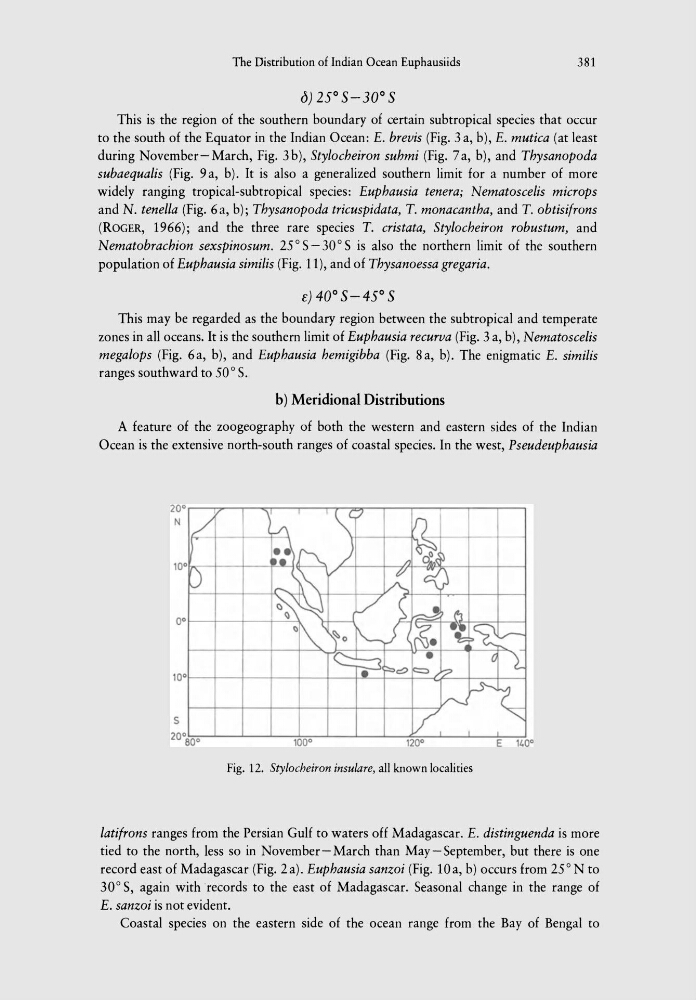
Fig. 12. Stylocheiron insulare, all known localities
Latifrons ranges from the Persian Gulf to waters off Madagascar. E. distinguenda is more
tied to the north, less so in November-March than May-September, but there is one
record east of Madagascar (Fig. 2a). Euphausia sanzoi (Fig. lOa, b) occurs from 25° N to
30° S, again with records to the east of Madagascar. Seasonal change in the range of
E. sanzoi is not evident.
Coastal species on the eastern side of the ocean range from the Bay of Bengal to
381
6) 25 0 S-30° S
This is the region of the southern boundary of certain subtropical species that occur
to the south of the Equator in the Indian Ocean: E. brevis (Fig. 3a, b), E. mutica (at least
during November-March, Fig. 3b), Stylocheiron suhmi (Fig. 7a, b), and Thysanopoda
subaequalis (Fig. 9 a, b). It is also a generalized southern limit for a number of more
widely ranging tropical-subtropical species: Euphausia tenera; Nematoscelis microps
and N. ten elLa (Fig. 6 a, b); Thysanopoda tricuspidata, T. monacantha, and T. obtisifrons
(ROGER, 1966); and the three rare species T. cristata, Stylocheiron rob us tum, and
Nematobrachion sexspinosum. 25 ° S - 30 ° S is also the northern limit of the southern
population of Euphausia similis (Fig. 11), and of Thysanoessa gregaria.
E) 40 0 S-45° S
This may be regarded as the boundary region between the subtropical and temperate
zones in all oceans. It is the southern limit of Euphausia recurva (Fig. 3 a, b), Nematoscelis
megalops (Fig. 6a, b), and Euphausia hemigibba (Fig. 8a, b). The enigmatic E. similis
ranges southward to 50° S.
b) Meridional Distributions
A feature of the zoogeography of both the western and eastern sides of the Indian
Ocean is the extensive north-south ranges of coastal species. In the west, Pseudeuphausia
Fig. 12. Stylocheiron insulare, all known localities
Latifrons ranges from the Persian Gulf to waters off Madagascar. E. distinguenda is more
tied to the north, less so in November-March than May-September, but there is one
record east of Madagascar (Fig. 2a). Euphausia sanzoi (Fig. lOa, b) occurs from 25° N to
30° S, again with records to the east of Madagascar. Seasonal change in the range of
E. sanzoi is not evident.
Coastal species on the eastern side of the ocean range from the Bay of Bengal to