

300
30' 30'
N
20'
10'
o·
S
10'
v. R. NAIR and T. s. s. RAo:
60'
70'
E 800 30 ,
N
200
~--l----)-l 00
500
60"
70'
o
S
E 080" 100
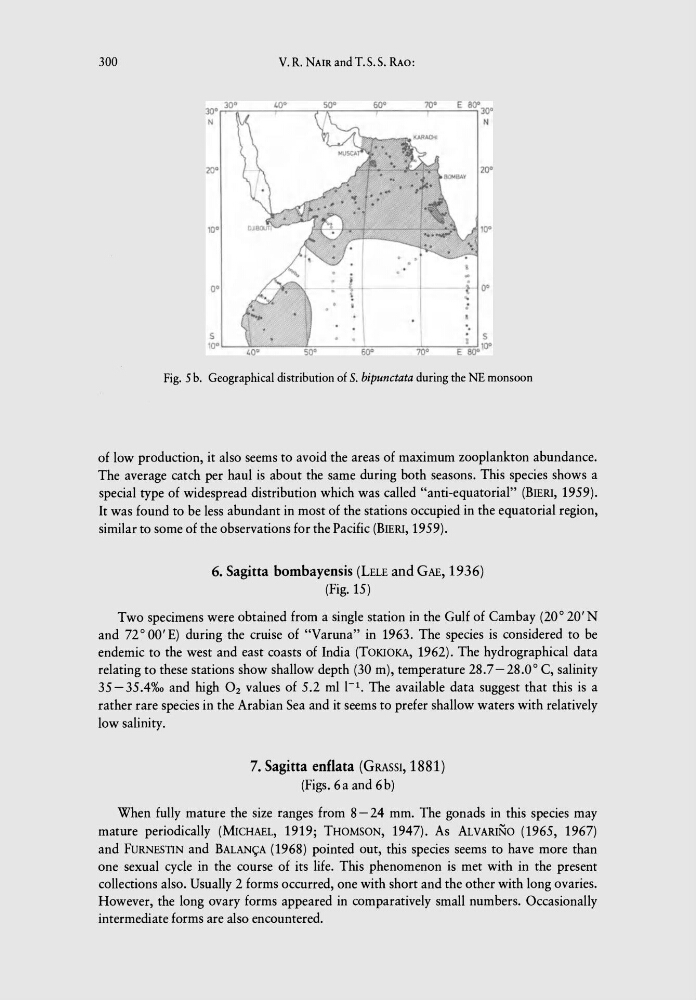
Fig. 5 b. Geographical distribution of S. bipunctata during the NE monsoon
of low production, it also seems to avoid the areas of maximum zooplankton abundance.
The average catch per haul is about the same during both seasons. This species shows a
special type of widespread distribution which was called "anti-equatorial" (BIERI, 1959).
It was found to be less abundant in most of the stations occupied in the equatorial region,
similar to some of the observations for the Pacific (BIERI, 1959).
6. Sagitta bombayensis (LELE and GAE, 1936)
(Fig. 15)
Two specimens were obtained from a single station in the Gulf of Cam bay (20 0 20' N
and 72 000' E) during the cruise of "Varuna" in 1963. The species is considered to be
endemic to the west and east coasts of India (TOKIOKA, 1962). The hydrographical data
relating to these stations show shallow depth (30 m), temperature 28.7- 28.0 0 C, salinity
35-35.40/00 and high O2 values of 5.2 mil-i. The available data suggest that this is a
rather rare species in the Arabian Sea and it seems to prefer shallow waters with relatively
low salinity.
7. Sagitta enflata (GRASSI, 1881)
(Figs. 6a and 6b)
When fully mature the size ranges from 8 - 24 mm. The gonads in this species may
mature periodically (MICHAEL, 1919; THOMSON, 1947). As ALVARINO (1965, 1967)
and FURNESTIN and BALAN<;:A (1968) pointed out, this species seems to have more than
one sexual cycle in the course of its life. This phenomenon is met with in the present
collections also. Usually 2 forms occurred, one with short and the other with long ovaries.
However, the long ovary forms appeared in comparatively small numbers. Occasionally
intermediate forms are also encountered.
30' 30'
N
20'
10'
o·
S
10'
v. R. NAIR and T. s. s. RAo:
60'
70'
E 800 30 ,
N
200
~--l----)-l 00
500
60"
70'
o
S
E 080" 100
Fig. 5 b. Geographical distribution of S. bipunctata during the NE monsoon
of low production, it also seems to avoid the areas of maximum zooplankton abundance.
The average catch per haul is about the same during both seasons. This species shows a
special type of widespread distribution which was called "anti-equatorial" (BIERI, 1959).
It was found to be less abundant in most of the stations occupied in the equatorial region,
similar to some of the observations for the Pacific (BIERI, 1959).
6. Sagitta bombayensis (LELE and GAE, 1936)
(Fig. 15)
Two specimens were obtained from a single station in the Gulf of Cam bay (20 0 20' N
and 72 000' E) during the cruise of "Varuna" in 1963. The species is considered to be
endemic to the west and east coasts of India (TOKIOKA, 1962). The hydrographical data
relating to these stations show shallow depth (30 m), temperature 28.7- 28.0 0 C, salinity
35-35.40/00 and high O2 values of 5.2 mil-i. The available data suggest that this is a
rather rare species in the Arabian Sea and it seems to prefer shallow waters with relatively
low salinity.
7. Sagitta enflata (GRASSI, 1881)
(Figs. 6a and 6b)
When fully mature the size ranges from 8 - 24 mm. The gonads in this species may
mature periodically (MICHAEL, 1919; THOMSON, 1947). As ALVARINO (1965, 1967)
and FURNESTIN and BALAN<;:A (1968) pointed out, this species seems to have more than
one sexual cycle in the course of its life. This phenomenon is met with in the present
collections also. Usually 2 forms occurred, one with short and the other with long ovaries.
However, the long ovary forms appeared in comparatively small numbers. Occasionally
intermediate forms are also encountered.