

286
H.-E. SCHMIDT:
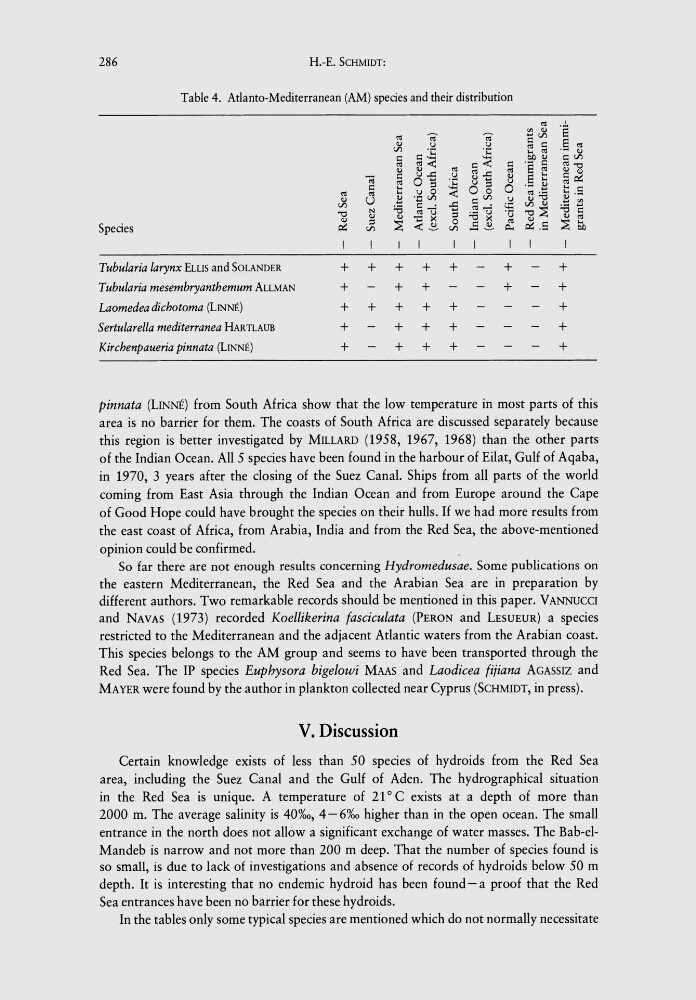
Table 4. Atlanta-Mediterranean (AM) species and their distribution
Species
Tubularia larynx ELLIS and SOLANDER
+ + + + +
+
+
Tubularia mesembryanthemum ALLMAN
+
+ +
+
+
Laomedea dichotoma (LINNE)
+ + + + +
+
Sertularella mediterranea HARTLAUB
+
+ + +
+
Kirchenpaueria pinnata (LINNE)
+
+ + +
+
pinnata (LINNE) from South Africa show that the low temperature in most parts of this
area is no barrier for them. The coasts of South Africa are discussed separately because
this region is better investigated by MILLARD (1958, 1967, 1968) than the other parts
of the Indian Ocean. All 5 species have been found in the harbour of Eilat, Gulf of Aqaba,
in 1970, 3 years after the closing of the Suez Canal. Ships from all parts of the world
coming from East Asia through the Indian Ocean and from Europe around the Cape
of Good Hope could have brought the species on their hulls. If we had more results from
the east coast of Africa, from Arabia, India and from the Red Sea, the above-mentioned
opinion could be confirmed.
So far there are not enough results concerning Hydromedusae. Some publications on
the eastern Mediterranean, the Red Sea and the Arabian Sea are in preparation by
different authors. Two remarkable records should be mentioned in this paper. VANNUCCI
and NAVAS (1973) recorded Koellikerina fasciculata (PERON and LESUEUR) a species
restricted to the Mediterranean and the adjacent Atlantic waters from the Arabian coast.
This species belongs to the AM group and seems to have been transported through the
Red Sea. The IP species Euphysora bigelowi MAAS and Laodicea fijiana AGASSIZ and
MAYER were found by the author in plankton collected near Cyprus (SCHMIDT, in press).
V. Discussion
Certain knowledge exists of less than 50 species of hydro ids from the Red Sea
area, including the Suez Canal and the Gulf of Aden. The hydrographical situation
in the Red Sea is unique. A temperature of 21 0 C exists at a depth of more than
2000 m. The average salinity is 40%0, 4 - 6%0 higher than in the open ocean. The small
entrance in the north does not allow a significant exchange of water masses. The Bab-elMandeb is narrow and not more than 200 m deep. That the number of species found is
so small, is due to lack of investigations and absence of records of hydroids below 50 ill
depth. It is interesting that no endemic hydroid has been found - a proof that the Red
Sea entrances have been no barrier for these hydroids.
In the tables only some typical species are mentioned which do not normally necessitate
H.-E. SCHMIDT:
Table 4. Atlanta-Mediterranean (AM) species and their distribution
Species
Tubularia larynx ELLIS and SOLANDER
+ + + + +
+
+
Tubularia mesembryanthemum ALLMAN
+
+ +
+
+
Laomedea dichotoma (LINNE)
+ + + + +
+
Sertularella mediterranea HARTLAUB
+
+ + +
+
Kirchenpaueria pinnata (LINNE)
+
+ + +
+
pinnata (LINNE) from South Africa show that the low temperature in most parts of this
area is no barrier for them. The coasts of South Africa are discussed separately because
this region is better investigated by MILLARD (1958, 1967, 1968) than the other parts
of the Indian Ocean. All 5 species have been found in the harbour of Eilat, Gulf of Aqaba,
in 1970, 3 years after the closing of the Suez Canal. Ships from all parts of the world
coming from East Asia through the Indian Ocean and from Europe around the Cape
of Good Hope could have brought the species on their hulls. If we had more results from
the east coast of Africa, from Arabia, India and from the Red Sea, the above-mentioned
opinion could be confirmed.
So far there are not enough results concerning Hydromedusae. Some publications on
the eastern Mediterranean, the Red Sea and the Arabian Sea are in preparation by
different authors. Two remarkable records should be mentioned in this paper. VANNUCCI
and NAVAS (1973) recorded Koellikerina fasciculata (PERON and LESUEUR) a species
restricted to the Mediterranean and the adjacent Atlantic waters from the Arabian coast.
This species belongs to the AM group and seems to have been transported through the
Red Sea. The IP species Euphysora bigelowi MAAS and Laodicea fijiana AGASSIZ and
MAYER were found by the author in plankton collected near Cyprus (SCHMIDT, in press).
V. Discussion
Certain knowledge exists of less than 50 species of hydro ids from the Red Sea
area, including the Suez Canal and the Gulf of Aden. The hydrographical situation
in the Red Sea is unique. A temperature of 21 0 C exists at a depth of more than
2000 m. The average salinity is 40%0, 4 - 6%0 higher than in the open ocean. The small
entrance in the north does not allow a significant exchange of water masses. The Bab-elMandeb is narrow and not more than 200 m deep. That the number of species found is
so small, is due to lack of investigations and absence of records of hydroids below 50 ill
depth. It is interesting that no endemic hydroid has been found - a proof that the Red
Sea entrances have been no barrier for these hydroids.
In the tables only some typical species are mentioned which do not normally necessitate