

The Distribution and Abundance of Zooplankton during Postmonsoon and Premonsoon Periods 263
region of SEWELL (1947), VERVOORT (1946), and VINOGRADOV (1968). Out of some
82 species of copepods identified (from the area of present studies) a relatively small
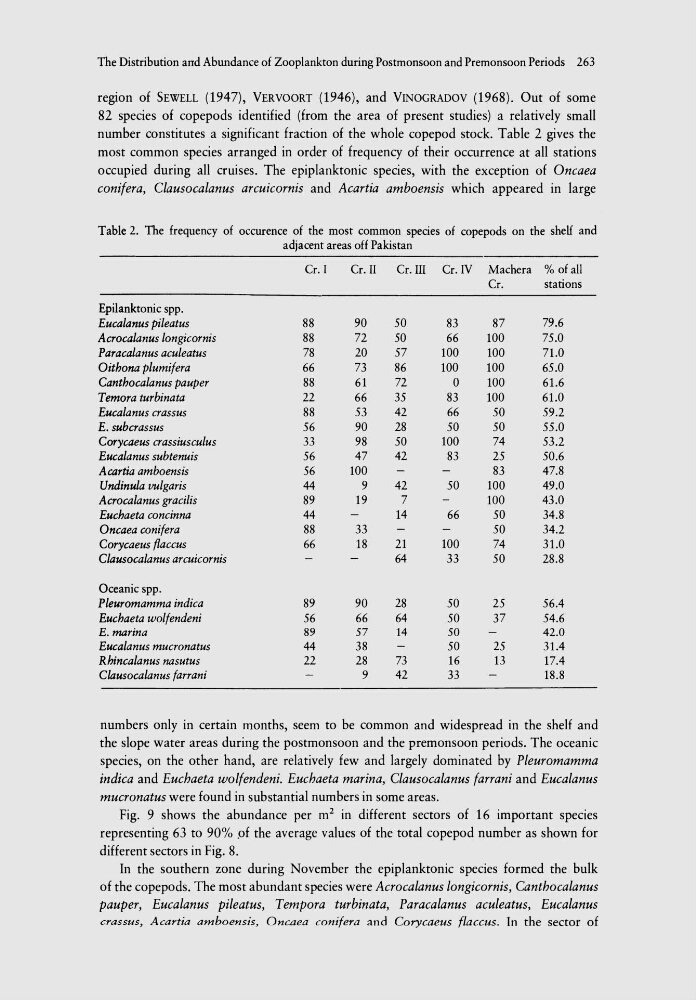
number constitutes a significant fraction of the whole copepod stock. Table 2 gives the
most common species arranged in order of frequency of their occurrence at all stations
occupied during all cruises. The epiplanktonic species, with the exception of Oncaea
conifera, Clausocalanus arcuicornis and Acartia amboensis which appeared in large
Table 2. The frequency of occurence of the most common species of copepods on the shelf and
adjacent areas off Pakistan
Cr.I
Cr. II
Cr. III Cr. IV Machera % of all
Cr.
stations
Epilanktonic spp.
Eucalanus pileatus
88
90
50
83
87
79.6
Acrocalanus longicornis
88
72
50
66
100
75.0
Paracalanus aculeatus
78
20
57
100
100
71.0
Oithona plumifera
66
73
86
100
100
65.0
Canthocalanus pauper
88
61
72
0
100
61.6
Temora turbinata
22
66
35
83
100
61.0
Eucalanus crassus
88
53
42
66
50
59.2
E. subcrassus
56
90
28
50
50
55.0
Corycaeus crassiusculus
33
98
50
100
74
53.2
Eucalanus subtenuis
56
47
42
83
25
50.6
Acartia amboensis
56
100
83
47.8
Undinula vulgaris
44
9
42
50
100
49.0
Acrocalanus gracilis
89
19
7
100
43.0
Euchaeta concinna
44
14
66
50
34.8
Oncaea conifera
88
33
50
34.2
Corycaeus flaccus
66
18
21
100
74
31.0
Clausocalanus arcuicornis
64
33
50
28.8
Oceanic spp.
Pleuromamma indica
89
90
28
50
25
56.4
Euchaeta wolfendeni
56
66
64
50
37
54.6
E. marina
89
57
14
50
42.0
Eucalanus mucronatus
44
38
50
25
31.4
Rhincalanus nasutus
22
28
73
16
13
17.4
Clausocalanus farrani
9
42
33
18.8
numbers only in certain months, seem to be common and widespread in the shelf and
the slope water areas during the postmonsoon and the premonsoon periods. The oceanic
species, on the other hand, are relatively few and largely dominated by Pleuromamma
indica and Euchaeta wolfendeni. Euchaeta marina, Clausocalanus farrani and Eucalanus
mucronatus were found in substantial numbers in some areas.
Fig. 9 shows the abundance per m 2 in different sectors of 16 important species
representing 63 to 90% .of the average values of the total copepod number as shown for
different sectors in Fig. 8.
In the southern zone during November the epiplanktonic species formed the bulk
of the copepods. The most abundant species were Acrocalanus longicornis, Canthocalanus
pauper, Eucalanus pileatus, Tempora turbinata, Paracalanus aculeatus, Eucalanus
crassus, Acartia amboensis, Oncaea conifera and Cnrycaeus flaccus. In the sector of
region of SEWELL (1947), VERVOORT (1946), and VINOGRADOV (1968). Out of some
82 species of copepods identified (from the area of present studies) a relatively small
number constitutes a significant fraction of the whole copepod stock. Table 2 gives the
most common species arranged in order of frequency of their occurrence at all stations
occupied during all cruises. The epiplanktonic species, with the exception of Oncaea
conifera, Clausocalanus arcuicornis and Acartia amboensis which appeared in large
Table 2. The frequency of occurence of the most common species of copepods on the shelf and
adjacent areas off Pakistan
Cr.I
Cr. II
Cr. III Cr. IV Machera % of all
Cr.
stations
Epilanktonic spp.
Eucalanus pileatus
88
90
50
83
87
79.6
Acrocalanus longicornis
88
72
50
66
100
75.0
Paracalanus aculeatus
78
20
57
100
100
71.0
Oithona plumifera
66
73
86
100
100
65.0
Canthocalanus pauper
88
61
72
0
100
61.6
Temora turbinata
22
66
35
83
100
61.0
Eucalanus crassus
88
53
42
66
50
59.2
E. subcrassus
56
90
28
50
50
55.0
Corycaeus crassiusculus
33
98
50
100
74
53.2
Eucalanus subtenuis
56
47
42
83
25
50.6
Acartia amboensis
56
100
83
47.8
Undinula vulgaris
44
9
42
50
100
49.0
Acrocalanus gracilis
89
19
7
100
43.0
Euchaeta concinna
44
14
66
50
34.8
Oncaea conifera
88
33
50
34.2
Corycaeus flaccus
66
18
21
100
74
31.0
Clausocalanus arcuicornis
64
33
50
28.8
Oceanic spp.
Pleuromamma indica
89
90
28
50
25
56.4
Euchaeta wolfendeni
56
66
64
50
37
54.6
E. marina
89
57
14
50
42.0
Eucalanus mucronatus
44
38
50
25
31.4
Rhincalanus nasutus
22
28
73
16
13
17.4
Clausocalanus farrani
9
42
33
18.8
numbers only in certain months, seem to be common and widespread in the shelf and
the slope water areas during the postmonsoon and the premonsoon periods. The oceanic
species, on the other hand, are relatively few and largely dominated by Pleuromamma
indica and Euchaeta wolfendeni. Euchaeta marina, Clausocalanus farrani and Eucalanus
mucronatus were found in substantial numbers in some areas.
Fig. 9 shows the abundance per m 2 in different sectors of 16 important species
representing 63 to 90% .of the average values of the total copepod number as shown for
different sectors in Fig. 8.
In the southern zone during November the epiplanktonic species formed the bulk
of the copepods. The most abundant species were Acrocalanus longicornis, Canthocalanus
pauper, Eucalanus pileatus, Tempora turbinata, Paracalanus aculeatus, Eucalanus
crassus, Acartia amboensis, Oncaea conifera and Cnrycaeus flaccus. In the sector of