

Zooplankton Studies in the Indian Ocean
251
Both the areas show patches of middle range values (10-39.9 ml) against a background
of low biomass (0.1- 9.9 ml). Large patches in the central Arabian Sea and eastern Indian
Ocean show values from 10-19.9 ml.
The May- June period witnesses the commencement of the SW monsoon. Here also
we have no data from the Somali and Arabian coasts nor from the eastern Bay of Bengal.
Patches of high values are scattered with a rich patch of biomass (20 - 39.9 ml) to the
east of Ceylon and a similar patch in the Gulf of Aden. Most of the samples out of the
248 for this season exhibit low values (10 ml).
July- August and September are the months when the SW monsoon is fully established
all over the north Indian Ocean. There are 451 samples for this season but unfortunately
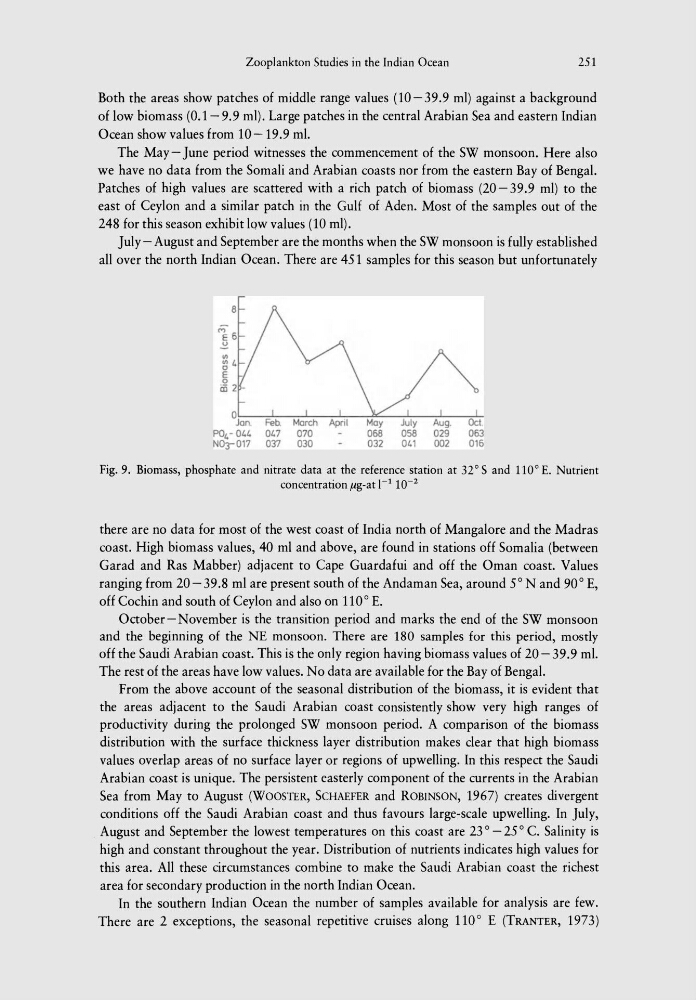
Fig. 9. Biomass, phosphate and nitrate data at the reference station at 3r Sand 110° E. Nutrient
concentration flg-at 1- 1 10- 2
there are no data for most of the west coast of India north of Mangalore and the Madras
coast. High biomass values, 40 ml and above, are found in stations off Somalia (between
Garad and Ras Mabber) adjacent to Cape Guardafui and off the Oman coast. Values
ranging from 20 - 39.8 ml are present south of the Andaman Sea, around 50 Nand 90 0 E,
off Cochin and south of Ceylon and also on 110
0
E.
October- November is the transition period and marks the end of the SW monsoon
and the beginning of the NE monsoon. There are 180 samples for this period, mostly
off the Saudi Arabian coast. This is the only region having biomass values of 20 - 39.9 m!.
The rest of the areas have low values. No data are available for the Bay of Bengal.
From the above account of the seasonal distribution of the biomass, it is evident that
the areas adjacent to the Saudi Arabian coast consistently show very high ranges of
productivity during the prolonged SW monsoon period. A comparison of the biomass
distribution with the surface thickness layer distribution makes clear that high biomass
values overlap areas of no surface layer or regions of upwelling. In this respect the Saudi
Arabian coast is unique. The persistent easterly component of the currents in the Arabian
Sea from May to August (WOOSTER, SCHAEFER and ROBINSON, 1967) creates divergent
conditions off the Saudi Arabian coast and thus favours large-scale upwelling. In July,
August and September the lowest temperatures on this coast are 23 0 - 25 0 C. Salinity is
high and constant throughout the year. Distribution of nutrients indicates high values for
this area. All these circumstances combine to make the Saudi Arabian coast the richest
area for secondary production in the north Indian Ocean.
In the southern Indian Ocean the number of samples available for analysis are few.
There are 2 exceptions, the seasonal repetitive cruises along 110 0 E (TRANTER, 1973)
251
Both the areas show patches of middle range values (10-39.9 ml) against a background
of low biomass (0.1- 9.9 ml). Large patches in the central Arabian Sea and eastern Indian
Ocean show values from 10-19.9 ml.
The May- June period witnesses the commencement of the SW monsoon. Here also
we have no data from the Somali and Arabian coasts nor from the eastern Bay of Bengal.
Patches of high values are scattered with a rich patch of biomass (20 - 39.9 ml) to the
east of Ceylon and a similar patch in the Gulf of Aden. Most of the samples out of the
248 for this season exhibit low values (10 ml).
July- August and September are the months when the SW monsoon is fully established
all over the north Indian Ocean. There are 451 samples for this season but unfortunately
Fig. 9. Biomass, phosphate and nitrate data at the reference station at 3r Sand 110° E. Nutrient
concentration flg-at 1- 1 10- 2
there are no data for most of the west coast of India north of Mangalore and the Madras
coast. High biomass values, 40 ml and above, are found in stations off Somalia (between
Garad and Ras Mabber) adjacent to Cape Guardafui and off the Oman coast. Values
ranging from 20 - 39.8 ml are present south of the Andaman Sea, around 50 Nand 90 0 E,
off Cochin and south of Ceylon and also on 110
0
E.
October- November is the transition period and marks the end of the SW monsoon
and the beginning of the NE monsoon. There are 180 samples for this period, mostly
off the Saudi Arabian coast. This is the only region having biomass values of 20 - 39.9 m!.
The rest of the areas have low values. No data are available for the Bay of Bengal.
From the above account of the seasonal distribution of the biomass, it is evident that
the areas adjacent to the Saudi Arabian coast consistently show very high ranges of
productivity during the prolonged SW monsoon period. A comparison of the biomass
distribution with the surface thickness layer distribution makes clear that high biomass
values overlap areas of no surface layer or regions of upwelling. In this respect the Saudi
Arabian coast is unique. The persistent easterly component of the currents in the Arabian
Sea from May to August (WOOSTER, SCHAEFER and ROBINSON, 1967) creates divergent
conditions off the Saudi Arabian coast and thus favours large-scale upwelling. In July,
August and September the lowest temperatures on this coast are 23 0 - 25 0 C. Salinity is
high and constant throughout the year. Distribution of nutrients indicates high values for
this area. All these circumstances combine to make the Saudi Arabian coast the richest
area for secondary production in the north Indian Ocean.
In the southern Indian Ocean the number of samples available for analysis are few.
There are 2 exceptions, the seasonal repetitive cruises along 110 0 E (TRANTER, 1973)