

Agulhas Bank Plankton
213
R. cornutus cornutus, and Centropages chierchiae come well in front of C. brachiatus,
and are followed closely by Acartia danae, A. negligens, Calanus finmarchicus (sensu
lato), Paracalanus parvus, Temora discaudata, and several others, whose names are
omitted here because they are mostly found in very small numbers.
The peaks of abundance during 2 separate years were found to be as follows:
1960-61
1963-64
April:
Centropages chierchiae
July:
Centropages brachiatus
July:
Centropages brachiatus
October: none
October: Nannocalanus minor
January: Nannocalanus minor
Calanoides carinatus
Calanoides carinatus
January: Rhincalanus nasutus
Rhincalanus nasutus
April:
Centropages chierchiae
July 1963
@
Jan. 1964
April 1964
©
@
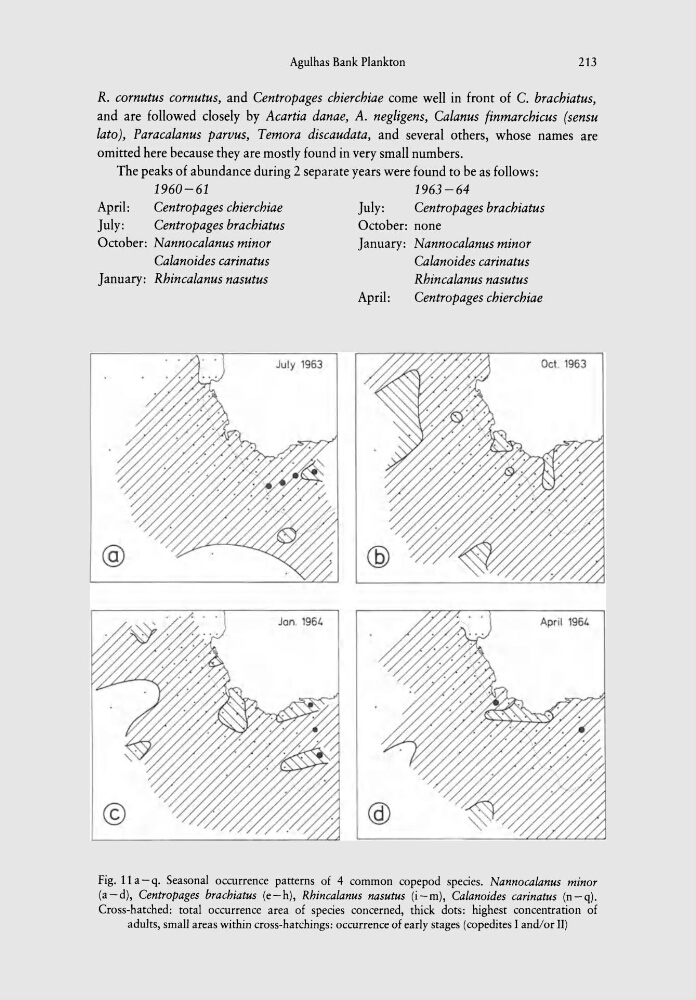
Fig. 11 a - q. Seasonal occurrence patterns of 4 common copepod species. Nannocalanus minor
(a -d), Centropages brachiatus (e - h), Rhincalanus nasutus (i - m), Calanoides carinatus (n - q).
Cross-hatched: total occurrence area of species concerned, thick dots: highest concentration of
adults, small areas within cross-hatchings: occurrence of early stages (copedites I and/or II)
213
R. cornutus cornutus, and Centropages chierchiae come well in front of C. brachiatus,
and are followed closely by Acartia danae, A. negligens, Calanus finmarchicus (sensu
lato), Paracalanus parvus, Temora discaudata, and several others, whose names are
omitted here because they are mostly found in very small numbers.
The peaks of abundance during 2 separate years were found to be as follows:
1960-61
1963-64
April:
Centropages chierchiae
July:
Centropages brachiatus
July:
Centropages brachiatus
October: none
October: Nannocalanus minor
January: Nannocalanus minor
Calanoides carinatus
Calanoides carinatus
January: Rhincalanus nasutus
Rhincalanus nasutus
April:
Centropages chierchiae
July 1963
@
Jan. 1964
April 1964
©
@
Fig. 11 a - q. Seasonal occurrence patterns of 4 common copepod species. Nannocalanus minor
(a -d), Centropages brachiatus (e - h), Rhincalanus nasutus (i - m), Calanoides carinatus (n - q).
Cross-hatched: total occurrence area of species concerned, thick dots: highest concentration of
adults, small areas within cross-hatchings: occurrence of early stages (copedites I and/or II)