

208
A. DE DECKER:
is more common in the north (St. Helena Bay) in winter, generally over deeper water.
It is found over the edge of the Bank in spring and autumn and SW of the Bank in
winter.
0
33°5
Nyctiphanes capen sis
1964-1966
0
34°
°
0
35°
0
0
0
0
0
36°5
0
0
@
17"E
19°
21°E
0
0
0
Euphausia lucens
33°5
0
0
0
1964 -1966
0
0
0
0
34°
0
0
0
0
0
0
35°
0
35°5
0
@
0
0
17°E
19°
21°E
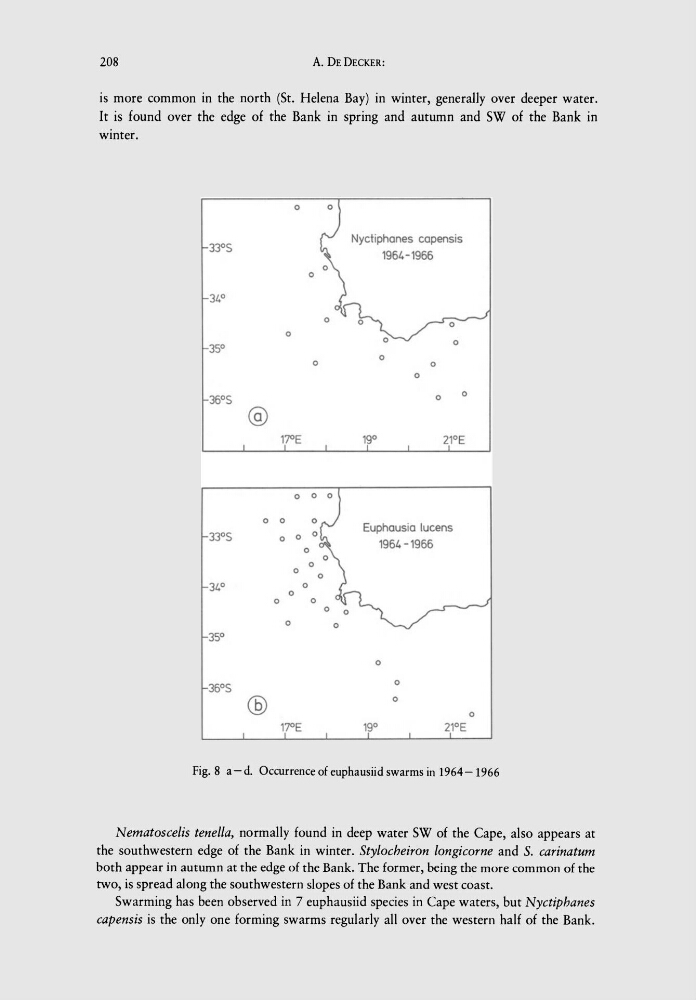
Fig. 8 a-d. Occurrence of euphausiid swarms in 1964-1966
Nematoscelis tenella, normally found in deep water SW of the Cape, also appears at
the southwestern edge of the Bank in winter. Stylocheiron longicorne and S. carina tum
both appear in autumn at the edge of the Bank. The former, being the more common of the
two, is spread along the southwestern slopes of the Bank and west coast.
Swarming has been observed in 7 euphausiid species in Cape waters, but Nyctiphanes
capensis is the only one forming swarms regularly all over the western half of the Bank.
A. DE DECKER:
is more common in the north (St. Helena Bay) in winter, generally over deeper water.
It is found over the edge of the Bank in spring and autumn and SW of the Bank in
winter.
0
33°5
Nyctiphanes capen sis
1964-1966
0
34°
°
0
35°
0
0
0
0
0
36°5
0
0
@
17"E
19°
21°E
0
0
0
Euphausia lucens
33°5
0
0
0
1964 -1966
0
0
0
0
34°
0
0
0
0
0
0
35°
0
35°5
0
@
0
0
17°E
19°
21°E
Fig. 8 a-d. Occurrence of euphausiid swarms in 1964-1966
Nematoscelis tenella, normally found in deep water SW of the Cape, also appears at
the southwestern edge of the Bank in winter. Stylocheiron longicorne and S. carina tum
both appear in autumn at the edge of the Bank. The former, being the more common of the
two, is spread along the southwestern slopes of the Bank and west coast.
Swarming has been observed in 7 euphausiid species in Cape waters, but Nyctiphanes
capensis is the only one forming swarms regularly all over the western half of the Bank.