

206
A. DE DECKER:
inshore at the time when S. friderici was found offshore. These deep-water forms are
found near the surface only at times when upwelling occurs and are thus used as
indicators of upwelling by several authors.
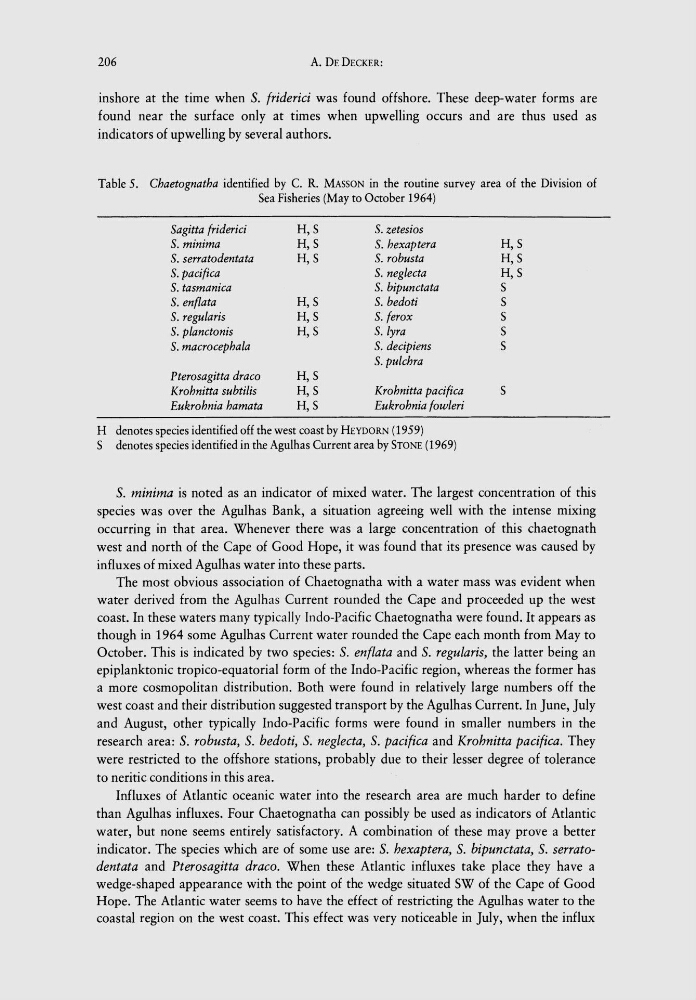
Table 5. Chaetognatha identified by C. R. MASSON in the routine survey area of the Division of
Sea Fisheries (May to October 1964)
Sagitta friderici
H,S
S. zetesios
S. minima
H,S
S. hexaptera
H, S
S. serratodentata
H, S
S. robusta
H,S
s. pacifica
s. neglecta
H,S
s. tasmanica
s. bipunctata
S
s. enflata
H, S
s. bedoti
S
s. regularis
H,S
s. ferox
S
s. planctonis
H,S
s. lyra
S
s. macrocephala
S. decipiens
S
s. pulchra
Pterosagitta draco
H,S
Krohnitta subtilis
H,S
Krohnitta pacifica
S
Eukrohnia hamata
H, S
Eukrohnia fowleri
H denotes species identified off the west coast by HEYDORN (1959)
S denotes species identified in the Agulhas Curreut area by STONE (1969)
S. minima is noted as an indicator of mixed water. The largest concentration of this
species was over the Agulhas Bank, a situation agreeing well with the intense mixing
occurring in that area. Whenever there was a large concentration of this chaetognath
west and north of the Cape of Good Hope, it was found that its presence was caused by
influxes of mixed Agulhas water into these parts.
The most obvious association of Chaetognatha with a water mass was evident when
water derived from the Agulhas Current rounded the Cape and proceeded up the west
coast. In these waters many typically Indo-Pacific Chaetognatha were found. It appears as
though in 1964 some Agulhas Current water rounded the Cape each month from May to
October. This is indicated by two species: S. enflata and S. regularis, the latter being an
epiplanktonic tropico-equatorial form of the Indo-Pacific region, whereas the former has
a more cosmopolitan distribution. Both were found in relatively large numbers off the
west coast and their distribution suggested transport by the Agulhas Current. In June, July
and August, other typically Indo-Pacific forms were found in smaller numbers in the
research area: S. robusta, S. bedoti, S. neglecta, S. pacifica and Krohnitta pacifica. They
were restricted to the offshore stations, probably due to their lesser degree of tolerance
to neritic conditions in this area.
Influxes of Atlantic oceanic water into the research area are much harder to define
than Agulhas influxes. Four Chaetognatha can possibly be used as indicators of Atlantic
water, but none seems entirely satisfactory. A combination of these may prove a better
indicator. The species which are of some use are: S. hexaptera, S. bipunctata, S. serratodentata and Pterosagitta draco. When these Atlantic influxes take place they have a
wedge-shaped appearance with the point of the wedge situated SW of the Cape of Good
Hope. The Atlantic water seems to have the effect of restricting the Agulhas water to the
coastal region on the west coast. This effect was very noticeable in July, when the influx
A. DE DECKER:
inshore at the time when S. friderici was found offshore. These deep-water forms are
found near the surface only at times when upwelling occurs and are thus used as
indicators of upwelling by several authors.
Table 5. Chaetognatha identified by C. R. MASSON in the routine survey area of the Division of
Sea Fisheries (May to October 1964)
Sagitta friderici
H,S
S. zetesios
S. minima
H,S
S. hexaptera
H, S
S. serratodentata
H, S
S. robusta
H,S
s. pacifica
s. neglecta
H,S
s. tasmanica
s. bipunctata
S
s. enflata
H, S
s. bedoti
S
s. regularis
H,S
s. ferox
S
s. planctonis
H,S
s. lyra
S
s. macrocephala
S. decipiens
S
s. pulchra
Pterosagitta draco
H,S
Krohnitta subtilis
H,S
Krohnitta pacifica
S
Eukrohnia hamata
H, S
Eukrohnia fowleri
H denotes species identified off the west coast by HEYDORN (1959)
S denotes species identified in the Agulhas Curreut area by STONE (1969)
S. minima is noted as an indicator of mixed water. The largest concentration of this
species was over the Agulhas Bank, a situation agreeing well with the intense mixing
occurring in that area. Whenever there was a large concentration of this chaetognath
west and north of the Cape of Good Hope, it was found that its presence was caused by
influxes of mixed Agulhas water into these parts.
The most obvious association of Chaetognatha with a water mass was evident when
water derived from the Agulhas Current rounded the Cape and proceeded up the west
coast. In these waters many typically Indo-Pacific Chaetognatha were found. It appears as
though in 1964 some Agulhas Current water rounded the Cape each month from May to
October. This is indicated by two species: S. enflata and S. regularis, the latter being an
epiplanktonic tropico-equatorial form of the Indo-Pacific region, whereas the former has
a more cosmopolitan distribution. Both were found in relatively large numbers off the
west coast and their distribution suggested transport by the Agulhas Current. In June, July
and August, other typically Indo-Pacific forms were found in smaller numbers in the
research area: S. robusta, S. bedoti, S. neglecta, S. pacifica and Krohnitta pacifica. They
were restricted to the offshore stations, probably due to their lesser degree of tolerance
to neritic conditions in this area.
Influxes of Atlantic oceanic water into the research area are much harder to define
than Agulhas influxes. Four Chaetognatha can possibly be used as indicators of Atlantic
water, but none seems entirely satisfactory. A combination of these may prove a better
indicator. The species which are of some use are: S. hexaptera, S. bipunctata, S. serratodentata and Pterosagitta draco. When these Atlantic influxes take place they have a
wedge-shaped appearance with the point of the wedge situated SW of the Cape of Good
Hope. The Atlantic water seems to have the effect of restricting the Agulhas water to the
coastal region on the west coast. This effect was very noticeable in July, when the influx