

General Features of Dinoflagellate Material Collected by the "Anton Bruun"
157
tropical and subtropical dinoflagellates. The scanning electron microscope has proved a
valuable adjunct to conventional observational methods (Figs. 5 a - c, 6 a - e) and has
increased the precision of the identifications. The value of the instrument in this study has
been discussed elsewhere (TAYLOR, 1972a).
lS0E
80
85
90
95
1000E
N 2~
./(
, .. (
2S0 N
20
IS
>33%0
10
________ -+ __________ ~--------~----------~~~~~--~~5
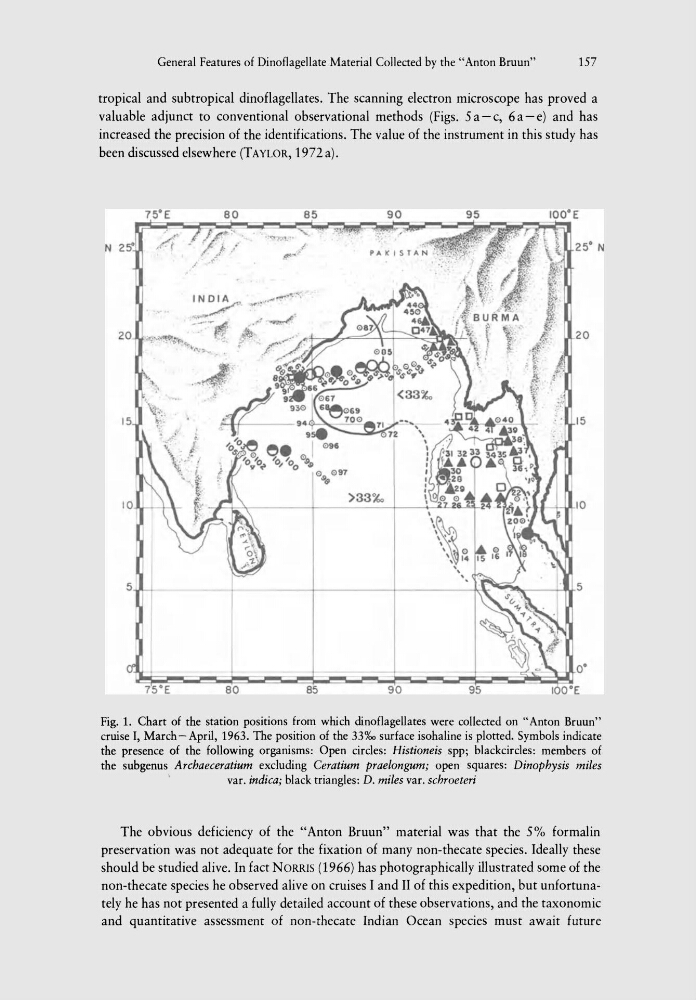
Fig. 1. Chart of the station positions from which dinoflagellates were collected on "Anton Bruun"
cruise I, March- April, 1963. The position of the 330/00 surface isohaline is plotted. Symbols indicate
the presence of the following organisms: Open circles: Histioneis spp; blackcircles: members of
the subgenus Archaeceratium excluding Ceratium praelongum; open squares: Dinophysis miles
,
var. indica; black triangles: D. miles var. schroeteri
The obvious deficiency of the "Anton Bruun" material was that the 5% formalin
preservation was not adequate for the fixation of many non-thecate species. Ideally these
should be studied alive. In fact NORRIS (1966) has photographically illustrated some of the
non-thecate species he observed alive on cruises I and II of this expedition, but unfortunately he has not presented a fully detailed account of these observations, and the taxonomic
and quantitative assessment of non-thecate Indian Ocean species must await future
157
tropical and subtropical dinoflagellates. The scanning electron microscope has proved a
valuable adjunct to conventional observational methods (Figs. 5 a - c, 6 a - e) and has
increased the precision of the identifications. The value of the instrument in this study has
been discussed elsewhere (TAYLOR, 1972a).
lS0E
80
85
90
95
1000E
N 2~
./(
, .. (
2S0 N
20
IS
>33%0
10
________ -+ __________ ~--------~----------~~~~~--~~5
Fig. 1. Chart of the station positions from which dinoflagellates were collected on "Anton Bruun"
cruise I, March- April, 1963. The position of the 330/00 surface isohaline is plotted. Symbols indicate
the presence of the following organisms: Open circles: Histioneis spp; blackcircles: members of
the subgenus Archaeceratium excluding Ceratium praelongum; open squares: Dinophysis miles
,
var. indica; black triangles: D. miles var. schroeteri
The obvious deficiency of the "Anton Bruun" material was that the 5% formalin
preservation was not adequate for the fixation of many non-thecate species. Ideally these
should be studied alive. In fact NORRIS (1966) has photographically illustrated some of the
non-thecate species he observed alive on cruises I and II of this expedition, but unfortunately he has not presented a fully detailed account of these observations, and the taxonomic
and quantitative assessment of non-thecate Indian Ocean species must await future