

136
S. Z. EL-SAYED and H. R. JITIs:
light intensity. Following the chlorophyll a maxima, there is a general decline in the
concentration of the plant pigment to the depth of 200 m; below this depth the quantity
is very much reduced. At several of the stations, substantial quantities of chlorophyll a
are found below the euphotic zones (arrows in Fig. 3). This is clearly shown at stations 4
and 17 which are located in the vicinity of the Polar Front. The integrated chlorophyll a
gave an average value of 19.5 mg m- 2 for the present cruise compared to 12.62 mg m- 2
and 15.94 mg m -2 for the Pacific and Atlantic sectors, respectively (EL-SA YED, 1970).
50
100
~
~ 1 50
o
200
250
300
o
0 '1
SClJTHBOUND STATIONS 11 .. 1)
~
ALI. STATIONS
"",'",", NORTHBOUNO STATIONS 112, IS-181
.. -~ ICE STATIONS 18-11,13,14)
0.2
0:5
04
Clorophyll a (mg m-3)
0 -5
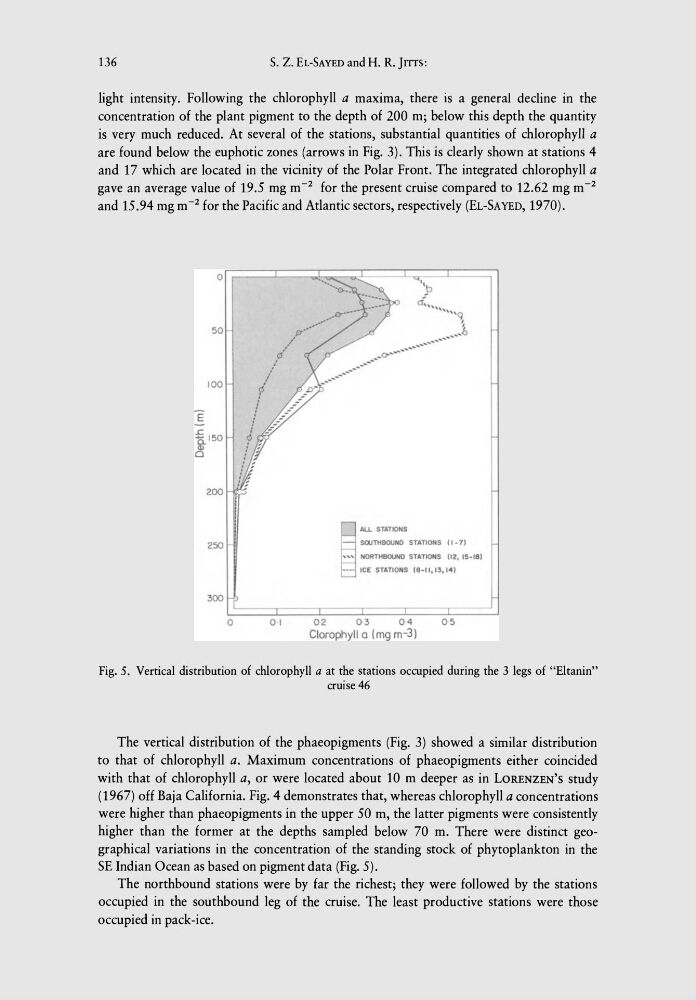
Fig. 5. Vertical distribution of chlorophyll a at the stations occupied during the 3 legs of "Eltanin"
cruise 46
The vertical distribution of the phaeopigments (Fig. 3) showed a similar distribution
to that of chlorophyll a. Maximum concentrations of phaeopigments either coincided
with that of chlorophyll a, or were located about 10 m deeper as in LORENZEN'S study
(1967) off Baja California. Fig. 4 demonstrates that, whereas chlorophyll a concentrations
were higher than phaeopigments in the upper 50 m, the latter pigments were consistently
higher than the former at the depths sampled below 70 m. There were distinct geographical variations in the concentration of the standing stock of phytoplankton in the
SE Indian Ocean as based on pigment data (Fig. 5).
The northbound stations were by far the richest; they were followed by the stations
occupied in the southbound leg of the cruise. The least productive stations were those
occupied in pack-ice.
S. Z. EL-SAYED and H. R. JITIs:
light intensity. Following the chlorophyll a maxima, there is a general decline in the
concentration of the plant pigment to the depth of 200 m; below this depth the quantity
is very much reduced. At several of the stations, substantial quantities of chlorophyll a
are found below the euphotic zones (arrows in Fig. 3). This is clearly shown at stations 4
and 17 which are located in the vicinity of the Polar Front. The integrated chlorophyll a
gave an average value of 19.5 mg m- 2 for the present cruise compared to 12.62 mg m- 2
and 15.94 mg m -2 for the Pacific and Atlantic sectors, respectively (EL-SA YED, 1970).
50
100
~
~ 1 50
o
200
250
300
o
0 '1
SClJTHBOUND STATIONS 11 .. 1)
~
ALI. STATIONS
"",'",", NORTHBOUNO STATIONS 112, IS-181
.. -~ ICE STATIONS 18-11,13,14)
0.2
0:5
04
Clorophyll a (mg m-3)
0 -5
Fig. 5. Vertical distribution of chlorophyll a at the stations occupied during the 3 legs of "Eltanin"
cruise 46
The vertical distribution of the phaeopigments (Fig. 3) showed a similar distribution
to that of chlorophyll a. Maximum concentrations of phaeopigments either coincided
with that of chlorophyll a, or were located about 10 m deeper as in LORENZEN'S study
(1967) off Baja California. Fig. 4 demonstrates that, whereas chlorophyll a concentrations
were higher than phaeopigments in the upper 50 m, the latter pigments were consistently
higher than the former at the depths sampled below 70 m. There were distinct geographical variations in the concentration of the standing stock of phytoplankton in the
SE Indian Ocean as based on pigment data (Fig. 5).
The northbound stations were by far the richest; they were followed by the stations
occupied in the southbound leg of the cruise. The least productive stations were those
occupied in pack-ice.