

407
hydrogen bonds and covalent cross-links. This in turn will maintain a fl uid state in
which hydrophobic interactions between terminal peptides permit the formation of
a sequence of liquid crystalline phases as water is removed. The fl uidity of these
phases allows the material to fl ow through the secretory apparatus and permits the
remarkably precise orientation of the collagen molecules in the fi nal material to be
defi ned by a combination of shearing orientation and liquid crystallization. When
the molecules are fi nally in position within the lumen of the nidamental gland, the
pH is raised, allowing the helical portions of the molecules to come together by
electrostatic interactions, in turn allowing the formation of intermolecular hydrogen
bonds and then oxidative covalent cross-links,” (Knight and Feng 1992 , 1994a ;
Feng and Knight 1992 , 1994b ).
Peptides from the dogfi sh egg capsule collagen have been partially sequenced,
and show some homology with Type VI, Type X, though mainly Type IV, collagens
(Luong et al. 1998 ; Knupp et al. 1998 ). However, the main principal difference of
the dogfi sh egg case collagen is that this protein aggregates in the most ordered
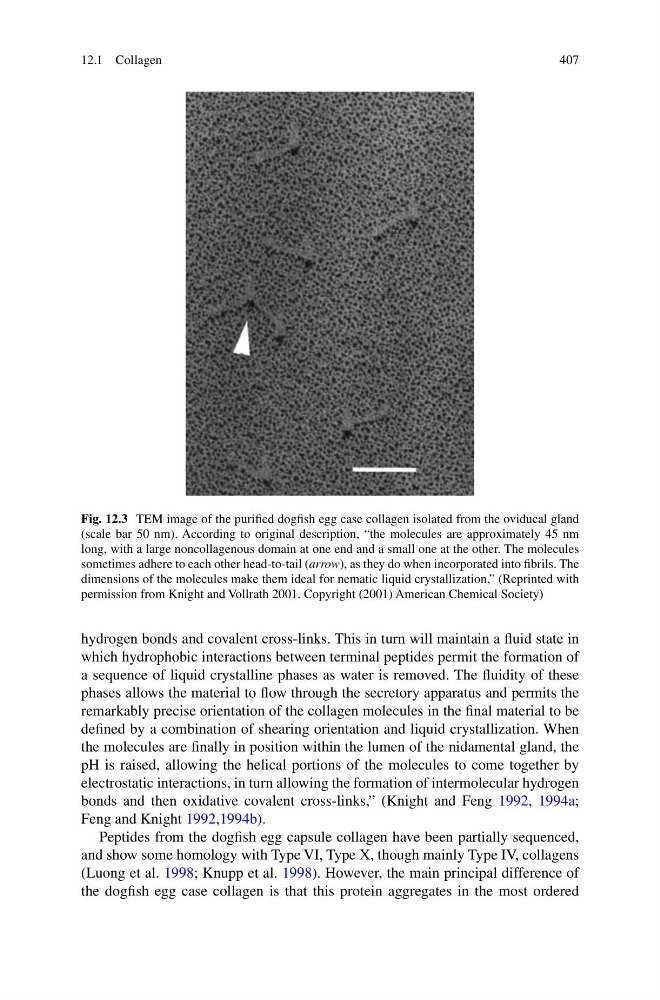
Fig. 12.3 TEM image of the purifi ed dogfi sh egg case collagen isolated from the oviducal gland
(scale bar 50 nm). According to original description, “the molecules are approximately 45 nm
long, with a large noncollagenous domain at one end and a small one at the other. The molecules
sometimes adhere to each other head-to-tail ( arrow ), as they do when incorporated into fi brils. The
dimensions of the molecules make them ideal for nematic liquid crystallization,” (Reprinted with
permission from Knight and Vollrath 2001. Copyright (2001) American Chemical Society)
12.1 Collagen
hydrogen bonds and covalent cross-links. This in turn will maintain a fl uid state in
which hydrophobic interactions between terminal peptides permit the formation of
a sequence of liquid crystalline phases as water is removed. The fl uidity of these
phases allows the material to fl ow through the secretory apparatus and permits the
remarkably precise orientation of the collagen molecules in the fi nal material to be
defi ned by a combination of shearing orientation and liquid crystallization. When
the molecules are fi nally in position within the lumen of the nidamental gland, the
pH is raised, allowing the helical portions of the molecules to come together by
electrostatic interactions, in turn allowing the formation of intermolecular hydrogen
bonds and then oxidative covalent cross-links,” (Knight and Feng 1992 , 1994a ;
Feng and Knight 1992 , 1994b ).
Peptides from the dogfi sh egg capsule collagen have been partially sequenced,
and show some homology with Type VI, Type X, though mainly Type IV, collagens
(Luong et al. 1998 ; Knupp et al. 1998 ). However, the main principal difference of
the dogfi sh egg case collagen is that this protein aggregates in the most ordered
Fig. 12.3 TEM image of the purifi ed dogfi sh egg case collagen isolated from the oviducal gland
(scale bar 50 nm). According to original description, “the molecules are approximately 45 nm
long, with a large noncollagenous domain at one end and a small one at the other. The molecules
sometimes adhere to each other head-to-tail ( arrow ), as they do when incorporated into fi brils. The
dimensions of the molecules make them ideal for nematic liquid crystallization,” (Reprinted with
permission from Knight and Vollrath 2001. Copyright (2001) American Chemical Society)
12.1 Collagen