

308
I am sure that developing of fi sh robotics is still a current popular topic in the literature
and will be progressing in the future. For example, novel magnetic fi sh-robot has
been recently reported (Kim et al. 2012 ). Researchers present “a biologically
inspired fi sh-robot driven by a single fl exible magnetic actuator with a rotating
magnetic fi eld in a three-axis Helmholtz coil. […] The proposed robot can swim
and perform a variety of maneuvers with the addition of pectoral fi ns and control of
the magnetic torque direction. The robot’s dynamic actuation correlates with the
magnetic actuator and the rotating magnetic fi eld. The proposed robot is also
equipped with new features, such as a total of 6° of freedom, a new control method
that stabilizes posture, three-dimensional swimming, a new velocity control, and
new turning abilities,” (Kim et al. 2012 ).
7.6 Conclusion
In 1958 R. B. Clark and J. B. Cowey published a paper in which they presented a
simple geometric model, based on the idea of a fi bre-reinforced cylinder, to explain the
mechanism underlying shape changes in ribbon worms and fl atworms (Clark and
Cowey 1958 ). While their results may have been of interest to only a few biologists
at that time, the essential idea of this paper, that a structure composed of inextensible fi bres could accommodate large extensibility, has endured and its application
has become widespread. It was fi rst used in numerous biomechanical case studies
and, more recently, in modern biomimetics and mechanical engineering. The basic
model that was developed is now entrenched as a design principle in biomechanics.
A fi sh is a cylinder only from principal point of view. As discussed above, numerous
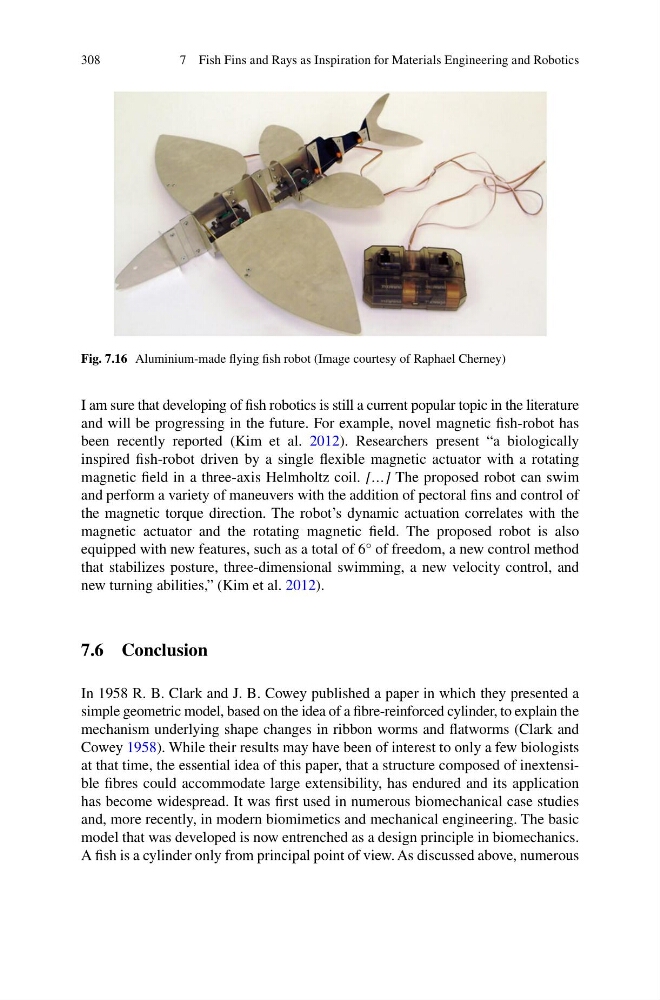
Fig. 7.16 Aluminium-made fl ying fi sh robot (Image courtesy of Raphael Cherney)
7 Fish Fins and Rays as Inspiration for Materials Engineering and Robotics
I am sure that developing of fi sh robotics is still a current popular topic in the literature
and will be progressing in the future. For example, novel magnetic fi sh-robot has
been recently reported (Kim et al. 2012 ). Researchers present “a biologically
inspired fi sh-robot driven by a single fl exible magnetic actuator with a rotating
magnetic fi eld in a three-axis Helmholtz coil. […] The proposed robot can swim
and perform a variety of maneuvers with the addition of pectoral fi ns and control of
the magnetic torque direction. The robot’s dynamic actuation correlates with the
magnetic actuator and the rotating magnetic fi eld. The proposed robot is also
equipped with new features, such as a total of 6° of freedom, a new control method
that stabilizes posture, three-dimensional swimming, a new velocity control, and
new turning abilities,” (Kim et al. 2012 ).
7.6 Conclusion
In 1958 R. B. Clark and J. B. Cowey published a paper in which they presented a
simple geometric model, based on the idea of a fi bre-reinforced cylinder, to explain the
mechanism underlying shape changes in ribbon worms and fl atworms (Clark and
Cowey 1958 ). While their results may have been of interest to only a few biologists
at that time, the essential idea of this paper, that a structure composed of inextensible fi bres could accommodate large extensibility, has endured and its application
has become widespread. It was fi rst used in numerous biomechanical case studies
and, more recently, in modern biomimetics and mechanical engineering. The basic
model that was developed is now entrenched as a design principle in biomechanics.
A fi sh is a cylinder only from principal point of view. As discussed above, numerous
Fig. 7.16 Aluminium-made fl ying fi sh robot (Image courtesy of Raphael Cherney)
7 Fish Fins and Rays as Inspiration for Materials Engineering and Robotics