

265
The patterns from the fi sh scales lend fi sh skin it natural beauty, and this carefully processed hide was commonly worn in the early days of Hezhen culture. This
processing involves skinning, drying, tanning, cutting, sewing, and embellishing the
skin. These old methods will soon be lost, as this labor-intensive protocol is diffi cult
for artists.
These days, the most common fi sh skin used is salmon from the Heilongjiang
River. With over a dozen separate steps, tanning fi sh skin is an important industrial
art form. Bamboo, which does not damage the skin, is used to separate the skin from
the animal. The skin is then air dried, where it hardens, and scraped with a knife.
This produces a tanned leather product. Needles used to sew this leather are derived
from fi sh bone; and the thread made from either animal sinews or thin strips of fi sh
skin. Due to the small size of fi sh, the symmetry of the joints and natural colors need
to be accounted for as the garment is assembled- each piece of clothing is pieced
together from a patchwork of hides. Dozens of fi sh are needed to make a full fi sh
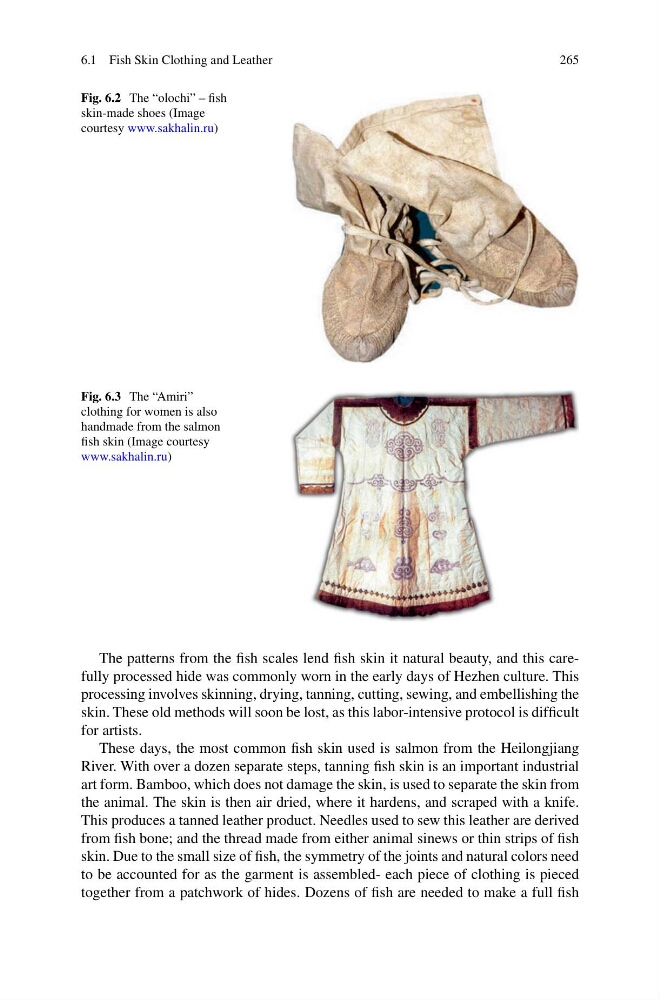
Fig. 6.2 The “olochi” – fi sh
skin-made shoes (Image
courtesy www.sakhalin.ru )
Fig. 6.3 The “Amiri”
clothing for women is also
handmade from the salmon
fi sh skin (Image courtesy
www.sakhalin.ru )
6.1 Fish Skin Clothing and Leather
The patterns from the fi sh scales lend fi sh skin it natural beauty, and this carefully processed hide was commonly worn in the early days of Hezhen culture. This
processing involves skinning, drying, tanning, cutting, sewing, and embellishing the
skin. These old methods will soon be lost, as this labor-intensive protocol is diffi cult
for artists.
These days, the most common fi sh skin used is salmon from the Heilongjiang
River. With over a dozen separate steps, tanning fi sh skin is an important industrial
art form. Bamboo, which does not damage the skin, is used to separate the skin from
the animal. The skin is then air dried, where it hardens, and scraped with a knife.
This produces a tanned leather product. Needles used to sew this leather are derived
from fi sh bone; and the thread made from either animal sinews or thin strips of fi sh
skin. Due to the small size of fi sh, the symmetry of the joints and natural colors need
to be accounted for as the garment is assembled- each piece of clothing is pieced
together from a patchwork of hides. Dozens of fi sh are needed to make a full fi sh
Fig. 6.2 The “olochi” – fi sh
skin-made shoes (Image
courtesy www.sakhalin.ru )
Fig. 6.3 The “Amiri”
clothing for women is also
handmade from the salmon
fi sh skin (Image courtesy
www.sakhalin.ru )
6.1 Fish Skin Clothing and Leather