

230
exclusively of parallel- fi bered, cellular bone (Bemis et al. 1997 ). Special plates of
cell-rich bone replaced elasmoid-type scales in various teleost species. Scutes with
a layer of hyaloine and usually ornamented with dermal denticles are characteristic
for armoured catfi sh (loricariids, callichthyids, and doradids) (Sire and Huysseune
1996 ; Sire 2001 ). Dermal plates, which are composed exclusively of bone, are
known for representatives of taxa like syngnathiforms, tetraodontiforms and
gasterosteiforms.
So called osteogenic primordium is located deep in the dermis and represents the
base where ossifi cation of dermal plates and scutes principally begin. This phenomenon is described by Sire and co-workers ( 2009 ) in a following way:
“As the bony plate begins to deposit osteoid and woven-fi bered bone, preexisting collagen fi bers from the surrounding dermis are integrated into the
matrix, in addition to various bone matrix components deposited by the osteoblasts. With continued ossifi cation, this primordium becomes progressively surrounded by parallel-fi bered bone, and eventually by a region made of plywood
organized lamellar bone, in which are incorporated Sharpey’s fi bers,” (Sire et al.
2009 ).
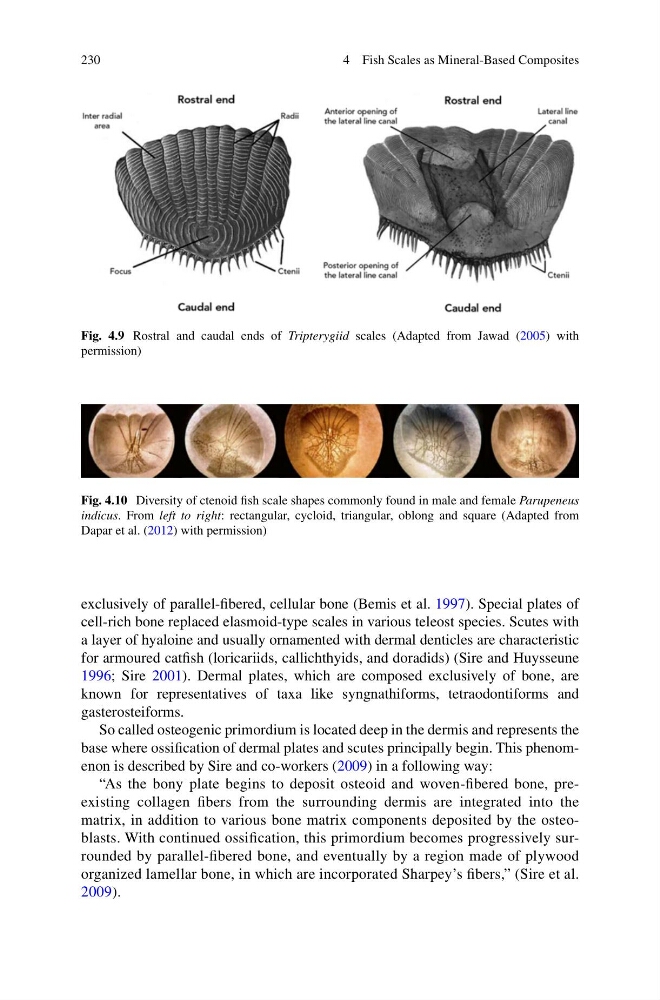
Fig. 4.9 Rostral and caudal ends of Tripterygiid scales (Adapted from Jawad ( 2005 ) with
permission)
Fig. 4.10 Diversity of ctenoid fi sh scale shapes commonly found in male and female Parupeneus
indicus . From left to right : rectangular, cycloid, triangular, oblong and square (Adapted from
Dapar et al. ( 2012 ) with permission)
4 Fish Scales as Mineral-Based Composites
exclusively of parallel- fi bered, cellular bone (Bemis et al. 1997 ). Special plates of
cell-rich bone replaced elasmoid-type scales in various teleost species. Scutes with
a layer of hyaloine and usually ornamented with dermal denticles are characteristic
for armoured catfi sh (loricariids, callichthyids, and doradids) (Sire and Huysseune
1996 ; Sire 2001 ). Dermal plates, which are composed exclusively of bone, are
known for representatives of taxa like syngnathiforms, tetraodontiforms and
gasterosteiforms.
So called osteogenic primordium is located deep in the dermis and represents the
base where ossifi cation of dermal plates and scutes principally begin. This phenomenon is described by Sire and co-workers ( 2009 ) in a following way:
“As the bony plate begins to deposit osteoid and woven-fi bered bone, preexisting collagen fi bers from the surrounding dermis are integrated into the
matrix, in addition to various bone matrix components deposited by the osteoblasts. With continued ossifi cation, this primordium becomes progressively surrounded by parallel-fi bered bone, and eventually by a region made of plywood
organized lamellar bone, in which are incorporated Sharpey’s fi bers,” (Sire et al.
2009 ).
Fig. 4.9 Rostral and caudal ends of Tripterygiid scales (Adapted from Jawad ( 2005 ) with
permission)
Fig. 4.10 Diversity of ctenoid fi sh scale shapes commonly found in male and female Parupeneus
indicus . From left to right : rectangular, cycloid, triangular, oblong and square (Adapted from
Dapar et al. ( 2012 ) with permission)
4 Fish Scales as Mineral-Based Composites