

9.10 Implication of the DUF Protein in the Axis Formation
Crucial for a further understanding of this highly complex spicule organization is
the answer for the underlying proteinaceous scaffold that organizes the skeletal
architecture (Fig. 9.11a, b). At a higher magnification, it becomes apparent that the
spicules are held (cemented) together by an organic matrix, which has – in other
sponge species – been assumed to be collagen or spongin (Garrone 1978).
The molecular nature of this material, spongin, remained unknown. In our approach
to solve that question, we purified the skeleton from L. baicalensis and subsequently identified the organic matrix, around the spicules (Wang et al. 2010b).
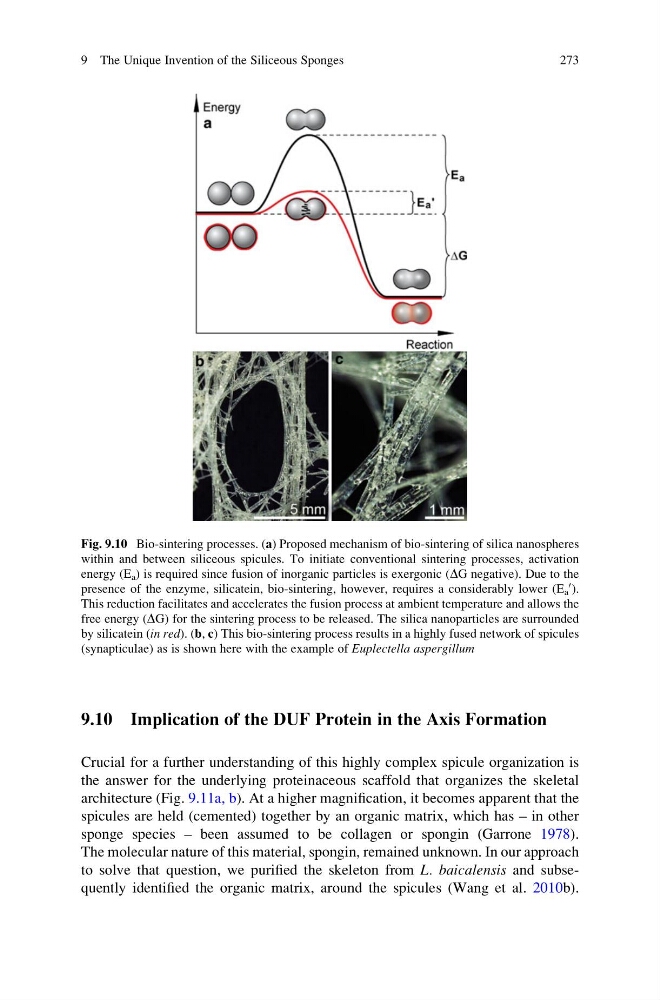
Fig. 9.10 Bio-sintering processes. (a) Proposed mechanism of bio-sintering of silica nanospheres
within and between siliceous spicules. To initiate conventional sintering processes, activation
energy (E a ) is required since fusion of inorganic particles is exergonic (DG negative). Due to the
presence of the enzyme, silicatein, bio-sintering, however, requires a considerably lower (E a
0 ).
This reduction facilitates and accelerates the fusion process at ambient temperature and allows the
free energy (DG) for the sintering process to be released. The silica nanoparticles are surrounded
by silicatein (in red). (b, c) This bio-sintering process results in a highly fused network of spicules
(synapticulae) as is shown here with the example of Euplectella aspergillum
9 The Unique Invention of the Siliceous Sponges
273
Crucial for a further understanding of this highly complex spicule organization is
the answer for the underlying proteinaceous scaffold that organizes the skeletal
architecture (Fig. 9.11a, b). At a higher magnification, it becomes apparent that the
spicules are held (cemented) together by an organic matrix, which has – in other
sponge species – been assumed to be collagen or spongin (Garrone 1978).
The molecular nature of this material, spongin, remained unknown. In our approach
to solve that question, we purified the skeleton from L. baicalensis and subsequently identified the organic matrix, around the spicules (Wang et al. 2010b).
Fig. 9.10 Bio-sintering processes. (a) Proposed mechanism of bio-sintering of silica nanospheres
within and between siliceous spicules. To initiate conventional sintering processes, activation
energy (E a ) is required since fusion of inorganic particles is exergonic (DG negative). Due to the
presence of the enzyme, silicatein, bio-sintering, however, requires a considerably lower (E a
0 ).
This reduction facilitates and accelerates the fusion process at ambient temperature and allows the
free energy (DG) for the sintering process to be released. The silica nanoparticles are surrounded
by silicatein (in red). (b, c) This bio-sintering process results in a highly fused network of spicules
(synapticulae) as is shown here with the example of Euplectella aspergillum
9 The Unique Invention of the Siliceous Sponges
273