

6.4.2 Effects of Templates on Calcium Carbonate Mineralization
The formation of biominerals is also controlled by organic template molecules
resulting in materials with unique shapes and properties. Templates used in in vitro
mineralization refer in particular to those substrates with particular sequence
fragments that could mediate special mineral crystals. It is generally believed that
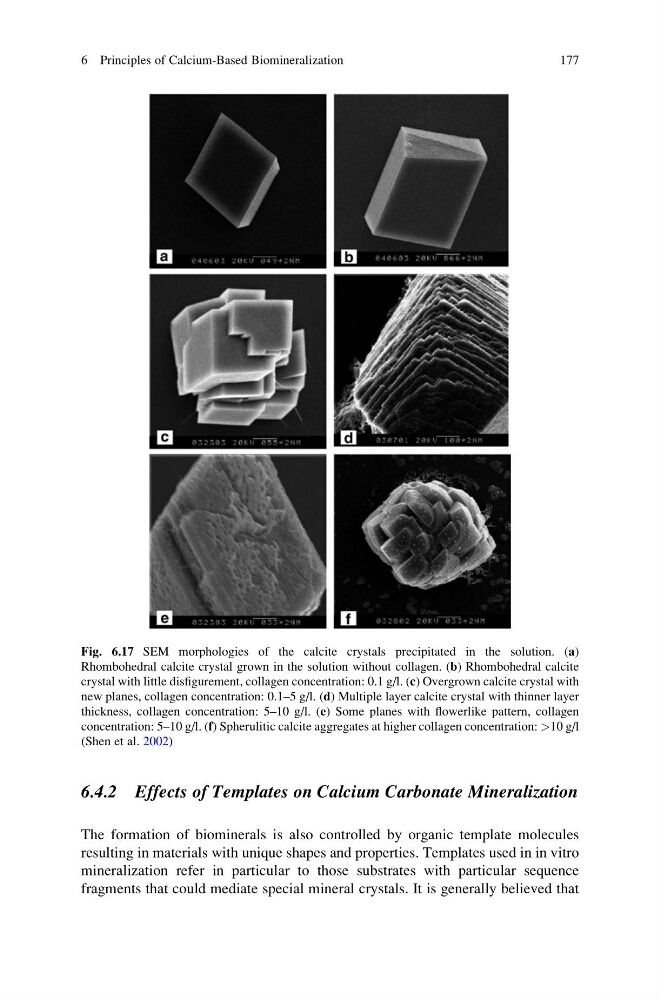
Fig. 6.17 SEM morphologies of the calcite crystals precipitated in the solution. (a)
Rhombohedral calcite crystal grown in the solution without collagen. (b) Rhombohedral calcite
crystal with little disfigurement, collagen concentration: 0.1 g/l. (c) Overgrown calcite crystal with
new planes, collagen concentration: 0.1–5 g/l. (d) Multiple layer calcite crystal with thinner layer
thickness, collagen concentration: 5–10 g/l. (e) Some planes with flowerlike pattern, collagen
concentration: 5–10 g/l. (f) Spherulitic calcite aggregates at higher collagen concentration: >10 g/l
(Shen et al. 2002)
6 Principles of Calcium-Based Biomineralization
177
The formation of biominerals is also controlled by organic template molecules
resulting in materials with unique shapes and properties. Templates used in in vitro
mineralization refer in particular to those substrates with particular sequence
fragments that could mediate special mineral crystals. It is generally believed that
Fig. 6.17 SEM morphologies of the calcite crystals precipitated in the solution. (a)
Rhombohedral calcite crystal grown in the solution without collagen. (b) Rhombohedral calcite
crystal with little disfigurement, collagen concentration: 0.1 g/l. (c) Overgrown calcite crystal with
new planes, collagen concentration: 0.1–5 g/l. (d) Multiple layer calcite crystal with thinner layer
thickness, collagen concentration: 5–10 g/l. (e) Some planes with flowerlike pattern, collagen
concentration: 5–10 g/l. (f) Spherulitic calcite aggregates at higher collagen concentration: >10 g/l
(Shen et al. 2002)
6 Principles of Calcium-Based Biomineralization
177