

6.1.2.1 Bone
Bone comes in all sorts of shapes and sizes in order to serve the various functions of
protection and mechanical support without compromising the requirement for
mobility. More than any other biomineral, the nature of bone highlights the
important distinction between the inorganic and bioinorganic material world. For
example, bone is often thought of as a living mineral since it undergoes continual
growth, dissolution, and remodeling in response to both internal signals, such as
pregnancy and external force fields, such as gravity.
The mechanical properties of bone are derived from the organized mineralization of hydroxyapatite within a matrix of collagen fibrils, glycoproteins,
and many other types of protein. The combination of inorganic and organic
components provides an increased toughness compared with hydroxapatite
alone. By sculpting these components into microanatomical structures-woven
bone, cortical bone, etc., and controlling the amounts of mineral content,
different levels of stiffness can be introduced into different bones according
to their particular functions. A fast moving, highly agile animal such as a deer
requires bones with high elasticity and relatively low mineral content (around
50 wt.%). By contrast, the bones of a large marine mammal like the whale are
stiff, with a hydroxyapatite content greater than 80 wt.%. Bone is a kind of
typical self-assembled biomaterial with hierarchical structure. Figure 6.5 shows
the hierarchical structure of a long bone.
The non-stoichiometric nature of bone mineral may be responsible for the
apparent piezoelectric response observed in this tissue. Although the precise mechanism is unknown, the application of pressure stimulates the growth of bone
mineral. Bone contains a network of cells that live within the mineralized structure
and are interconnected through small pores and channels. One possibility is that
the osteocytes act as biological “strain gauges” that respond to changes in mechanical pressure and send chemical or electrochemical signals to the bone surface
which then activate another type of cell called osteoblast to begin mineralization.
The process of activation is further complicated because there is another type of cell
called osteoclast whose job it is to degrade bone through acid and enzymes, and
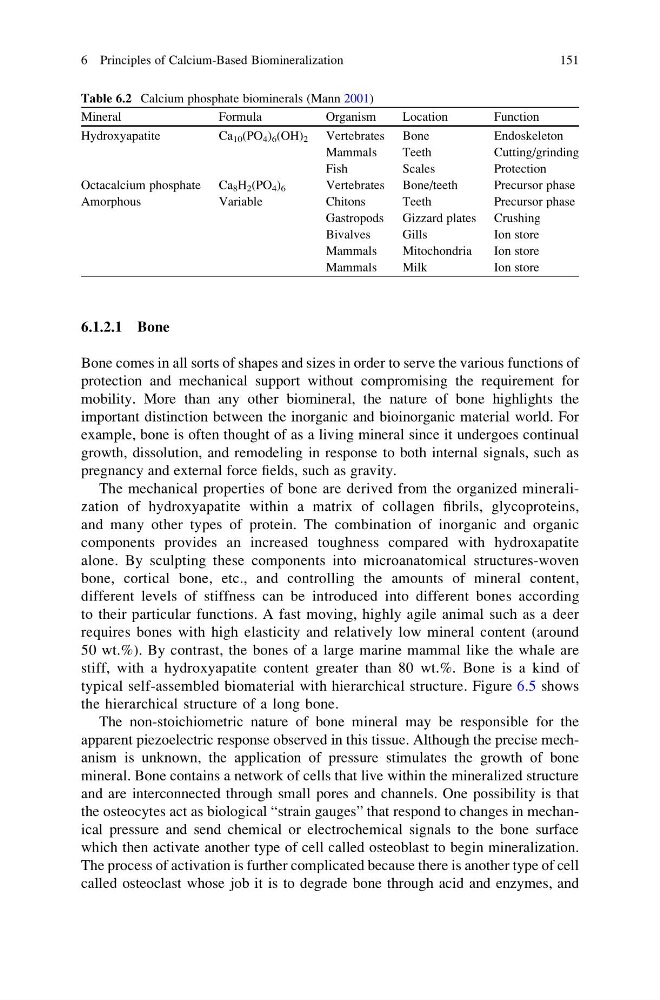
Table 6.2 Calcium phosphate biominerals (Mann 2001)
Mineral
Formula
Organism
Location
Function
Hydroxyapatite
Ca 10 (PO 4 ) 6 (OH) 2 Vertebrates Bone
Endoskeleton
Mammals
Teeth
Cutting/grinding
Fish
Scales
Protection
Octacalcium phosphate Ca 8 H 2 (PO 4 ) 6
Vertebrates Bone/teeth
Precursor phase
Amorphous
Variable
Chitons
Teeth
Precursor phase
Gastropods Gizzard plates Crushing
Bivalves
Gills
Ion store
Mammals
Mitochondria
Ion store
Mammals
Milk
Ion store
6 Principles of Calcium-Based Biomineralization
151
Bone comes in all sorts of shapes and sizes in order to serve the various functions of
protection and mechanical support without compromising the requirement for
mobility. More than any other biomineral, the nature of bone highlights the
important distinction between the inorganic and bioinorganic material world. For
example, bone is often thought of as a living mineral since it undergoes continual
growth, dissolution, and remodeling in response to both internal signals, such as
pregnancy and external force fields, such as gravity.
The mechanical properties of bone are derived from the organized mineralization of hydroxyapatite within a matrix of collagen fibrils, glycoproteins,
and many other types of protein. The combination of inorganic and organic
components provides an increased toughness compared with hydroxapatite
alone. By sculpting these components into microanatomical structures-woven
bone, cortical bone, etc., and controlling the amounts of mineral content,
different levels of stiffness can be introduced into different bones according
to their particular functions. A fast moving, highly agile animal such as a deer
requires bones with high elasticity and relatively low mineral content (around
50 wt.%). By contrast, the bones of a large marine mammal like the whale are
stiff, with a hydroxyapatite content greater than 80 wt.%. Bone is a kind of
typical self-assembled biomaterial with hierarchical structure. Figure 6.5 shows
the hierarchical structure of a long bone.
The non-stoichiometric nature of bone mineral may be responsible for the
apparent piezoelectric response observed in this tissue. Although the precise mechanism is unknown, the application of pressure stimulates the growth of bone
mineral. Bone contains a network of cells that live within the mineralized structure
and are interconnected through small pores and channels. One possibility is that
the osteocytes act as biological “strain gauges” that respond to changes in mechanical pressure and send chemical or electrochemical signals to the bone surface
which then activate another type of cell called osteoblast to begin mineralization.
The process of activation is further complicated because there is another type of cell
called osteoclast whose job it is to degrade bone through acid and enzymes, and
Table 6.2 Calcium phosphate biominerals (Mann 2001)
Mineral
Formula
Organism
Location
Function
Hydroxyapatite
Ca 10 (PO 4 ) 6 (OH) 2 Vertebrates Bone
Endoskeleton
Mammals
Teeth
Cutting/grinding
Fish
Scales
Protection
Octacalcium phosphate Ca 8 H 2 (PO 4 ) 6
Vertebrates Bone/teeth
Precursor phase
Amorphous
Variable
Chitons
Teeth
Precursor phase
Gastropods Gizzard plates Crushing
Bivalves
Gills
Ion store
Mammals
Mitochondria
Ion store
Mammals
Milk
Ion store
6 Principles of Calcium-Based Biomineralization
151