

82
Plankton in Coral-Reef Waters
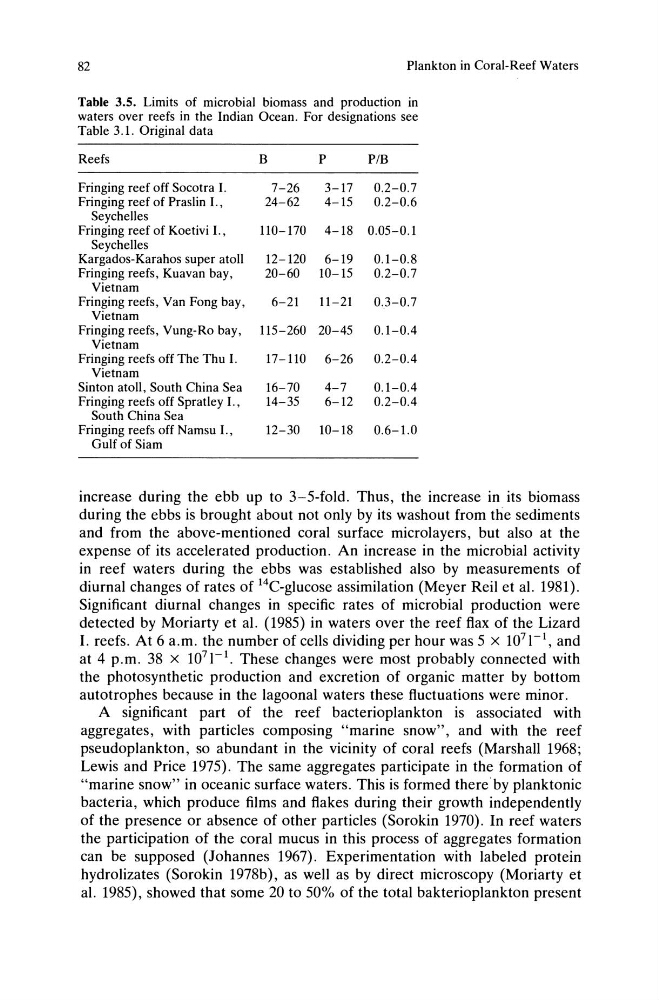
Table 3.5. Limits of microbial biomass and production in
waters over reefs in the Indian Ocean. For designations see
Table 3.1. Original data
Reefs
B
P
PIB
Fringing reef off Socotra I.
7-26
3-17
0.2-0.7
Fringing reef of Praslin I.,
24-62
4-15
0.2-0.6
Seychelles
Fringing reef of Koetivi I.,
110-170 4-18 0.05-0.1
Seychelles
Kargados-Karahos super atoll
12-120 6-19
0.1-0.8
Fringing reefs, Kuavan bay,
20-60
10-15
0.2-0.7
Vietnam
Fringing reefs, Van Fong bay,
6-21
11-21
0.3-0.7
Vietnam
Fringing reefs, Vung-Ro bay, 115-260 20-45
0.1-0.4
Vietnam
Fringing reefs off The Thu I.
17-110 6-26
0.2-0.4
Vietnam
Sinton atoll, South China Sea
16-70
4-7
0.1-0.4
Fringing reefs off Spratley I.,
14-35
6-12
0.2-0.4
South China Sea
Fringing reefs off Namsu I.,
12-30 10-18
0.6-1.0
Gulf of Siam
increase during the ebb up to 3-5-fold. Thus, the increase in its biomass
during the ebbs is brought about not only by its washout from the sediments
and from the above-mentioned coral surface microlayers, but also at the
expense of its accelerated production. An increase in the microbial activity
in reef waters during the ebbs was established also by measurements of
diurnal changes of rates of 14C-glucose assimilation (Meyer Reil et al. 1981).
Significant diurnal changes in specific rates of microbial production were
detected by Moriarty et al. (1985) in waters over the reef flax of the Lizard
I. reefs. At 6 a.m. the number of cells dividing per hour was 5 x 10 7 1- 1 , and
at 4 p.m. 38 x 10 7 1- 1 . These changes were most probably connected with
the photosynthetic production and excretion of organic matter by bottom
autotrophes because in the lagoonal waters these fluctuations were minor.
A significant part of the reef bacterioplankton is associated with
aggregates, with particles composing "marine snow", and with the reef
pseudoplankton, so abundant in the vicinity of coral reefs (Marshall 1968;
Lewis and Price 1975). The same aggregates participate in the formation of
"marine snow" in oceanic surface waters. This is formed thereby planktonic
bacteria, which produce films and flakes during their growth independently
of the presence or absence of other particles (Sorokin 1970). In reef waters
the participation of the coral mucus in this process of aggregates formation
can be supposed (Johannes 1967). Experimentation with labeled protein
hydrolizates (Sorokin 1978b), as well as by direct microscopy (Moriarty et
al. 1985), showed that some 20 to 50% of the total bakterioplankton present
Plankton in Coral-Reef Waters
Table 3.5. Limits of microbial biomass and production in
waters over reefs in the Indian Ocean. For designations see
Table 3.1. Original data
Reefs
B
P
PIB
Fringing reef off Socotra I.
7-26
3-17
0.2-0.7
Fringing reef of Praslin I.,
24-62
4-15
0.2-0.6
Seychelles
Fringing reef of Koetivi I.,
110-170 4-18 0.05-0.1
Seychelles
Kargados-Karahos super atoll
12-120 6-19
0.1-0.8
Fringing reefs, Kuavan bay,
20-60
10-15
0.2-0.7
Vietnam
Fringing reefs, Van Fong bay,
6-21
11-21
0.3-0.7
Vietnam
Fringing reefs, Vung-Ro bay, 115-260 20-45
0.1-0.4
Vietnam
Fringing reefs off The Thu I.
17-110 6-26
0.2-0.4
Vietnam
Sinton atoll, South China Sea
16-70
4-7
0.1-0.4
Fringing reefs off Spratley I.,
14-35
6-12
0.2-0.4
South China Sea
Fringing reefs off Namsu I.,
12-30 10-18
0.6-1.0
Gulf of Siam
increase during the ebb up to 3-5-fold. Thus, the increase in its biomass
during the ebbs is brought about not only by its washout from the sediments
and from the above-mentioned coral surface microlayers, but also at the
expense of its accelerated production. An increase in the microbial activity
in reef waters during the ebbs was established also by measurements of
diurnal changes of rates of 14C-glucose assimilation (Meyer Reil et al. 1981).
Significant diurnal changes in specific rates of microbial production were
detected by Moriarty et al. (1985) in waters over the reef flax of the Lizard
I. reefs. At 6 a.m. the number of cells dividing per hour was 5 x 10 7 1- 1 , and
at 4 p.m. 38 x 10 7 1- 1 . These changes were most probably connected with
the photosynthetic production and excretion of organic matter by bottom
autotrophes because in the lagoonal waters these fluctuations were minor.
A significant part of the reef bacterioplankton is associated with
aggregates, with particles composing "marine snow", and with the reef
pseudoplankton, so abundant in the vicinity of coral reefs (Marshall 1968;
Lewis and Price 1975). The same aggregates participate in the formation of
"marine snow" in oceanic surface waters. This is formed thereby planktonic
bacteria, which produce films and flakes during their growth independently
of the presence or absence of other particles (Sorokin 1970). In reef waters
the participation of the coral mucus in this process of aggregates formation
can be supposed (Johannes 1967). Experimentation with labeled protein
hydrolizates (Sorokin 1978b), as well as by direct microscopy (Moriarty et
al. 1985), showed that some 20 to 50% of the total bakterioplankton present