

Nutrients
53
Ae
8tJ
//Il
ZtJ
Il
20
//tJ
6'tJ
A"Ac
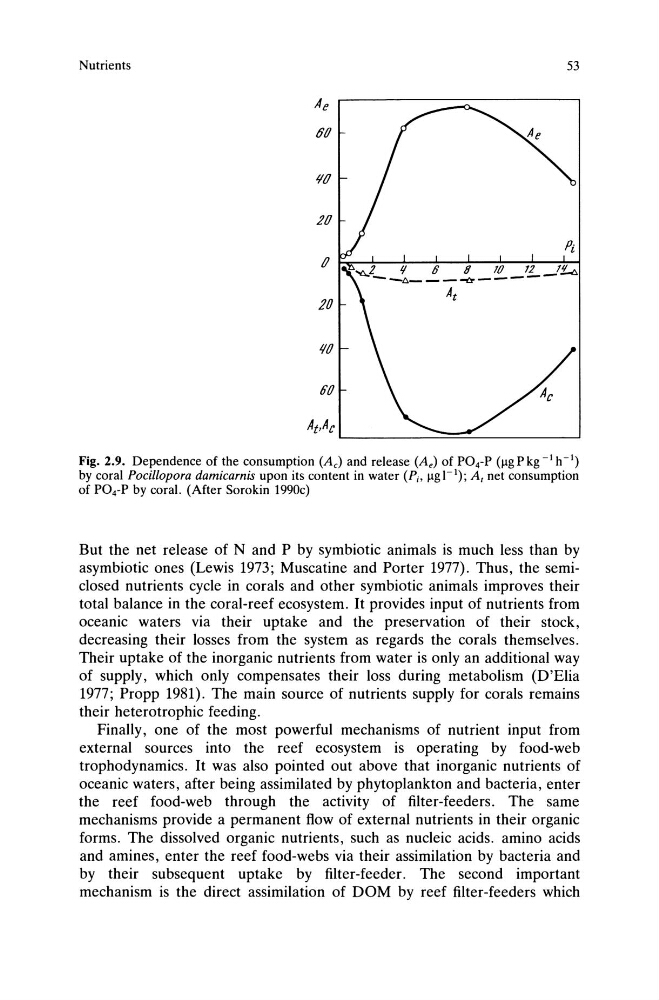
Fig. 2.9. Dependence of the consumption (Ac) and release (Ae) of P04-P (~g P kg -1 h -1)
by coral Pocillopora damicarnis upon its content in water (Pi> ~g 1-1); AI net consumption
of P04-P by coral. (After Sorokin 1990c)
But the net release of Nand P by symbiotic animals is much less than by
asymbiotic ones (Lewis 1973; Muscatine and Porter 1977). Thus, the semiclosed nutrients cycle in corals and other symbiotic animals improves their
total balance in the coral-reef ecosystem. It provides input of nutrients from
oceanic waters via their uptake and the preservation of their stock,
decreasing their losses from the system as regards the corals themselves.
Their uptake of the inorganic nutrients from water is only an additional way
of supply, which only compensates their loss during metabolism (D'Elia
1977; Propp 1981). The main source of nutrients supply for corals remains
their heterotrophic feeding.
Finally, one of the most powerful mechanisms of nutrient input from
external sources into the reef ecosystem is operating by food-web
trophodynamics. It was also pointed out above that inorganic nutrients of
oceanic waters, after being assimilated by phytoplankton and bacteria, enter
the reef food-web through the activity of filter-feeders. The same
mechanisms provide a permanent flow of external nutrients in their organic
forms. The dissolved organic nutrients, such as nucleic acids. amino acids
and amines, enter the reef food-webs via their assimilation by bacteria and
by their subsequent uptake by filter-feeder. The second important
mechanism is the direct assimilation of DOM by reef filter-feeders which
53
Ae
8tJ
//Il
ZtJ
Il
20
//tJ
6'tJ
A"Ac
Fig. 2.9. Dependence of the consumption (Ac) and release (Ae) of P04-P (~g P kg -1 h -1)
by coral Pocillopora damicarnis upon its content in water (Pi> ~g 1-1); AI net consumption
of P04-P by coral. (After Sorokin 1990c)
But the net release of Nand P by symbiotic animals is much less than by
asymbiotic ones (Lewis 1973; Muscatine and Porter 1977). Thus, the semiclosed nutrients cycle in corals and other symbiotic animals improves their
total balance in the coral-reef ecosystem. It provides input of nutrients from
oceanic waters via their uptake and the preservation of their stock,
decreasing their losses from the system as regards the corals themselves.
Their uptake of the inorganic nutrients from water is only an additional way
of supply, which only compensates their loss during metabolism (D'Elia
1977; Propp 1981). The main source of nutrients supply for corals remains
their heterotrophic feeding.
Finally, one of the most powerful mechanisms of nutrient input from
external sources into the reef ecosystem is operating by food-web
trophodynamics. It was also pointed out above that inorganic nutrients of
oceanic waters, after being assimilated by phytoplankton and bacteria, enter
the reef food-web through the activity of filter-feeders. The same
mechanisms provide a permanent flow of external nutrients in their organic
forms. The dissolved organic nutrients, such as nucleic acids. amino acids
and amines, enter the reef food-webs via their assimilation by bacteria and
by their subsequent uptake by filter-feeder. The second important
mechanism is the direct assimilation of DOM by reef filter-feeders which