

138
Benthic Microflora, Periphyton and Plant Associations
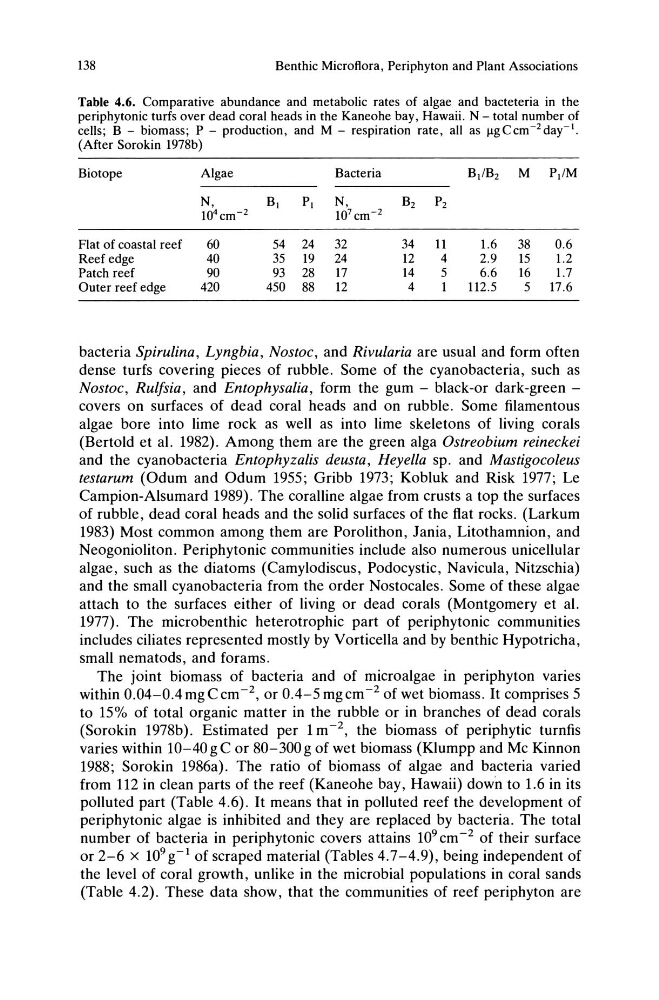
Table 4.6. Comparative abundance and metabolic rates of algae and bacteteria in the
periphytonic turfs over dead coral heads in the Kaneohe bay, Hawaii. N - total number of
cells; B - biomass; P - production, and M - respiration rate, all as flgCcm-2day-].
(After Sorokin 1978b)
Biotope
Algae
Bacteria
B]/B2
M P]/M
N,
B]
p]
N,
B2
P2
10 4 cm- 2
10 7 cm- 2
Flat of coastal reef
60
54 24
32
34
11
1.6
38
0.6
Reef edge
40
35 19
24
12
4
2.9
15
1.2
Patch reef
90
93 28
17
14
5
6.6
16
1.7
Outer reef edge
420
450 88
12
4
1
112.5
5 17.6
bacteria Spirulina, Lyngbia, Nostoc, and Rivularia are usual and form often
dense turfs covering pieces of rubble. Some of the cyanobacteria, such as
Nostoc, Rulfsia, and Entophysalia, form the gum - black-or dark-green -
covers on surfaces of dead coral heads and on rubble. Some filamentous
algae bore into lime rock as well as into lime skeletons of living corals
(Bertold et al. 1982). Among them are the green alga Ostreobium reineckei
and the cyanobacteria Entophyzalis deusta, Heyella sp. and Mastigocoleus
testa rum (Odum and Odum 1955; Gribb 1973; Kobluk and Risk 1977; Le
Campion-Alsumard 1989). The coralline algae from crusts a top the surfaces
of rubble, dead coral heads and the solid surfaces of the flat rocks. (Larkum
1983) Most common among them are Porolithon, Jania, Litothamnion, and
Neogonioliton. Periphytonic communities include also numerous unicellular
algae, such as the diatoms (Camylodiscus, Podocystic, Navicula, Nitzschia)
and the small cyanobacteria from the order Nostocales. Some of these algae
attach to the surfaces either of living or dead corals (Montgomery et al.
1977). The microbenthic heterotrophic part of periphytonic communities
includes ciliates represented mostly by Vorticella and by benthic Hypotricha,
small nematods, and forams.
The joint biomass of bacteria and of microalgae in periphyton varies
within 0.04-0.4mg Ccm- 2 , or 0.4-5 mgcm- 2 of wet biomass. It comprises 5
to 15% of total organic matter in the rubble or in branches of dead corals
(Sorokin 1978b). Estimated per 1 m- 2 , the biomass of periphytic turnfis
varies within 10-40 g Cor 80-300 g of wet biomass (Klumpp and Mc Kinnon
1988; Sorokin 1986a). The ratio of biomass of algae and bacteria varied
from 112 in clean parts of the reef (Kaneohe bay, Hawaii) down to 1.6 in its
polluted part (Table 4.6). It means that in polluted reef the development of
periphytonic algae is inhibited and they are replaced by bacteria. The total
number of bacteria in periphytonic covers attains 10 9 cm -2 of their surface
or 2-6 X 10 9 g-l of scraped material (Tables 4.7-4.9), being independent of
the level of coral growth, unlike in the microbial populations in coral sands
(Table 4.2). These data show, that the communities of reef periphyton are
Benthic Microflora, Periphyton and Plant Associations
Table 4.6. Comparative abundance and metabolic rates of algae and bacteteria in the
periphytonic turfs over dead coral heads in the Kaneohe bay, Hawaii. N - total number of
cells; B - biomass; P - production, and M - respiration rate, all as flgCcm-2day-].
(After Sorokin 1978b)
Biotope
Algae
Bacteria
B]/B2
M P]/M
N,
B]
p]
N,
B2
P2
10 4 cm- 2
10 7 cm- 2
Flat of coastal reef
60
54 24
32
34
11
1.6
38
0.6
Reef edge
40
35 19
24
12
4
2.9
15
1.2
Patch reef
90
93 28
17
14
5
6.6
16
1.7
Outer reef edge
420
450 88
12
4
1
112.5
5 17.6
bacteria Spirulina, Lyngbia, Nostoc, and Rivularia are usual and form often
dense turfs covering pieces of rubble. Some of the cyanobacteria, such as
Nostoc, Rulfsia, and Entophysalia, form the gum - black-or dark-green -
covers on surfaces of dead coral heads and on rubble. Some filamentous
algae bore into lime rock as well as into lime skeletons of living corals
(Bertold et al. 1982). Among them are the green alga Ostreobium reineckei
and the cyanobacteria Entophyzalis deusta, Heyella sp. and Mastigocoleus
testa rum (Odum and Odum 1955; Gribb 1973; Kobluk and Risk 1977; Le
Campion-Alsumard 1989). The coralline algae from crusts a top the surfaces
of rubble, dead coral heads and the solid surfaces of the flat rocks. (Larkum
1983) Most common among them are Porolithon, Jania, Litothamnion, and
Neogonioliton. Periphytonic communities include also numerous unicellular
algae, such as the diatoms (Camylodiscus, Podocystic, Navicula, Nitzschia)
and the small cyanobacteria from the order Nostocales. Some of these algae
attach to the surfaces either of living or dead corals (Montgomery et al.
1977). The microbenthic heterotrophic part of periphytonic communities
includes ciliates represented mostly by Vorticella and by benthic Hypotricha,
small nematods, and forams.
The joint biomass of bacteria and of microalgae in periphyton varies
within 0.04-0.4mg Ccm- 2 , or 0.4-5 mgcm- 2 of wet biomass. It comprises 5
to 15% of total organic matter in the rubble or in branches of dead corals
(Sorokin 1978b). Estimated per 1 m- 2 , the biomass of periphytic turnfis
varies within 10-40 g Cor 80-300 g of wet biomass (Klumpp and Mc Kinnon
1988; Sorokin 1986a). The ratio of biomass of algae and bacteria varied
from 112 in clean parts of the reef (Kaneohe bay, Hawaii) down to 1.6 in its
polluted part (Table 4.6). It means that in polluted reef the development of
periphytonic algae is inhibited and they are replaced by bacteria. The total
number of bacteria in periphytonic covers attains 10 9 cm -2 of their surface
or 2-6 X 10 9 g-l of scraped material (Tables 4.7-4.9), being independent of
the level of coral growth, unlike in the microbial populations in coral sands
(Table 4.2). These data show, that the communities of reef periphyton are