

108
Plankton in Coral-Reef Waters
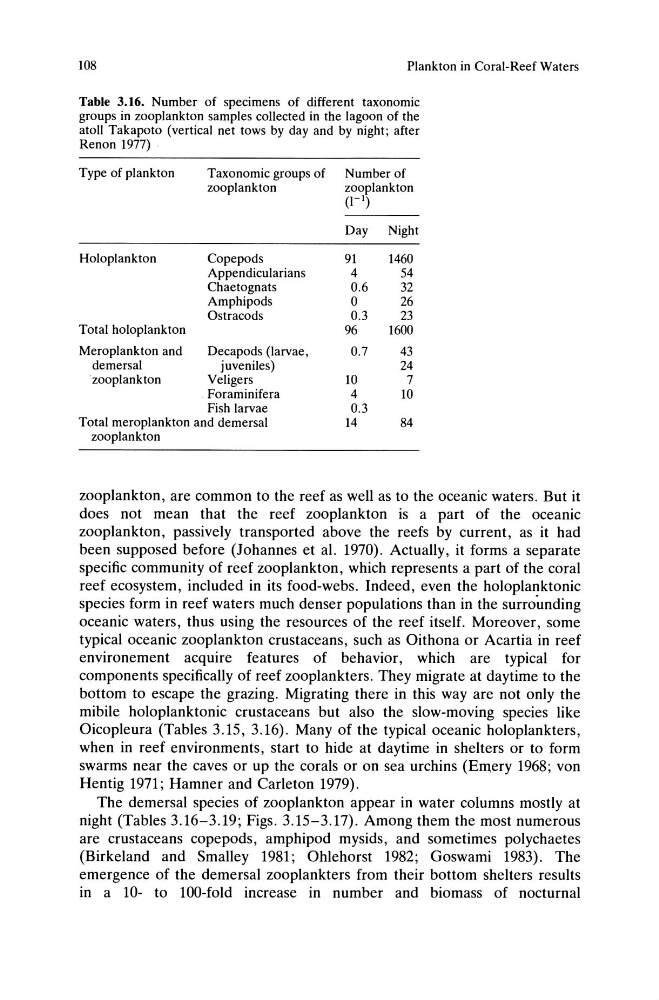
Table 3.16. Number of specimens of different taxonomic
groups in zooplankton samples collected in the lagoon of the
atoll Takapoto (vertical net tows by day and by night; after
Renon 1977)
Type of plankton
Holoplankton
Total holoplankton
Meroplankton and
demersal
·zooplankton
Taxonomic groups of
zooplankton
Copepods
Appendicularians
Chaetognats
Amphipods
Ostracods
Decapods (larvae,
juveniles)
Veligers
Foraminifera
Fish larvae
Total meroplankton and demersal
zooplankton
Number of
zooplankton
0- 1 )
Day
Night
91
1460
4
54
0.6
32
0
26
0.3
23
96
1600
0.7
43
24
10
7
4
10
0.3
14
84
zooplankton, are common to the reef as well as to the oceanic waters. But it
does not mean that the reef zooplankton is a part of the oceanic
zooplankton, passively transported above the reefs by current, as it had
been supposed before (Johannes et al. 1970). Actually, it forms a separate
specific community of reef zooplankton, which represents a part of the coral
reef ecosystem, included in its food-webs. Indeed, even the holoplanktonic
species form in reef waters much denser populations than in the surrounding
oceanic waters, thus using the resources of the reef itself. Moreover, some
typical oceanic zooplankton crustaceans, such as Oithona or Acartia in reef
environement acquire features of behavior, which are typical for
components specifically of reef zooplankters. They migrate at daytime to the
bottom to escape the grazing. Migrating there in this way are not only the
mibile holoplanktonic crustaceans but also the slow-moving species like
Oicopleura (Tables 3.15, 3.16). Many of the typical oceanic holoplankters,
when in reef environments, start to hide at daytime in shelters or to form
swarms near the caves or up the corals or on sea urchins (Emery 1968; von
Hentig 1971; Hamner and Carleton 1979).
The demersal species of zooplankton appear in water columns mostly at
night (Tables 3.16-3.19; Figs. 3.15-3.17). Among them the most numerous
are crustaceans copepods, amphipod mysids, and sometimes polychaetes
(Birkeland and Smalley 1981; Ohlehorst 1982; Goswami 1983). The
emergence of the demersal zooplankters from their bottom shelters results
in a 10- to 100-fold increase in number and biomass of nocturnal
Plankton in Coral-Reef Waters
Table 3.16. Number of specimens of different taxonomic
groups in zooplankton samples collected in the lagoon of the
atoll Takapoto (vertical net tows by day and by night; after
Renon 1977)
Type of plankton
Holoplankton
Total holoplankton
Meroplankton and
demersal
·zooplankton
Taxonomic groups of
zooplankton
Copepods
Appendicularians
Chaetognats
Amphipods
Ostracods
Decapods (larvae,
juveniles)
Veligers
Foraminifera
Fish larvae
Total meroplankton and demersal
zooplankton
Number of
zooplankton
0- 1 )
Day
Night
91
1460
4
54
0.6
32
0
26
0.3
23
96
1600
0.7
43
24
10
7
4
10
0.3
14
84
zooplankton, are common to the reef as well as to the oceanic waters. But it
does not mean that the reef zooplankton is a part of the oceanic
zooplankton, passively transported above the reefs by current, as it had
been supposed before (Johannes et al. 1970). Actually, it forms a separate
specific community of reef zooplankton, which represents a part of the coral
reef ecosystem, included in its food-webs. Indeed, even the holoplanktonic
species form in reef waters much denser populations than in the surrounding
oceanic waters, thus using the resources of the reef itself. Moreover, some
typical oceanic zooplankton crustaceans, such as Oithona or Acartia in reef
environement acquire features of behavior, which are typical for
components specifically of reef zooplankters. They migrate at daytime to the
bottom to escape the grazing. Migrating there in this way are not only the
mibile holoplanktonic crustaceans but also the slow-moving species like
Oicopleura (Tables 3.15, 3.16). Many of the typical oceanic holoplankters,
when in reef environments, start to hide at daytime in shelters or to form
swarms near the caves or up the corals or on sea urchins (Emery 1968; von
Hentig 1971; Hamner and Carleton 1979).
The demersal species of zooplankton appear in water columns mostly at
night (Tables 3.16-3.19; Figs. 3.15-3.17). Among them the most numerous
are crustaceans copepods, amphipod mysids, and sometimes polychaetes
(Birkeland and Smalley 1981; Ohlehorst 1982; Goswami 1983). The
emergence of the demersal zooplankters from their bottom shelters results
in a 10- to 100-fold increase in number and biomass of nocturnal