

106
Plankton in Coral-Reef Waters
water samples (within 1-2 h after sampling) in glass box chambers of 2030 ml capacity and 4 mm high (Sorokin 1980). Another really quantitative
method is their epifiuorescence microscopy on 0.4 Jl black Nuclepore filters
after Sherr and Sherr (1983). Both latter methods were used also to count
in reef waters other small microzooplankters of 2 to 10 Jl size, like the
zoofiagellates, the planktonic amoebae, and the small radiolarians (Sorokin
and Tyapkin 1984; Kopylov 1985; Moiseev 1985).
3.3.1 Mesozooplankton
The composition of reef zooplankton varies in the estimates of different
authors, depending upon the sampling techniques used and the time and
place of sampling, even on the same reef. The daytime tows, especially
those made in reef zones influenced by incoming oceanic waters, were
enriched with the holoplanktonic species brought from the ocean by currents
(Johnson 1954; Gerber and Marshall 1974; Moore and Sander 1976; Ferraris
1982; Goswami 1983). The total number of zooplankton species in such
samples could be 100 to 120. In the nocturnal samples, because of an
additional catch of demersal and meroplanktonic species, it increased about
twice, and in the trap samples it might be as much as 260 (Sale et al. 1976a;
Mc William et al. 1981; Tables 3.16-3.18). The night tows gave samples
enriched with the demersal and the meroplanktonic forms, which were quite
different by species composition from zooplankton samples collected in
surrounding oceanic waters (Tables 3.16, 3.17). The species composition of
zooplankton samples collected in light traps and with the aid of airlift
differed from the samples collected by night tows or by the use of dark traps
(Emery 1968; Sale et al. 1976a). In the light traps, for example, the zoea
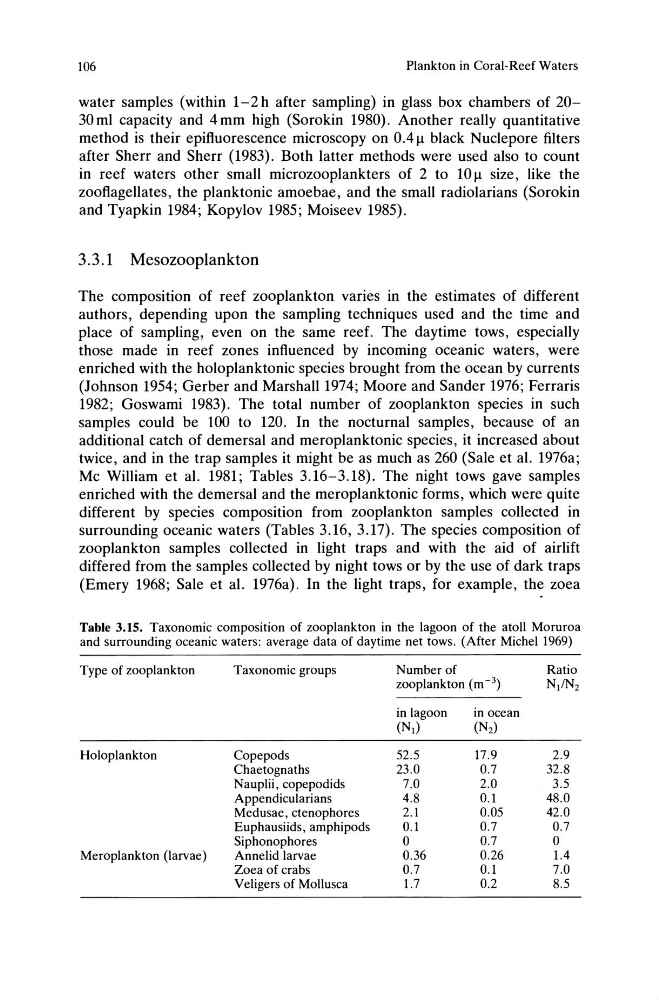
Table 3.15. Taxonomic composition of zooplankton in the lagoon of the atoll Momroa
and surrounding oceanic waters: average data of daytime net tows. (After Michel 1969)
Type of zooplankton
Taxonomic groups
Number of
Ratio
zooplankton (m- 3 )
N J/N 2
in lagoon
in ocean
(Nd
(N2)
Holoplankton
Copepods
52.5
17.9
2.9
Chaetognaths
23.0
0.7
32.8
Nauplii, copepodids
7.0
2.0
3.5
Appendicularians
4.8
0.1
48.0
Medusae, ctenophores
2.1
0.05
42.0
Euphausiids, amphipods
0.1
0.7
0.7
Siphonophores
0
0.7
0
Meroplankton (larvae)
Annelid larvae
0.36
0.26
1.4
Zoea of crabs
0.7
0.1
7.0
Veligers of Mollusca
1.7
0.2
8.5
Plankton in Coral-Reef Waters
water samples (within 1-2 h after sampling) in glass box chambers of 2030 ml capacity and 4 mm high (Sorokin 1980). Another really quantitative
method is their epifiuorescence microscopy on 0.4 Jl black Nuclepore filters
after Sherr and Sherr (1983). Both latter methods were used also to count
in reef waters other small microzooplankters of 2 to 10 Jl size, like the
zoofiagellates, the planktonic amoebae, and the small radiolarians (Sorokin
and Tyapkin 1984; Kopylov 1985; Moiseev 1985).
3.3.1 Mesozooplankton
The composition of reef zooplankton varies in the estimates of different
authors, depending upon the sampling techniques used and the time and
place of sampling, even on the same reef. The daytime tows, especially
those made in reef zones influenced by incoming oceanic waters, were
enriched with the holoplanktonic species brought from the ocean by currents
(Johnson 1954; Gerber and Marshall 1974; Moore and Sander 1976; Ferraris
1982; Goswami 1983). The total number of zooplankton species in such
samples could be 100 to 120. In the nocturnal samples, because of an
additional catch of demersal and meroplanktonic species, it increased about
twice, and in the trap samples it might be as much as 260 (Sale et al. 1976a;
Mc William et al. 1981; Tables 3.16-3.18). The night tows gave samples
enriched with the demersal and the meroplanktonic forms, which were quite
different by species composition from zooplankton samples collected in
surrounding oceanic waters (Tables 3.16, 3.17). The species composition of
zooplankton samples collected in light traps and with the aid of airlift
differed from the samples collected by night tows or by the use of dark traps
(Emery 1968; Sale et al. 1976a). In the light traps, for example, the zoea
Table 3.15. Taxonomic composition of zooplankton in the lagoon of the atoll Momroa
and surrounding oceanic waters: average data of daytime net tows. (After Michel 1969)
Type of zooplankton
Taxonomic groups
Number of
Ratio
zooplankton (m- 3 )
N J/N 2
in lagoon
in ocean
(Nd
(N2)
Holoplankton
Copepods
52.5
17.9
2.9
Chaetognaths
23.0
0.7
32.8
Nauplii, copepodids
7.0
2.0
3.5
Appendicularians
4.8
0.1
48.0
Medusae, ctenophores
2.1
0.05
42.0
Euphausiids, amphipods
0.1
0.7
0.7
Siphonophores
0
0.7
0
Meroplankton (larvae)
Annelid larvae
0.36
0.26
1.4
Zoea of crabs
0.7
0.1
7.0
Veligers of Mollusca
1.7
0.2
8.5