

The future pervasiveness of hypoxia in all ecosystems
will depend upon a combination of climate change and
land management. Climate change will affect water column stratification, organic matter production, nutrient discharges, and rates of oxygen consumption. Land
management will also affect the concentrations of nutrients through agriculture.
Bibliography
Andrews, M. J., and Rickard, D. G., 1980. Rehabilitation of the
inner Thames estuary. Marine Pollution Bulletin, 11, 327–332.
Arntz, W. E., Gallardo, V. A., Gutiérrez, D., Isla, E., Levin, L. A.,
Mendo, J., Neira, C., Rowe, G., Tarazona, J., and Wolff, M.,
2006. ENSO and similar perturbation effects on the benthos of
the Humboldt, California and Benguela Current upwelling ecosystems. Advances in Geosciences, 6, 243–265.
Baden, S. P., Loo, L.-O., Pihl, L., and Rosenberg, R., 1990. Effects
of eutrophication on benthic communities including fish Swedish west coast. Ambio, 19, 113–122.
Baird, D., Christian, R. R., Peterson, C. H., and Johnson, G. A.,
2004. Consequences of hypoxia on estuarine ecosystem function: energy diversion from consumers to microbes. Ecology
Applications, 14, 805–822.
Benson, B. B., and Krause, D., 1984. The concentration and isotopic fractionation of gases dissolved in freshwater in equilibrium
with the atmosphere: 1. Oxygen. Limnologie and Oceanography, 25, 662–671.
Berelson, W. M., 1991. The flushing of two deep-sea basins, Southern California Borderland. Limnology and Oceanography,
36, 1150–1166.
Boesch, D. F., and Rabalais, N. N., 1991. Effects of hypoxia on
continental shelf benthos: comparisons between the New York
Bight and the Northern Gulf of Mexico. In Tyson, R. V., and
Pearson, T. H. (eds.), Modern and Ancient Continental Shelf
Anoxia. London: The Geological Society, pp. 27–34. Geological
Society special publication number 58.
Breitburg, D. L., Hondorp, D. W., Davias, L. W., and Diaz, R. J.,
2009. Hypoxia, nitrogen and fisheries Integrating effects across
local and global landscapes. Annual Review of Marine Science,
1, 329–350.
Brill, R. W., 1996. Selective advantages conferred by the high
performance physiology of tunas, billfishes, and dolphin fish.
Comparative Biochemistry and Physiology, 113, 3–15.
Caddy, J. F., 1993. Towards a comparative evaluation of human
impacts on fishery ecosystems of enclosed and semi-enclosed
seas. Reviews in Fisheries Science, 1, 57–95.
Carpenter, S. R., Ludwig, D., and Brock, W. A., 1999. Management
of eutrophication for lakes subject to potentially irreversible
change. Ecology Application, 9, 751–771.
Chabot, D., and Dutil, J.-D., 1999. Reduced growth of Atlantic cod
in non-lethal hypoxic conditions. Journal of Fish Biology,
55, 472–491.
Chapman, P., and Shannon, L. V., 1985. The Benguela ecosystem
Part II Chemistry and related processes. Oceanography and
Marine Biology. Annual Review, 23, 183–251.
Cheng, W., Liu, C.-H., Hsu, J.-P., and Chen, J.-C., 2002.
Effect of hypoxia on the immune response of giant freshwater
prawn Macrobrachium rosenbergii and its susceptibility to
pathogen Enterococcus. Fish & Shellfish Immunology,
13, 351–365.
Cloern, J. E., 2001. Our evolving conceptual model of the coastal
eutrophication problem. Marine Ecology Progress Series,
210, 223–253.
Cockroft, A. C., 2001. Jasus lalandii “walkouts” or mass strandings
in South Africa during the 1990’s: an overview. Marine and
Freshwater Research, 52, 1085–1094.
Conley, D. J., Carstensen, J., Aigars, J., Axe, P., Bonsdorff, E.,
Eremina, T., Haahti, B.-M., Humborg, C., Jonsson, P.,
Kotta, J., Lännegren, C., Larsson, U., Maximov, A., Rodriguez
Medina, M., Lysiak-Pastuszak, E., Remeikaité-Nikiené, N.,
Walve, J., Wilhelms, S., and Zillén, L., 2011. Hypoxia is
increasing in the coastal zone of the Baltic Sea. Environmental
Science and Technology, 45, 6777–6783.
Cooper, S. R., and Brush, G. S., 1991. Long-term history of
Chesapeake Bay anoxia. Science, 254, 992–996.
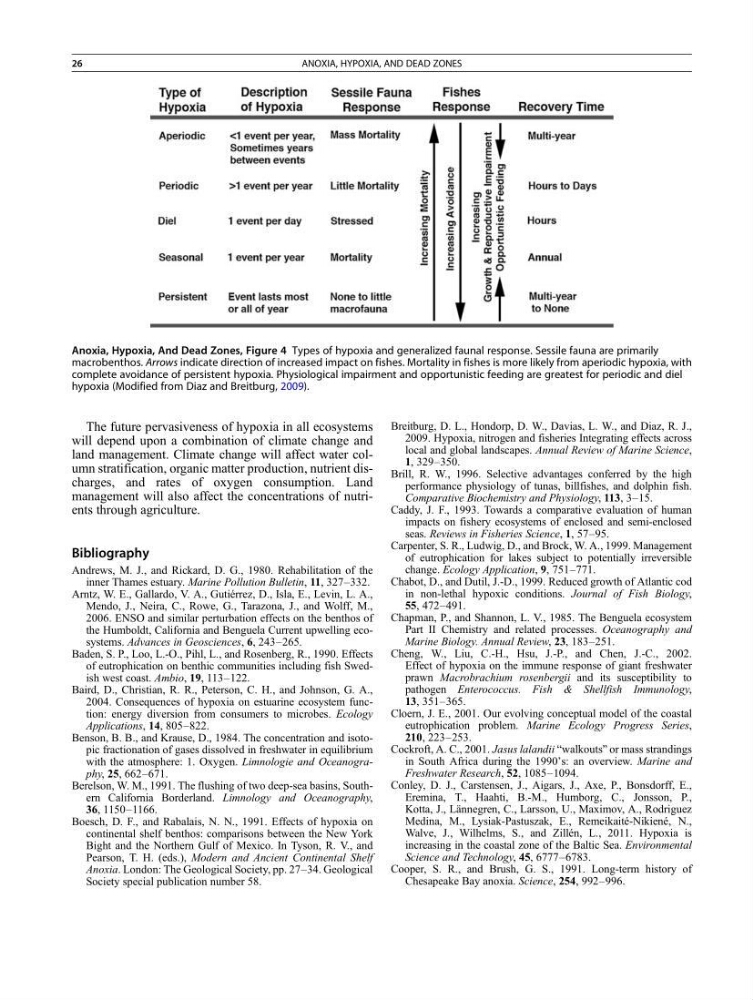
Anoxia, Hypoxia, And Dead Zones, Figure 4 Types of hypoxia and generalized faunal response. Sessile fauna are primarily
macrobenthos. Arrows indicate direction of increased impact on fishes. Mortality in fishes is more likely from aperiodic hypoxia, with
complete avoidance of persistent hypoxia. Physiological impairment and opportunistic feeding are greatest for periodic and diel
hypoxia (Modified from Diaz and Breitburg, 2009).
26
ANOXIA, HYPOXIA, AND DEAD ZONES
will depend upon a combination of climate change and
land management. Climate change will affect water column stratification, organic matter production, nutrient discharges, and rates of oxygen consumption. Land
management will also affect the concentrations of nutrients through agriculture.
Bibliography
Andrews, M. J., and Rickard, D. G., 1980. Rehabilitation of the
inner Thames estuary. Marine Pollution Bulletin, 11, 327–332.
Arntz, W. E., Gallardo, V. A., Gutiérrez, D., Isla, E., Levin, L. A.,
Mendo, J., Neira, C., Rowe, G., Tarazona, J., and Wolff, M.,
2006. ENSO and similar perturbation effects on the benthos of
the Humboldt, California and Benguela Current upwelling ecosystems. Advances in Geosciences, 6, 243–265.
Baden, S. P., Loo, L.-O., Pihl, L., and Rosenberg, R., 1990. Effects
of eutrophication on benthic communities including fish Swedish west coast. Ambio, 19, 113–122.
Baird, D., Christian, R. R., Peterson, C. H., and Johnson, G. A.,
2004. Consequences of hypoxia on estuarine ecosystem function: energy diversion from consumers to microbes. Ecology
Applications, 14, 805–822.
Benson, B. B., and Krause, D., 1984. The concentration and isotopic fractionation of gases dissolved in freshwater in equilibrium
with the atmosphere: 1. Oxygen. Limnologie and Oceanography, 25, 662–671.
Berelson, W. M., 1991. The flushing of two deep-sea basins, Southern California Borderland. Limnology and Oceanography,
36, 1150–1166.
Boesch, D. F., and Rabalais, N. N., 1991. Effects of hypoxia on
continental shelf benthos: comparisons between the New York
Bight and the Northern Gulf of Mexico. In Tyson, R. V., and
Pearson, T. H. (eds.), Modern and Ancient Continental Shelf
Anoxia. London: The Geological Society, pp. 27–34. Geological
Society special publication number 58.
Breitburg, D. L., Hondorp, D. W., Davias, L. W., and Diaz, R. J.,
2009. Hypoxia, nitrogen and fisheries Integrating effects across
local and global landscapes. Annual Review of Marine Science,
1, 329–350.
Brill, R. W., 1996. Selective advantages conferred by the high
performance physiology of tunas, billfishes, and dolphin fish.
Comparative Biochemistry and Physiology, 113, 3–15.
Caddy, J. F., 1993. Towards a comparative evaluation of human
impacts on fishery ecosystems of enclosed and semi-enclosed
seas. Reviews in Fisheries Science, 1, 57–95.
Carpenter, S. R., Ludwig, D., and Brock, W. A., 1999. Management
of eutrophication for lakes subject to potentially irreversible
change. Ecology Application, 9, 751–771.
Chabot, D., and Dutil, J.-D., 1999. Reduced growth of Atlantic cod
in non-lethal hypoxic conditions. Journal of Fish Biology,
55, 472–491.
Chapman, P., and Shannon, L. V., 1985. The Benguela ecosystem
Part II Chemistry and related processes. Oceanography and
Marine Biology. Annual Review, 23, 183–251.
Cheng, W., Liu, C.-H., Hsu, J.-P., and Chen, J.-C., 2002.
Effect of hypoxia on the immune response of giant freshwater
prawn Macrobrachium rosenbergii and its susceptibility to
pathogen Enterococcus. Fish & Shellfish Immunology,
13, 351–365.
Cloern, J. E., 2001. Our evolving conceptual model of the coastal
eutrophication problem. Marine Ecology Progress Series,
210, 223–253.
Cockroft, A. C., 2001. Jasus lalandii “walkouts” or mass strandings
in South Africa during the 1990’s: an overview. Marine and
Freshwater Research, 52, 1085–1094.
Conley, D. J., Carstensen, J., Aigars, J., Axe, P., Bonsdorff, E.,
Eremina, T., Haahti, B.-M., Humborg, C., Jonsson, P.,
Kotta, J., Lännegren, C., Larsson, U., Maximov, A., Rodriguez
Medina, M., Lysiak-Pastuszak, E., Remeikaité-Nikiené, N.,
Walve, J., Wilhelms, S., and Zillén, L., 2011. Hypoxia is
increasing in the coastal zone of the Baltic Sea. Environmental
Science and Technology, 45, 6777–6783.
Cooper, S. R., and Brush, G. S., 1991. Long-term history of
Chesapeake Bay anoxia. Science, 254, 992–996.
Anoxia, Hypoxia, And Dead Zones, Figure 4 Types of hypoxia and generalized faunal response. Sessile fauna are primarily
macrobenthos. Arrows indicate direction of increased impact on fishes. Mortality in fishes is more likely from aperiodic hypoxia, with
complete avoidance of persistent hypoxia. Physiological impairment and opportunistic feeding are greatest for periodic and diel
hypoxia (Modified from Diaz and Breitburg, 2009).
26
ANOXIA, HYPOXIA, AND DEAD ZONES