

complex food webs. An understanding of the cascading
effects of functional interactions among species across
communities and ecosystems remains at the core of trophic dynamics.
Bibliography
Azam, F., Fenchel, T., Field, J. G., Gray, J. S., Meyer-Reil, L. A.,
and Thingstad, F., 1983. The ecological role of water-column
microbes in the sea. Marine Ecology Progress Series, 10,
257–263.
Egerton, F. N., 2002. A history of the ecological sciences, part 6:
Arabic language science: origins and zooplogical writings. Bulletin of the Ecological Society of America, 83, 142–146.
Elton, C. S., 1927. Animal Ecology. New York: Macmillan.
Hanson, C. E., Hyndes, G. A., and Wang, S. F., 2010. Differentiation of benthic marine primary producers using stable isotopes
and fatty acids: implications to food web studies. Aquatic Botany, 93, 114–122.
Hardy, A. C., 1924. The herring in relation to its animal environment. Fishery Investigations Series II, 7, 1–45.
Lindeman, R. L., 1942. The trophic-dynamic aspect of ecology.
Ecology, 23, 399–418.
Paine, R. T., 1980. Food webs: linkage, interaction strength and
community infrastructure. Journal of Animal Ecology, 49,
667–685.
Pauly, D., Christensen, V., and Walters, C., 2000. Ecopath, ecosim,
and ecospace as tools for evaluating ecosystem impact of fisheries. ICES Journal of Marine Science, 57, 697–706.
Pimm, S. L., 1982. Food Webs. London: Chapman and Hall.
Suedel, B. C., Boraczek, J. A., Peddicord, R. K., Clifford, P. A., and
Dillon, T. M., 1994. Trophic transfer and biomagnification
potential of contaminants in aquatic ecosystems. Reviews of
Environmental Contamination and Toxicology, 136, 21–89.
Winemiller, K. O., and Polis, G. A., 1996. Food webs: what can they
tell us about the world? In Polis, G. A., and Winemiller, K. O.
(eds.), Food Webs: Integration of Patterns & Dynamics. New
York: Chapman & Hall, pp. 1–22.
Cross-references
Detritus Food Webs
Food Chain
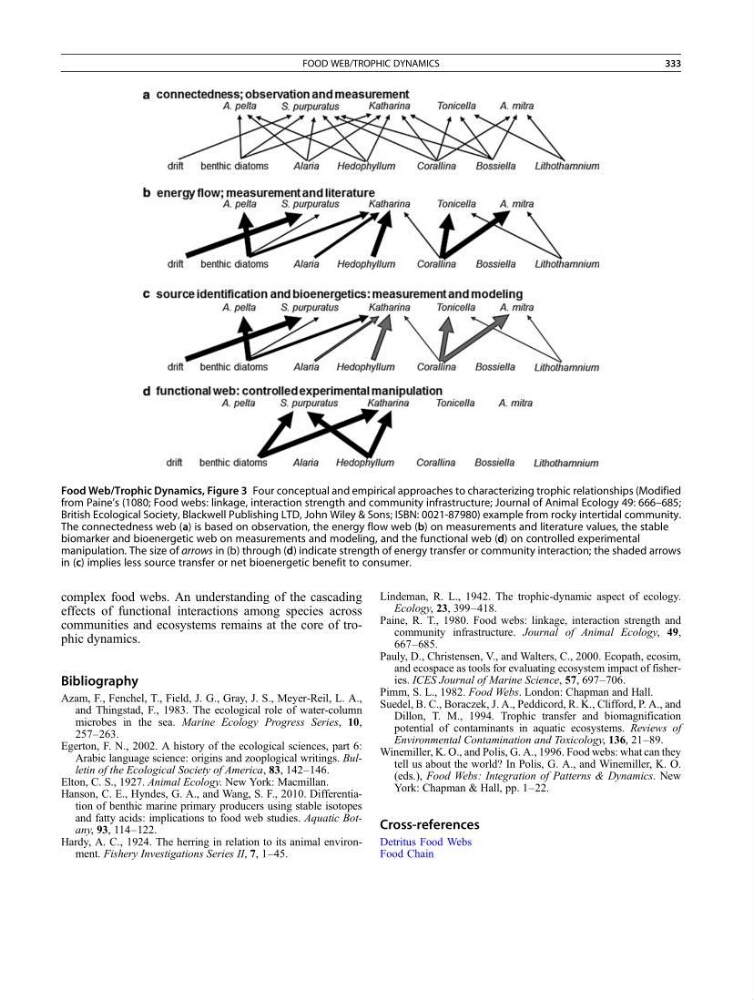
Food Web/Trophic Dynamics, Figure 3 Four conceptual and empirical approaches to characterizing trophic relationships (Modified
from Paine’s (1080; Food webs: linkage, interaction strength and community infrastructure; Journal of Animal Ecology 49: 666–685;
British Ecological Society, Blackwell Publishing LTD, John Wiley & Sons; ISBN: 0021-87980) example from rocky intertidal community.
The connectedness web (a) is based on observation, the energy flow web (b) on measurements and literature values, the stable
biomarker and bioenergetic web on measurements and modeling, and the functional web (d) on controlled experimental
manipulation. The size of arrows in (b) through (d) indicate strength of energy transfer or community interaction; the shaded arrows
in (c) implies less source transfer or net bioenergetic benefit to consumer.
FOOD WEB/TROPHIC DYNAMICS
333
effects of functional interactions among species across
communities and ecosystems remains at the core of trophic dynamics.
Bibliography
Azam, F., Fenchel, T., Field, J. G., Gray, J. S., Meyer-Reil, L. A.,
and Thingstad, F., 1983. The ecological role of water-column
microbes in the sea. Marine Ecology Progress Series, 10,
257–263.
Egerton, F. N., 2002. A history of the ecological sciences, part 6:
Arabic language science: origins and zooplogical writings. Bulletin of the Ecological Society of America, 83, 142–146.
Elton, C. S., 1927. Animal Ecology. New York: Macmillan.
Hanson, C. E., Hyndes, G. A., and Wang, S. F., 2010. Differentiation of benthic marine primary producers using stable isotopes
and fatty acids: implications to food web studies. Aquatic Botany, 93, 114–122.
Hardy, A. C., 1924. The herring in relation to its animal environment. Fishery Investigations Series II, 7, 1–45.
Lindeman, R. L., 1942. The trophic-dynamic aspect of ecology.
Ecology, 23, 399–418.
Paine, R. T., 1980. Food webs: linkage, interaction strength and
community infrastructure. Journal of Animal Ecology, 49,
667–685.
Pauly, D., Christensen, V., and Walters, C., 2000. Ecopath, ecosim,
and ecospace as tools for evaluating ecosystem impact of fisheries. ICES Journal of Marine Science, 57, 697–706.
Pimm, S. L., 1982. Food Webs. London: Chapman and Hall.
Suedel, B. C., Boraczek, J. A., Peddicord, R. K., Clifford, P. A., and
Dillon, T. M., 1994. Trophic transfer and biomagnification
potential of contaminants in aquatic ecosystems. Reviews of
Environmental Contamination and Toxicology, 136, 21–89.
Winemiller, K. O., and Polis, G. A., 1996. Food webs: what can they
tell us about the world? In Polis, G. A., and Winemiller, K. O.
(eds.), Food Webs: Integration of Patterns & Dynamics. New
York: Chapman & Hall, pp. 1–22.
Cross-references
Detritus Food Webs
Food Chain
Food Web/Trophic Dynamics, Figure 3 Four conceptual and empirical approaches to characterizing trophic relationships (Modified
from Paine’s (1080; Food webs: linkage, interaction strength and community infrastructure; Journal of Animal Ecology 49: 666–685;
British Ecological Society, Blackwell Publishing LTD, John Wiley & Sons; ISBN: 0021-87980) example from rocky intertidal community.
The connectedness web (a) is based on observation, the energy flow web (b) on measurements and literature values, the stable
biomarker and bioenergetic web on measurements and modeling, and the functional web (d) on controlled experimental
manipulation. The size of arrows in (b) through (d) indicate strength of energy transfer or community interaction; the shaded arrows
in (c) implies less source transfer or net bioenergetic benefit to consumer.
FOOD WEB/TROPHIC DYNAMICS
333