

sand to accumulate over time, increasing beach width which
leads to dune creation. However, in some cases, they can
also be a mechanism for beach loss since shores downdrift
may have accelerated erosion rates. Care must be taken in
the design of shore structures. The purposeful addition of
sand, called beach nourishment, can enhance existing sandy
shorelines or create beaches where one previously existed,
but because of erosion, development, or change in
longshore transport, it no longer does. Structures such as
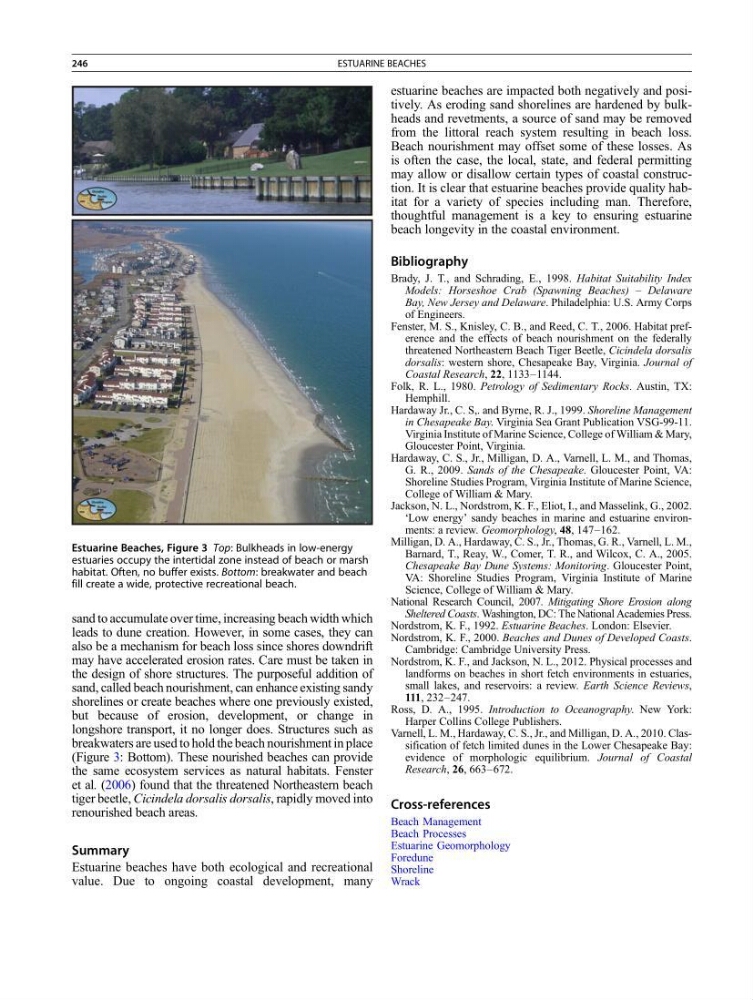
breakwaters are used to hold the beach nourishment in place
(Figure 3: Bottom). These nourished beaches can provide
the same ecosystem services as natural habitats. Fenster
et al. (2006) found that the threatened Northeastern beach
tiger beetle, Cicindela dorsalis dorsalis, rapidly moved into
renourished beach areas.
Summary
Estuarine beaches have both ecological and recreational
value. Due to ongoing coastal development, many
estuarine beaches are impacted both negatively and positively. As eroding sand shorelines are hardened by bulkheads and revetments, a source of sand may be removed
from the littoral reach system resulting in beach loss.
Beach nourishment may offset some of these losses. As
is often the case, the local, state, and federal permitting
may allow or disallow certain types of coastal construction. It is clear that estuarine beaches provide quality habitat for a variety of species including man. Therefore,
thoughtful management is a key to ensuring estuarine
beach longevity in the coastal environment.
Bibliography
Brady, J. T., and Schrading, E., 1998. Habitat Suitability Index
Models: Horseshoe Crab (Spawning Beaches) – Delaware
Bay, New Jersey and Delaware. Philadelphia: U.S. Army Corps
of Engineers.
Fenster, M. S., Knisley, C. B., and Reed, C. T., 2006. Habitat preference and the effects of beach nourishment on the federally
threatened Northeastern Beach Tiger Beetle, Cicindela dorsalis
dorsalis: western shore, Chesapeake Bay, Virginia. Journal of
Coastal Research, 22, 1133–1144.
Folk, R. L., 1980. Petrology of Sedimentary Rocks. Austin, TX:
Hemphill.
Hardaway Jr., C. S,. and Byrne, R. J., 1999. Shoreline Management
in Chesapeake Bay. Virginia Sea Grant Publication VSG-99-11.
Virginia Institute of Marine Science, College of William & Mary,
Gloucester Point, Virginia.
Hardaway, C. S., Jr., Milligan, D. A., Varnell, L. M., and Thomas,
G. R., 2009. Sands of the Chesapeake. Gloucester Point, VA:
Shoreline Studies Program, Virginia Institute of Marine Science,
College of William & Mary.
Jackson, N. L., Nordstrom, K. F., Eliot, I., and Masselink, G., 2002.
‘Low energy’ sandy beaches in marine and estuarine environments: a review. Geomorphology, 48, 147–162.
Milligan, D. A., Hardaway, C. S., Jr., Thomas, G. R., Varnell, L. M.,
Barnard, T., Reay, W., Comer, T. R., and Wilcox, C. A., 2005.
Chesapeake Bay Dune Systems: Monitoring. Gloucester Point,
VA: Shoreline Studies Program, Virginia Institute of Marine
Science, College of William & Mary.
National Research Council, 2007. Mitigating Shore Erosion along
Sheltered Coasts. Washington, DC: The National Academies Press.
Nordstrom, K. F., 1992. Estuarine Beaches. London: Elsevier.
Nordstrom, K. F., 2000. Beaches and Dunes of Developed Coasts.
Cambridge: Cambridge University Press.
Nordstrom, K. F., and Jackson, N. L., 2012. Physical processes and
landforms on beaches in short fetch environments in estuaries,
small lakes, and reservoirs: a review. Earth Science Reviews,
111, 232–247.
Ross, D. A., 1995. Introduction to Oceanography. New York:
Harper Collins College Publishers.
Varnell, L. M., Hardaway, C. S., Jr., and Milligan, D. A., 2010. Classification of fetch limited dunes in the Lower Chesapeake Bay:
evidence of morphologic equilibrium. Journal of Coastal
Research, 26, 663–672.
Cross-references
Beach Management
Beach Processes
Estuarine Geomorphology
Foredune
Shoreline
Wrack
Estuarine Beaches, Figure 3 Top: Bulkheads in low-energy
estuaries occupy the intertidal zone instead of beach or marsh
habitat. Often, no buffer exists. Bottom: breakwater and beach
fill create a wide, protective recreational beach.
246
ESTUARINE BEACHES
leads to dune creation. However, in some cases, they can
also be a mechanism for beach loss since shores downdrift
may have accelerated erosion rates. Care must be taken in
the design of shore structures. The purposeful addition of
sand, called beach nourishment, can enhance existing sandy
shorelines or create beaches where one previously existed,
but because of erosion, development, or change in
longshore transport, it no longer does. Structures such as
breakwaters are used to hold the beach nourishment in place
(Figure 3: Bottom). These nourished beaches can provide
the same ecosystem services as natural habitats. Fenster
et al. (2006) found that the threatened Northeastern beach
tiger beetle, Cicindela dorsalis dorsalis, rapidly moved into
renourished beach areas.
Summary
Estuarine beaches have both ecological and recreational
value. Due to ongoing coastal development, many
estuarine beaches are impacted both negatively and positively. As eroding sand shorelines are hardened by bulkheads and revetments, a source of sand may be removed
from the littoral reach system resulting in beach loss.
Beach nourishment may offset some of these losses. As
is often the case, the local, state, and federal permitting
may allow or disallow certain types of coastal construction. It is clear that estuarine beaches provide quality habitat for a variety of species including man. Therefore,
thoughtful management is a key to ensuring estuarine
beach longevity in the coastal environment.
Bibliography
Brady, J. T., and Schrading, E., 1998. Habitat Suitability Index
Models: Horseshoe Crab (Spawning Beaches) – Delaware
Bay, New Jersey and Delaware. Philadelphia: U.S. Army Corps
of Engineers.
Fenster, M. S., Knisley, C. B., and Reed, C. T., 2006. Habitat preference and the effects of beach nourishment on the federally
threatened Northeastern Beach Tiger Beetle, Cicindela dorsalis
dorsalis: western shore, Chesapeake Bay, Virginia. Journal of
Coastal Research, 22, 1133–1144.
Folk, R. L., 1980. Petrology of Sedimentary Rocks. Austin, TX:
Hemphill.
Hardaway Jr., C. S,. and Byrne, R. J., 1999. Shoreline Management
in Chesapeake Bay. Virginia Sea Grant Publication VSG-99-11.
Virginia Institute of Marine Science, College of William & Mary,
Gloucester Point, Virginia.
Hardaway, C. S., Jr., Milligan, D. A., Varnell, L. M., and Thomas,
G. R., 2009. Sands of the Chesapeake. Gloucester Point, VA:
Shoreline Studies Program, Virginia Institute of Marine Science,
College of William & Mary.
Jackson, N. L., Nordstrom, K. F., Eliot, I., and Masselink, G., 2002.
‘Low energy’ sandy beaches in marine and estuarine environments: a review. Geomorphology, 48, 147–162.
Milligan, D. A., Hardaway, C. S., Jr., Thomas, G. R., Varnell, L. M.,
Barnard, T., Reay, W., Comer, T. R., and Wilcox, C. A., 2005.
Chesapeake Bay Dune Systems: Monitoring. Gloucester Point,
VA: Shoreline Studies Program, Virginia Institute of Marine
Science, College of William & Mary.
National Research Council, 2007. Mitigating Shore Erosion along
Sheltered Coasts. Washington, DC: The National Academies Press.
Nordstrom, K. F., 1992. Estuarine Beaches. London: Elsevier.
Nordstrom, K. F., 2000. Beaches and Dunes of Developed Coasts.
Cambridge: Cambridge University Press.
Nordstrom, K. F., and Jackson, N. L., 2012. Physical processes and
landforms on beaches in short fetch environments in estuaries,
small lakes, and reservoirs: a review. Earth Science Reviews,
111, 232–247.
Ross, D. A., 1995. Introduction to Oceanography. New York:
Harper Collins College Publishers.
Varnell, L. M., Hardaway, C. S., Jr., and Milligan, D. A., 2010. Classification of fetch limited dunes in the Lower Chesapeake Bay:
evidence of morphologic equilibrium. Journal of Coastal
Research, 26, 663–672.
Cross-references
Beach Management
Beach Processes
Estuarine Geomorphology
Foredune
Shoreline
Wrack
Estuarine Beaches, Figure 3 Top: Bulkheads in low-energy
estuaries occupy the intertidal zone instead of beach or marsh
habitat. Often, no buffer exists. Bottom: breakwater and beach
fill create a wide, protective recreational beach.
246
ESTUARINE BEACHES