

water body dimensions (width, length, and depth)
(Jackson et al., 2002). In estuaries with small basin dimensions, the energy potential of waves is limited, resulting in
beach characteristics that can include longshore bars in the
nearshore, narrow foreshores, narrow or nonexistent
backshores, short beach lengths, low tide terrace, and
poorly developed or nonexistent dunes (Nordstrom and
Jackson, 2012). In addition, ship and boat wakes can
increase erosion along estuarine shorelines.
Tidal and surge-related water-level fluctuations affect
low wave energy beach morphology and processes. Tide
range affects the strength of tidal currents and the vertical
distribution of wave energy over the profile which, in turn,
determines the width of the beach and the duration that the
breaking waves will occur at any elevation (Nordstrom
and Jackson, 2012). Tidal currents can be the mechanism
for sediment transport in areas where waves may not
break. Increased water levels during storms increase the
distance inland the larger storm waves will travel which
has a greater effect on the shoreline. Storm surge can vary
greatly throughout an estuary depending on tide range,
wind direction, and volume of water associated with the
event. This, along with shore orientation, will determine
a storm’s effect on a particular stretch of shoreline.
Estuarine beaches will develop in a variety of geomorphic settings from small pocket beaches to longer linear
features to spits (Varnell et al., 2010). Many beaches exist
in front of marshes and creek mouths in addition to upland
banks (Figure 1: Top). As noted, wave climate, tide range,
sediment source, shore orientation, and shore morphology
all help determine the dimensions of an estuarine
beach system, and configurations vary greatly. Some
beaches exist as sand only in the intertidal area of a coast
(Figure 1: Bottom), while others have well-developed
nearshore bars and dune systems.
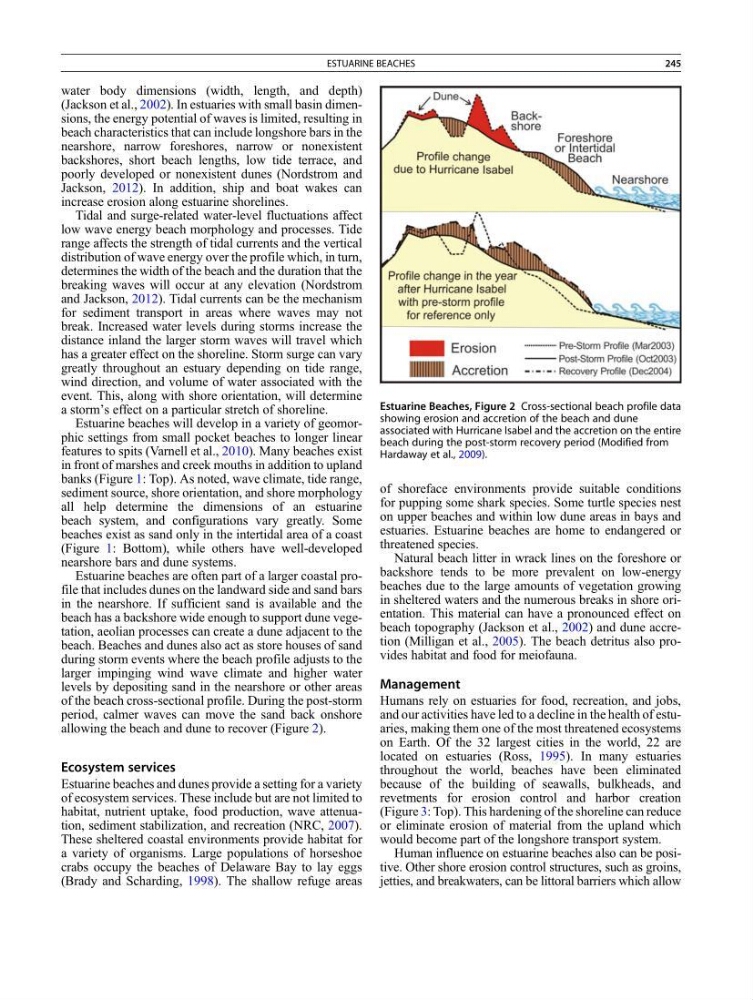
Estuarine beaches are often part of a larger coastal profile that includes dunes on the landward side and sand bars
in the nearshore. If sufficient sand is available and the
beach has a backshore wide enough to support dune vegetation, aeolian processes can create a dune adjacent to the
beach. Beaches and dunes also act as store houses of sand
during storm events where the beach profile adjusts to the
larger impinging wind wave climate and higher water
levels by depositing sand in the nearshore or other areas
of the beach cross-sectional profile. During the post-storm
period, calmer waves can move the sand back onshore
allowing the beach and dune to recover (Figure 2).
Ecosystem services
Estuarine beaches and dunes provide a setting for a variety
of ecosystem services. These include but are not limited to
habitat, nutrient uptake, food production, wave attenuation, sediment stabilization, and recreation (NRC, 2007).
These sheltered coastal environments provide habitat for
a variety of organisms. Large populations of horseshoe
crabs occupy the beaches of Delaware Bay to lay eggs
(Brady and Scharding, 1998). The shallow refuge areas
of shoreface environments provide suitable conditions
for pupping some shark species. Some turtle species nest
on upper beaches and within low dune areas in bays and
estuaries. Estuarine beaches are home to endangered or
threatened species.
Natural beach litter in wrack lines on the foreshore or
backshore tends to be more prevalent on low-energy
beaches due to the large amounts of vegetation growing
in sheltered waters and the numerous breaks in shore orientation. This material can have a pronounced effect on
beach topography (Jackson et al., 2002) and dune accretion (Milligan et al., 2005). The beach detritus also provides habitat and food for meiofauna.
Management
Humans rely on estuaries for food, recreation, and jobs,
and our activities have led to a decline in the health of estuaries, making them one of the most threatened ecosystems
on Earth. Of the 32 largest cities in the world, 22 are
located on estuaries (Ross, 1995). In many estuaries
throughout the world, beaches have been eliminated
because of the building of seawalls, bulkheads, and
revetments for erosion control and harbor creation
(Figure 3: Top). This hardening of the shoreline can reduce
or eliminate erosion of material from the upland which
would become part of the longshore transport system.
Human influence on estuarine beaches also can be positive. Other shore erosion control structures, such as groins,
jetties, and breakwaters, can be littoral barriers which allow
Estuarine Beaches, Figure 2 Cross-sectional beach profile data
showing erosion and accretion of the beach and dune
associated with Hurricane Isabel and the accretion on the entire
beach during the post-storm recovery period (Modified from
Hardaway et al., 2009).
ESTUARINE BEACHES
245
(Jackson et al., 2002). In estuaries with small basin dimensions, the energy potential of waves is limited, resulting in
beach characteristics that can include longshore bars in the
nearshore, narrow foreshores, narrow or nonexistent
backshores, short beach lengths, low tide terrace, and
poorly developed or nonexistent dunes (Nordstrom and
Jackson, 2012). In addition, ship and boat wakes can
increase erosion along estuarine shorelines.
Tidal and surge-related water-level fluctuations affect
low wave energy beach morphology and processes. Tide
range affects the strength of tidal currents and the vertical
distribution of wave energy over the profile which, in turn,
determines the width of the beach and the duration that the
breaking waves will occur at any elevation (Nordstrom
and Jackson, 2012). Tidal currents can be the mechanism
for sediment transport in areas where waves may not
break. Increased water levels during storms increase the
distance inland the larger storm waves will travel which
has a greater effect on the shoreline. Storm surge can vary
greatly throughout an estuary depending on tide range,
wind direction, and volume of water associated with the
event. This, along with shore orientation, will determine
a storm’s effect on a particular stretch of shoreline.
Estuarine beaches will develop in a variety of geomorphic settings from small pocket beaches to longer linear
features to spits (Varnell et al., 2010). Many beaches exist
in front of marshes and creek mouths in addition to upland
banks (Figure 1: Top). As noted, wave climate, tide range,
sediment source, shore orientation, and shore morphology
all help determine the dimensions of an estuarine
beach system, and configurations vary greatly. Some
beaches exist as sand only in the intertidal area of a coast
(Figure 1: Bottom), while others have well-developed
nearshore bars and dune systems.
Estuarine beaches are often part of a larger coastal profile that includes dunes on the landward side and sand bars
in the nearshore. If sufficient sand is available and the
beach has a backshore wide enough to support dune vegetation, aeolian processes can create a dune adjacent to the
beach. Beaches and dunes also act as store houses of sand
during storm events where the beach profile adjusts to the
larger impinging wind wave climate and higher water
levels by depositing sand in the nearshore or other areas
of the beach cross-sectional profile. During the post-storm
period, calmer waves can move the sand back onshore
allowing the beach and dune to recover (Figure 2).
Ecosystem services
Estuarine beaches and dunes provide a setting for a variety
of ecosystem services. These include but are not limited to
habitat, nutrient uptake, food production, wave attenuation, sediment stabilization, and recreation (NRC, 2007).
These sheltered coastal environments provide habitat for
a variety of organisms. Large populations of horseshoe
crabs occupy the beaches of Delaware Bay to lay eggs
(Brady and Scharding, 1998). The shallow refuge areas
of shoreface environments provide suitable conditions
for pupping some shark species. Some turtle species nest
on upper beaches and within low dune areas in bays and
estuaries. Estuarine beaches are home to endangered or
threatened species.
Natural beach litter in wrack lines on the foreshore or
backshore tends to be more prevalent on low-energy
beaches due to the large amounts of vegetation growing
in sheltered waters and the numerous breaks in shore orientation. This material can have a pronounced effect on
beach topography (Jackson et al., 2002) and dune accretion (Milligan et al., 2005). The beach detritus also provides habitat and food for meiofauna.
Management
Humans rely on estuaries for food, recreation, and jobs,
and our activities have led to a decline in the health of estuaries, making them one of the most threatened ecosystems
on Earth. Of the 32 largest cities in the world, 22 are
located on estuaries (Ross, 1995). In many estuaries
throughout the world, beaches have been eliminated
because of the building of seawalls, bulkheads, and
revetments for erosion control and harbor creation
(Figure 3: Top). This hardening of the shoreline can reduce
or eliminate erosion of material from the upland which
would become part of the longshore transport system.
Human influence on estuarine beaches also can be positive. Other shore erosion control structures, such as groins,
jetties, and breakwaters, can be littoral barriers which allow
Estuarine Beaches, Figure 2 Cross-sectional beach profile data
showing erosion and accretion of the beach and dune
associated with Hurricane Isabel and the accretion on the entire
beach during the post-storm recovery period (Modified from
Hardaway et al., 2009).
ESTUARINE BEACHES
245