

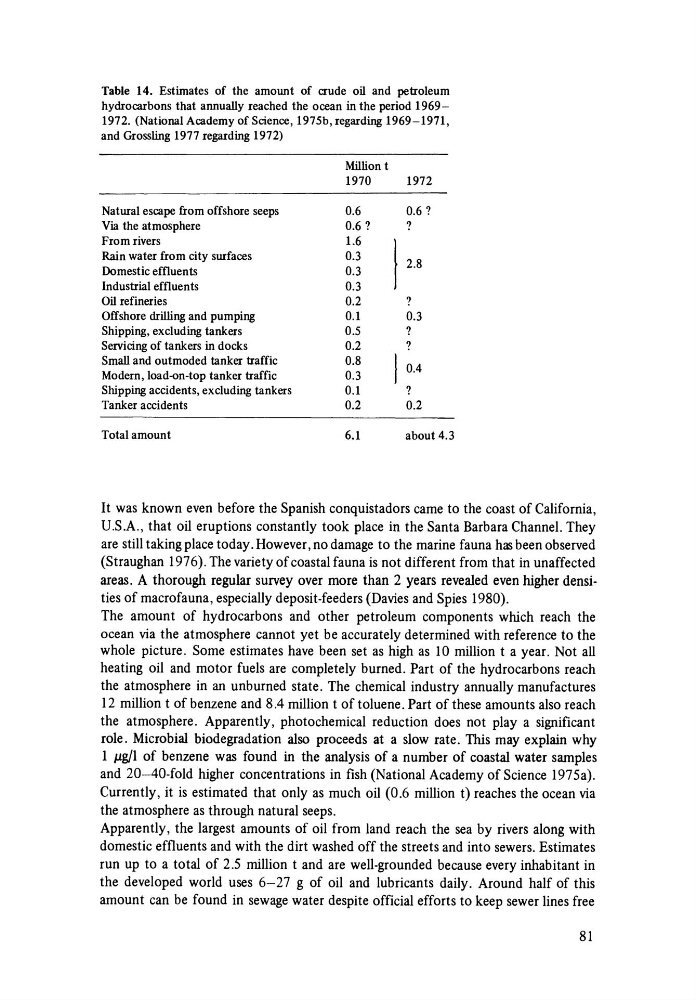
Table 14. Estimates of the amount of crude oil and petroleum
hydrocarbons that annually reached the ocean in the period 19691972. (National Academy of Science, 1975b, regarding 1969-1971,
and Grossling 1977 regarding 1972)
Million t
1970
1972
Natural escape from offshore seeps
0.6
0.6 ?
Via the atmosphere
0.6 ?
?
From rivers
1.6
Rain water from city surfaces
0.3
2.8
Domestic effluents
0.3
Industrial effluents
0.3
Oil refineries
0.2
?
Offshore drilling and pumping
0.1
0.3
Shipping, excluding tankers
0.5
?
Servicing of tankers in docks
0.2
?
Small and outmoded tanker traffic
0.8
0.4
Modern, load-on-top tanker traffic
0.3
Shipping accidents, excluding tankers
0.1
?
Tanker accidents
0.2
0.2
Total amount
6.1
about 4.3
It was known even before the Spanish conquistadors came to the coast of California,
U.S.A., that oil eruptions constantly took place in the Santa Barbara Channel. They
are still taking place today. However, no damage to the marine fauna has been observed
(Straughan 1976). The variety of coastal fauna is not different from that in unaffected
areas. A thorough regular survey over more than 2 years revealed even higher densities of macrofauna, especially deposit-feeders (Davies and Spies 1980).
The amount of hydrocarbons and other petroleum components which reach the
ocean via the atmosphere cannot yet be accurately determined with reference to the
whole picture. Some estimates have been set as high as 10 million t a year. Not all
heating oil and motor fuels are completely burned. Part of the hydrocarbons reach
the atmosphere in an unburned state. The chemical industry annually manufactures
12 million t of benzene and 8.4 million t of toluene. Part of these amounts also reach
the atmosphere. Apparently, photochemical reduction does not playa significant
role. Microbial biodegradation also proceeds at a slow rate. This may explain why
1 IlgJI of benzene was found in the analysis of a number of coastal water samples
and 20-40-fold higher concentrations in fish (National Academy of Science 1975a).
Currently, it is estimated that only as much oil (0.6 million t) reaches the ocean via
the atmosphere as through natural seeps.
Apparently, the largest amounts of oil from land reach the sea by rivers along with
domestic effluents and with the dirt washed off the streets and into sewers. Estimates
run up to a total of 2.5 million t and are well-grounded because every inhabitant in
the developed world uses 6-27 g of oil and lubricants daily. Around half of this
amount can be found in sewage water despite official efforts to keep sewer lines free
81
hydrocarbons that annually reached the ocean in the period 19691972. (National Academy of Science, 1975b, regarding 1969-1971,
and Grossling 1977 regarding 1972)
Million t
1970
1972
Natural escape from offshore seeps
0.6
0.6 ?
Via the atmosphere
0.6 ?
?
From rivers
1.6
Rain water from city surfaces
0.3
2.8
Domestic effluents
0.3
Industrial effluents
0.3
Oil refineries
0.2
?
Offshore drilling and pumping
0.1
0.3
Shipping, excluding tankers
0.5
?
Servicing of tankers in docks
0.2
?
Small and outmoded tanker traffic
0.8
0.4
Modern, load-on-top tanker traffic
0.3
Shipping accidents, excluding tankers
0.1
?
Tanker accidents
0.2
0.2
Total amount
6.1
about 4.3
It was known even before the Spanish conquistadors came to the coast of California,
U.S.A., that oil eruptions constantly took place in the Santa Barbara Channel. They
are still taking place today. However, no damage to the marine fauna has been observed
(Straughan 1976). The variety of coastal fauna is not different from that in unaffected
areas. A thorough regular survey over more than 2 years revealed even higher densities of macrofauna, especially deposit-feeders (Davies and Spies 1980).
The amount of hydrocarbons and other petroleum components which reach the
ocean via the atmosphere cannot yet be accurately determined with reference to the
whole picture. Some estimates have been set as high as 10 million t a year. Not all
heating oil and motor fuels are completely burned. Part of the hydrocarbons reach
the atmosphere in an unburned state. The chemical industry annually manufactures
12 million t of benzene and 8.4 million t of toluene. Part of these amounts also reach
the atmosphere. Apparently, photochemical reduction does not playa significant
role. Microbial biodegradation also proceeds at a slow rate. This may explain why
1 IlgJI of benzene was found in the analysis of a number of coastal water samples
and 20-40-fold higher concentrations in fish (National Academy of Science 1975a).
Currently, it is estimated that only as much oil (0.6 million t) reaches the ocean via
the atmosphere as through natural seeps.
Apparently, the largest amounts of oil from land reach the sea by rivers along with
domestic effluents and with the dirt washed off the streets and into sewers. Estimates
run up to a total of 2.5 million t and are well-grounded because every inhabitant in
the developed world uses 6-27 g of oil and lubricants daily. Around half of this
amount can be found in sewage water despite official efforts to keep sewer lines free
81