

®
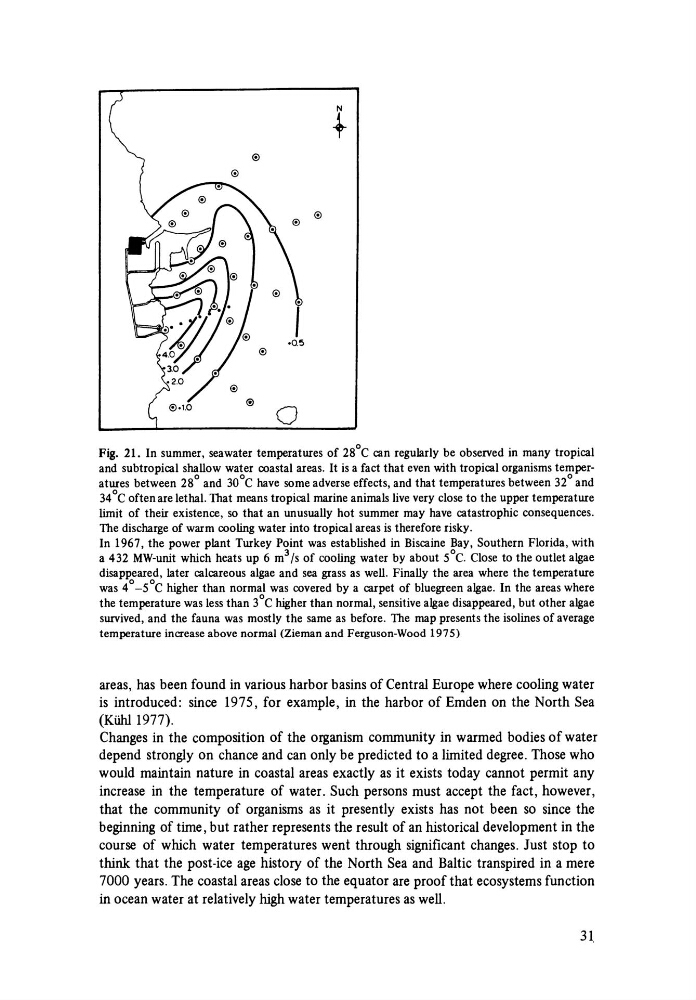
Fig. 21. In summer, seawater temperatures of 28°C can regularly be observed in many tropical
and subtropical shallow water coastal areas. It is a fact that even with tropical organisms temperatures between 28° and 30°C have some adverse effects, and that temperatures between 32° and
34°C often are lethal. That means tropical marine animals live very close to the upper temperature
limit of their existence, so that an unusually hot summer may have catastrophic consequences.
The discharge of warm cooling water into tropical areas is therefore risky.
In 1967, the power plant Turkey Point was established in Biscaine Bay, Southern Florida, with
a 432 MW-unit which heats up 6 m 3 /s of cooling water by about Soc. Close to the outlet algae
disappeared, later calcareous algae and sea grass as well. Finally the area where the temperature
was 4°_S o C higher than normal was covered by a carpet of bluegreen algae. In the areas where
the temperature was less than 3°C higher than normal, sensitive algae disappeared, but other algae
survived, and the fauna was mostly the same as before. The map presents the isolines of average
temperature increase above normal (Zieman and Ferguson-Wood 1975)
areas, has been found in various harbor basins of Central Europe where cooling water
is introduced: since 1975, for example, in the harbor of Emden on the North Sea
(Kiihl 1977).
Changes in the composition of the organism community in warmed bodies of water
depend strongly on chance and can only be predicted to a limited degree. Those who
would maintain nature in coastal areas exactly as it exists today cannot permit any
increase in the temperature of water. Such persons must accept the fact, however,
that the community of organisms as it presently exists has not been so since the
beginning of time, but rather represents the result of an historical development in the
course of which water temperatures went through significant changes. Just stop to
think that the post-ice age history of the North Sea and Baltic transpired in a mere
7000 years. The coastal areas close to the equator are proof that ecosystems function
in ocean water at relatively high water temperatures as well.
31.
Fig. 21. In summer, seawater temperatures of 28°C can regularly be observed in many tropical
and subtropical shallow water coastal areas. It is a fact that even with tropical organisms temperatures between 28° and 30°C have some adverse effects, and that temperatures between 32° and
34°C often are lethal. That means tropical marine animals live very close to the upper temperature
limit of their existence, so that an unusually hot summer may have catastrophic consequences.
The discharge of warm cooling water into tropical areas is therefore risky.
In 1967, the power plant Turkey Point was established in Biscaine Bay, Southern Florida, with
a 432 MW-unit which heats up 6 m 3 /s of cooling water by about Soc. Close to the outlet algae
disappeared, later calcareous algae and sea grass as well. Finally the area where the temperature
was 4°_S o C higher than normal was covered by a carpet of bluegreen algae. In the areas where
the temperature was less than 3°C higher than normal, sensitive algae disappeared, but other algae
survived, and the fauna was mostly the same as before. The map presents the isolines of average
temperature increase above normal (Zieman and Ferguson-Wood 1975)
areas, has been found in various harbor basins of Central Europe where cooling water
is introduced: since 1975, for example, in the harbor of Emden on the North Sea
(Kiihl 1977).
Changes in the composition of the organism community in warmed bodies of water
depend strongly on chance and can only be predicted to a limited degree. Those who
would maintain nature in coastal areas exactly as it exists today cannot permit any
increase in the temperature of water. Such persons must accept the fact, however,
that the community of organisms as it presently exists has not been so since the
beginning of time, but rather represents the result of an historical development in the
course of which water temperatures went through significant changes. Just stop to
think that the post-ice age history of the North Sea and Baltic transpired in a mere
7000 years. The coastal areas close to the equator are proof that ecosystems function
in ocean water at relatively high water temperatures as well.
31.