

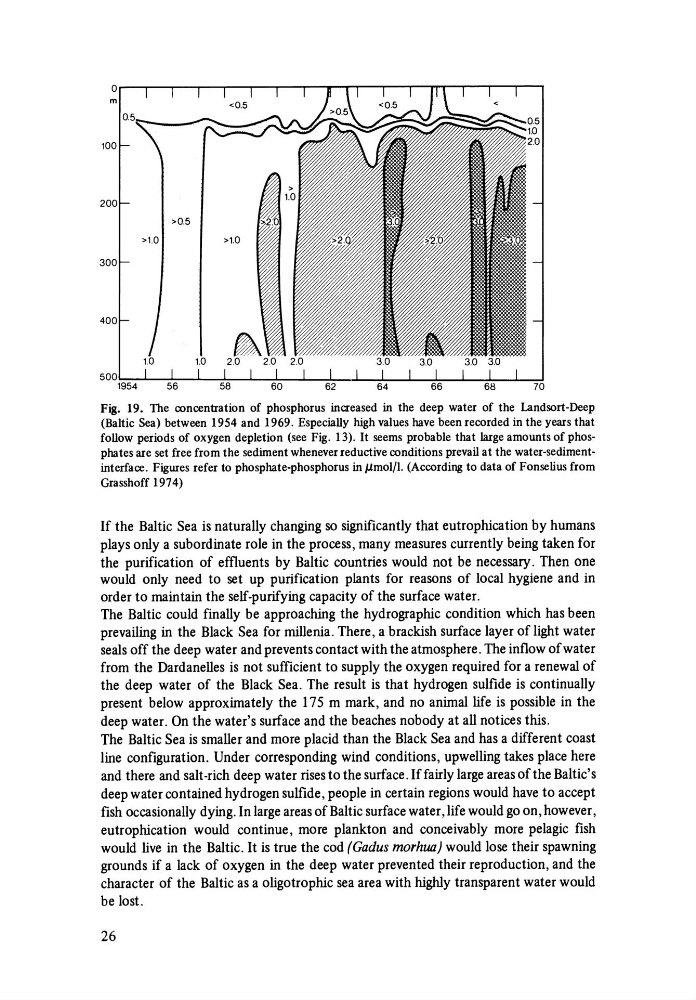
Fig. 19. The concentration of phosphorus increased in the deep water of the Landsort-Deep
(Baltic Sea) between 1954 and 1969. Especially high values have been recorded in the years that
follow periods of oxygen depletion (see Fig. 13). It seems probable that large amounts of phosphates are set free from the sediment whenever reductive conditions prevail at the water-sedimentinterface. Figures refer to phosphate-phosphorus in J,Lmol/1. (According to data of Fonselius from
Grasshoff 1974)
If the Baltic Sea is naturally changing so significantly that eutrophication by humans
plays only a subordinate role in the process, many measures currently being taken for
the purification of effluents by Baltic countries would not be necessary. Then one
would only need to set up purification plants for reasons of local hygiene and in
order to maintain the self-purifying capacity of the surface water.
The Baltic could finally be approaching the hydrographic condition which has been
prevailing in the Black Sea for millenia. There, a brackish surface layer of light water
seals off the deep water and prevents contact with the atmosphere. The inflow of water
from the Dardanelles is not sufficient to supply the oxygen required for a renewal of
the deep water of the Black Sea. The result is that hydrogen sulfide is continually
present below approximately the 175 m mark, and no animal life is possible in the
deep water. On the water's surface and the beaches nobody at all notices this.
The Baltic Sea is smaller and more placid than the Black Sea and has a different coast
line configuration. Under corresponding wind conditions, upwelling takes place here
and there and salt-rich deep water rises to the surface. If fairly large areas of the Baltic's
deep water contained hydrogen sulfide, people in certain regions would have to accept
fish occasionally dying. In large areas of Baltic surface water, life would go on, however,
eutrophication would continue, more plankton and conceivably more pelagic fish
would live in the Baltic. It is true the cod (Gadus morhua) would lose their spawning
grounds if a lack of oxygen in the deep water prevented their reproduction, and the
character of the Baltic as a oligotrophic sea area with highly transparent water would
be lost.
26
(Baltic Sea) between 1954 and 1969. Especially high values have been recorded in the years that
follow periods of oxygen depletion (see Fig. 13). It seems probable that large amounts of phosphates are set free from the sediment whenever reductive conditions prevail at the water-sedimentinterface. Figures refer to phosphate-phosphorus in J,Lmol/1. (According to data of Fonselius from
Grasshoff 1974)
If the Baltic Sea is naturally changing so significantly that eutrophication by humans
plays only a subordinate role in the process, many measures currently being taken for
the purification of effluents by Baltic countries would not be necessary. Then one
would only need to set up purification plants for reasons of local hygiene and in
order to maintain the self-purifying capacity of the surface water.
The Baltic could finally be approaching the hydrographic condition which has been
prevailing in the Black Sea for millenia. There, a brackish surface layer of light water
seals off the deep water and prevents contact with the atmosphere. The inflow of water
from the Dardanelles is not sufficient to supply the oxygen required for a renewal of
the deep water of the Black Sea. The result is that hydrogen sulfide is continually
present below approximately the 175 m mark, and no animal life is possible in the
deep water. On the water's surface and the beaches nobody at all notices this.
The Baltic Sea is smaller and more placid than the Black Sea and has a different coast
line configuration. Under corresponding wind conditions, upwelling takes place here
and there and salt-rich deep water rises to the surface. If fairly large areas of the Baltic's
deep water contained hydrogen sulfide, people in certain regions would have to accept
fish occasionally dying. In large areas of Baltic surface water, life would go on, however,
eutrophication would continue, more plankton and conceivably more pelagic fish
would live in the Baltic. It is true the cod (Gadus morhua) would lose their spawning
grounds if a lack of oxygen in the deep water prevented their reproduction, and the
character of the Baltic as a oligotrophic sea area with highly transparent water would
be lost.
26