

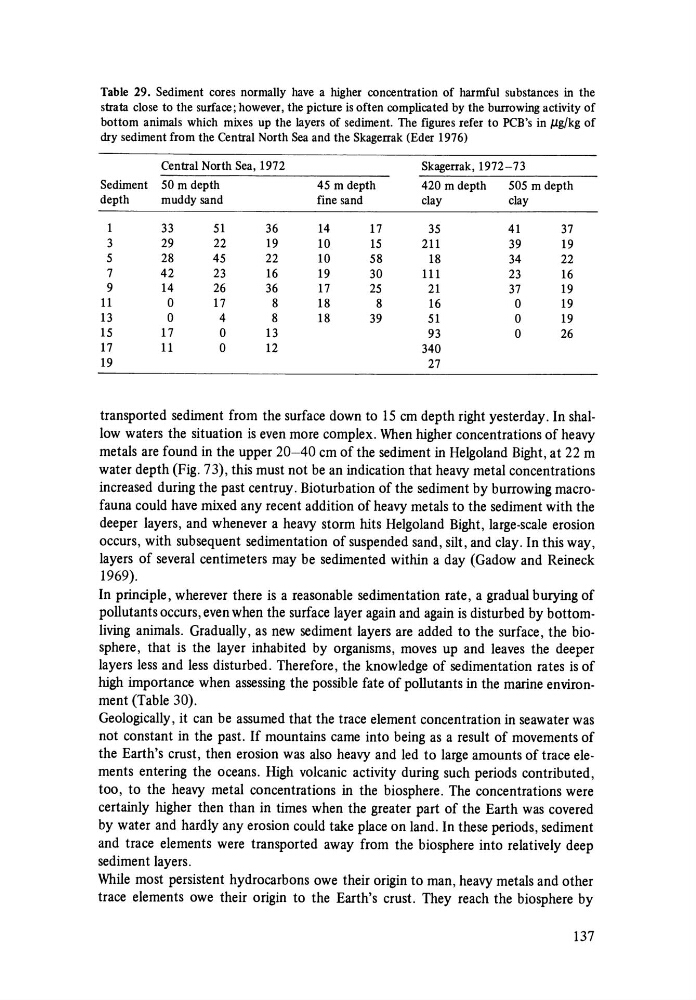
Table 29. Sediment cores normally have a higher concentration of harmful substances in the
strata close to the surface; however, the picture is often complicated by the burrowing activity of
bottom animals which mixes up the layers of sediment. The figures refer to PCB's in f.l.g/kg of
dry sediment from the Central North Sea and the Skagerrak (Eder 1976)
Central North Sea, 1972
Skagerrak, 1972-73
Sediment 50 m depth
45 m depth
420 m depth
505 m depth
depth
muddy sand
fine sand
clay
clay
1
33
51
36
14
17
35
41
37
3
29
22
19
10
15
211
39
19
5
28
45
22
10
58
18
34
22
7
42
23
16
19
30
111
23
16
9
14
26
36
17
25
21
37
19
11
0
17
8
18
8
16
0
19
13
0
4
8
18
39
51
0
19
15
17
0
13
93
0
26
17
11
0
12
340
19
27
transported sediment from the surface down to 15 em depth right yesterday. In shallow waters the situation is even more complex. When higher concentrations of heavy
metals are found in the upper 20-40 em of the sediment in Helgoland Bight, at 22 m
water depth (Fig. 73), this must not be an indication that heavy metal concentrations
increased during the past centruy. Bioturbation of the sediment by burrowing macrofauna could have mixed any recent addition of heavy metals to the sediment with the
deeper layers, and whenever a heavy storm hits Helgoland Bight, large-scale erosion
occurs, with subsequent sedimentation of suspended sand, silt, and clay. In this way,
layers of several centimeters may be sedimented within a day (Gadow and Reineck
1969).
In principle, wherever there is a reasonable sedimentation rate, a gradual burying of
pollutants occurs, even when the surface layer again and again is disturbed by bottomliving animals. Gradually, as new sediment layers are added to the surface, the biosphere, that is the layer inhabited by organisms, moves up and leaves the deeper
layers less and less disturbed. Therefore, the knowledge of sedimentation rates is of
high importance when assessing the possible fate of pollutants in the marine environment (Table 30).
Geologically, it can be assumed that the trace element concentration in seawater was
not constant in the past. If mountains came into being as a result of movements of
the Earth's crust, then erosion was also heavy and led to large amounts of trace elements entering the oceans. High volcanic activity during such periods contributed,
too, to the heavy metal concentrations in the biosphere. The concentrations were
certainly higher then than in times when the greater part of the Earth was covered
by water and hardly any erosion could take place on land. In these periods, sediment
and trace elements were transported away from the biosphere into relatively deep
sediment layers.
While most persistent hydrocarbons owe their origin to man, heavy metals and other
trace elements owe their origin to the Earth's crust. They reach the biosphere by
137
strata close to the surface; however, the picture is often complicated by the burrowing activity of
bottom animals which mixes up the layers of sediment. The figures refer to PCB's in f.l.g/kg of
dry sediment from the Central North Sea and the Skagerrak (Eder 1976)
Central North Sea, 1972
Skagerrak, 1972-73
Sediment 50 m depth
45 m depth
420 m depth
505 m depth
depth
muddy sand
fine sand
clay
clay
1
33
51
36
14
17
35
41
37
3
29
22
19
10
15
211
39
19
5
28
45
22
10
58
18
34
22
7
42
23
16
19
30
111
23
16
9
14
26
36
17
25
21
37
19
11
0
17
8
18
8
16
0
19
13
0
4
8
18
39
51
0
19
15
17
0
13
93
0
26
17
11
0
12
340
19
27
transported sediment from the surface down to 15 em depth right yesterday. In shallow waters the situation is even more complex. When higher concentrations of heavy
metals are found in the upper 20-40 em of the sediment in Helgoland Bight, at 22 m
water depth (Fig. 73), this must not be an indication that heavy metal concentrations
increased during the past centruy. Bioturbation of the sediment by burrowing macrofauna could have mixed any recent addition of heavy metals to the sediment with the
deeper layers, and whenever a heavy storm hits Helgoland Bight, large-scale erosion
occurs, with subsequent sedimentation of suspended sand, silt, and clay. In this way,
layers of several centimeters may be sedimented within a day (Gadow and Reineck
1969).
In principle, wherever there is a reasonable sedimentation rate, a gradual burying of
pollutants occurs, even when the surface layer again and again is disturbed by bottomliving animals. Gradually, as new sediment layers are added to the surface, the biosphere, that is the layer inhabited by organisms, moves up and leaves the deeper
layers less and less disturbed. Therefore, the knowledge of sedimentation rates is of
high importance when assessing the possible fate of pollutants in the marine environment (Table 30).
Geologically, it can be assumed that the trace element concentration in seawater was
not constant in the past. If mountains came into being as a result of movements of
the Earth's crust, then erosion was also heavy and led to large amounts of trace elements entering the oceans. High volcanic activity during such periods contributed,
too, to the heavy metal concentrations in the biosphere. The concentrations were
certainly higher then than in times when the greater part of the Earth was covered
by water and hardly any erosion could take place on land. In these periods, sediment
and trace elements were transported away from the biosphere into relatively deep
sediment layers.
While most persistent hydrocarbons owe their origin to man, heavy metals and other
trace elements owe their origin to the Earth's crust. They reach the biosphere by
137