

1000
mg I kg per day
1000
mg I kg per day
100
100
A
•
C
10
•
10
elimination
uptake
0.1 +---,------,---,---.- 0.1 +---,------,----,----.10
100
1000 10000 100000 0.001
0.01
tissues mg I kg
mg I kg per day
10
10
0.1
10
seawater ~g I I
A
BC
mg/kg1000 100 10
0.1
10 ~g/l
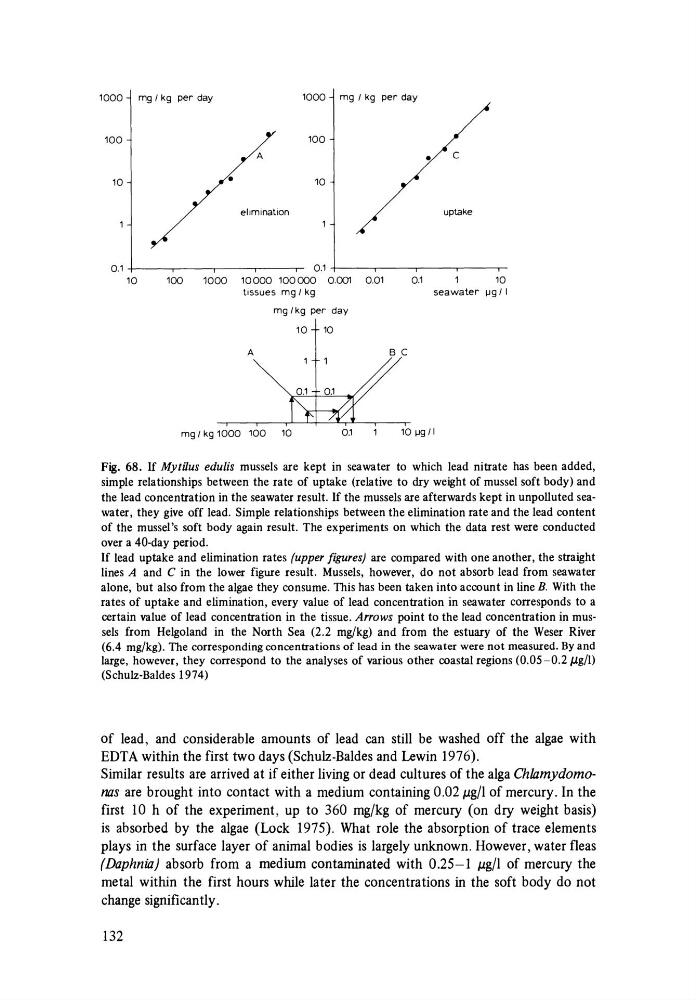
Fig. 68. If Mytilus edulis mussels are kept in seawater to which lead nitrate has been added,
simple relationships between the rate of uptake (relative to dry weight of mussel soft body) and
the lead concentration in the seawater result. If the mussels are afterwards kept in unpolluted seawater, they give off lead. Simple relationships between the elimination rate and the lead content
of the mussel's soft body again result. The experiments on which the data rest were conducted
over a 40-day period.
If lead uptake and elimination rates (upper figures) are compared with one another, the straight
lines A and C in the lower figure result. Mussels, however, do not absorb lead from seawater
alone, but also from the algae they consume. This has been taken into account in line B. With the
rates of uptake and elimination, every value of lead concentration in seawater corresponds to a
certain value of lead concentration in the tissue. Arrows point to the lead concentration in mussels from Helgoland in the North Sea (2.2 mg/kg) and from the estuary of the Weser River
(6.4 mg/kg). The corresponding concentrations of lead in the seawater were not measured. By and
large, however, they correspond to the analyses of various other coastal regions (0.05 -0.2 J.lg/l)
(Schulz-Baldes 1974)
of lead, and considerable amounts of lead can still be washed off the algae with
EDTA within the first two days (Schulz-Baldes and Lewin 1976).
Similar results are arrived at if either living or dead cultures of the alga Chlamydomonas are brought into contact with a medium containing 0.02 J.lg/I of mercury. In the
first 10 h of the experiment, up to 360 mg/kg of mercury (on dry weight basis)
is absorbed by the algae (Lock 1975). What role the absorption of trace elements
plays in the surface layer of animal bodies is largely unknown. However, water fleas
(Daphnia) absorb from a medium contaminated with 0.25-1 J.lg/I of mercury the
metal within the first hours while later the concentrations in the soft body do not
change significantly.
132
mg I kg per day
1000
mg I kg per day
100
100
A
•
C
10
•
10
elimination
uptake
0.1 +---,------,---,---.- 0.1 +---,------,----,----.10
100
1000 10000 100000 0.001
0.01
tissues mg I kg
mg I kg per day
10
10
0.1
10
seawater ~g I I
A
BC
mg/kg1000 100 10
0.1
10 ~g/l
Fig. 68. If Mytilus edulis mussels are kept in seawater to which lead nitrate has been added,
simple relationships between the rate of uptake (relative to dry weight of mussel soft body) and
the lead concentration in the seawater result. If the mussels are afterwards kept in unpolluted seawater, they give off lead. Simple relationships between the elimination rate and the lead content
of the mussel's soft body again result. The experiments on which the data rest were conducted
over a 40-day period.
If lead uptake and elimination rates (upper figures) are compared with one another, the straight
lines A and C in the lower figure result. Mussels, however, do not absorb lead from seawater
alone, but also from the algae they consume. This has been taken into account in line B. With the
rates of uptake and elimination, every value of lead concentration in seawater corresponds to a
certain value of lead concentration in the tissue. Arrows point to the lead concentration in mussels from Helgoland in the North Sea (2.2 mg/kg) and from the estuary of the Weser River
(6.4 mg/kg). The corresponding concentrations of lead in the seawater were not measured. By and
large, however, they correspond to the analyses of various other coastal regions (0.05 -0.2 J.lg/l)
(Schulz-Baldes 1974)
of lead, and considerable amounts of lead can still be washed off the algae with
EDTA within the first two days (Schulz-Baldes and Lewin 1976).
Similar results are arrived at if either living or dead cultures of the alga Chlamydomonas are brought into contact with a medium containing 0.02 J.lg/I of mercury. In the
first 10 h of the experiment, up to 360 mg/kg of mercury (on dry weight basis)
is absorbed by the algae (Lock 1975). What role the absorption of trace elements
plays in the surface layer of animal bodies is largely unknown. However, water fleas
(Daphnia) absorb from a medium contaminated with 0.25-1 J.lg/I of mercury the
metal within the first hours while later the concentrations in the soft body do not
change significantly.
132