

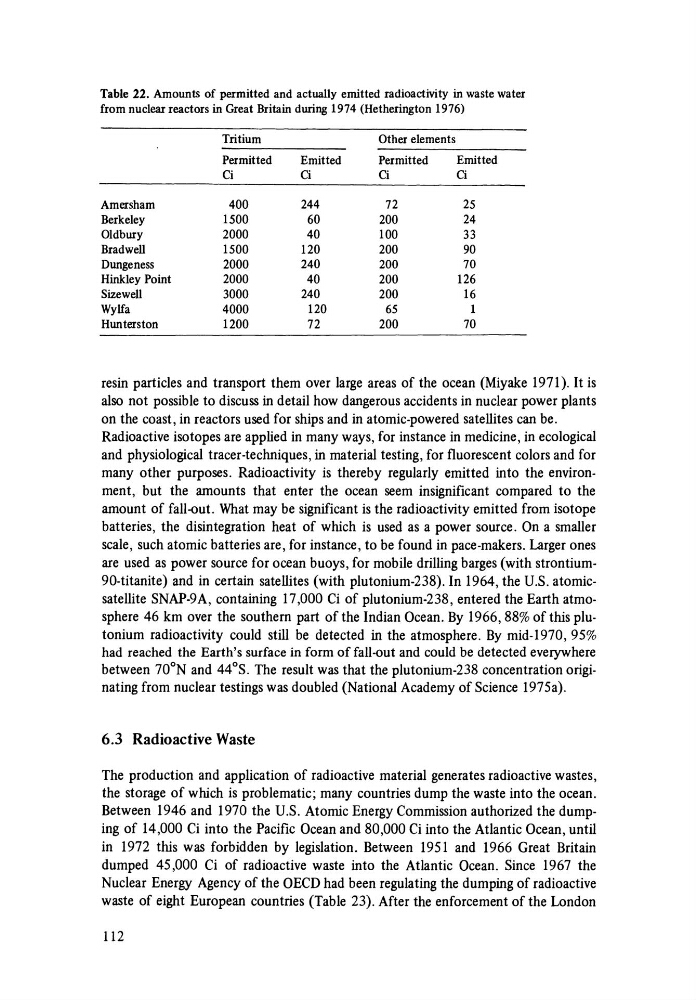
Table 22. Amounts of permitted and actually emitted radioactivity in waste water
from nuclear reactors in Great Britain during 1974 (Hetherington 1976)
Tritium
Other elements
Permitted
Emitted
Permitted
Emitted
Ci
Ci
Ci
Ci
Amersham
400
244
72
25
Berkeley
1500
60
200
24
OIdbury
2000
40
100
33
Bradwell
1500
120
200
90
Dungeness
2000
240
200
70
Hinkley Point
2000
40
200
126
Sizewell
3000
240
200
16
Wylfa
4000
120
65
1
Hunterston
1200
72
200
70
resin particles and transport them over large areas of the ocean (Miyake 1971). It is
also not possible to discuss in detail how dangerous accidents in nuclear power plants
on the coast, in reactors used for ships and in atomic-powered satellites can be.
Radioactive isotopes are applied in many ways, for instance in medicine, in ecological
and physiological tracer-techniques, in material testing, for fluorescent colors and for
many other purposes. Radioactivity is thereby regularly emitted into the environment, but the amounts that enter the ocean seem inSignificant compared to the
amount of fall-out. What may be significant is the radioactivity emitted from isotope
batteries, the disintegration heat of which is used as a power source. On a smaller
scale, such atomic batteries are, for instance, to be found in pace-makers. Larger ones
are used as power source for ocean buoys, for mobile drilling barges (with strontium90-titanite) and in certain satellites (with plutonium-238). In 1964, the U.S. atomicsatellite SNAP-9A, containing 17,000 Ci of plutonium-238, entered the Earth atmosphere 46 km over the southern part of the Indian Ocean. By 1966, 88% of this plutonium radioactivity could still be detected in the atmosphere. By mid-1970, 95%
had reached the Earth's surface in form of fall-out and could be detected everywhere
between 70
0
N and 44°S. The result was that the plutonium-238 concentration originating from nuclear testings was doubled (National Academy of Science 1975a).
6.3 Radioactive Waste
The production and application of radioactive material generates radioactive wastes,
the storage of which is problematic; many countries dump the waste into the ocean.
Between 1946 and 1970 the U.S. Atomic Energy Commission authorized the dumping of 14,000 Ci into the Pacific Ocean and 80,000 Ci into the Atlantic Ocean, until
in 1972 this was forbidden by legislation. Between 1951 and 1966 Great Britain
dumped 45,000 Ci of radioactive waste into the Atlantic Ocean. Since 1967 the
Nuclear Energy Agency of the OECD had been regulating the dumping of radioactive
waste of eight European countries (Table 23). After the enforcement of the London
112
from nuclear reactors in Great Britain during 1974 (Hetherington 1976)
Tritium
Other elements
Permitted
Emitted
Permitted
Emitted
Ci
Ci
Ci
Ci
Amersham
400
244
72
25
Berkeley
1500
60
200
24
OIdbury
2000
40
100
33
Bradwell
1500
120
200
90
Dungeness
2000
240
200
70
Hinkley Point
2000
40
200
126
Sizewell
3000
240
200
16
Wylfa
4000
120
65
1
Hunterston
1200
72
200
70
resin particles and transport them over large areas of the ocean (Miyake 1971). It is
also not possible to discuss in detail how dangerous accidents in nuclear power plants
on the coast, in reactors used for ships and in atomic-powered satellites can be.
Radioactive isotopes are applied in many ways, for instance in medicine, in ecological
and physiological tracer-techniques, in material testing, for fluorescent colors and for
many other purposes. Radioactivity is thereby regularly emitted into the environment, but the amounts that enter the ocean seem inSignificant compared to the
amount of fall-out. What may be significant is the radioactivity emitted from isotope
batteries, the disintegration heat of which is used as a power source. On a smaller
scale, such atomic batteries are, for instance, to be found in pace-makers. Larger ones
are used as power source for ocean buoys, for mobile drilling barges (with strontium90-titanite) and in certain satellites (with plutonium-238). In 1964, the U.S. atomicsatellite SNAP-9A, containing 17,000 Ci of plutonium-238, entered the Earth atmosphere 46 km over the southern part of the Indian Ocean. By 1966, 88% of this plutonium radioactivity could still be detected in the atmosphere. By mid-1970, 95%
had reached the Earth's surface in form of fall-out and could be detected everywhere
between 70
0
N and 44°S. The result was that the plutonium-238 concentration originating from nuclear testings was doubled (National Academy of Science 1975a).
6.3 Radioactive Waste
The production and application of radioactive material generates radioactive wastes,
the storage of which is problematic; many countries dump the waste into the ocean.
Between 1946 and 1970 the U.S. Atomic Energy Commission authorized the dumping of 14,000 Ci into the Pacific Ocean and 80,000 Ci into the Atlantic Ocean, until
in 1972 this was forbidden by legislation. Between 1951 and 1966 Great Britain
dumped 45,000 Ci of radioactive waste into the Atlantic Ocean. Since 1967 the
Nuclear Energy Agency of the OECD had been regulating the dumping of radioactive
waste of eight European countries (Table 23). After the enforcement of the London
112