

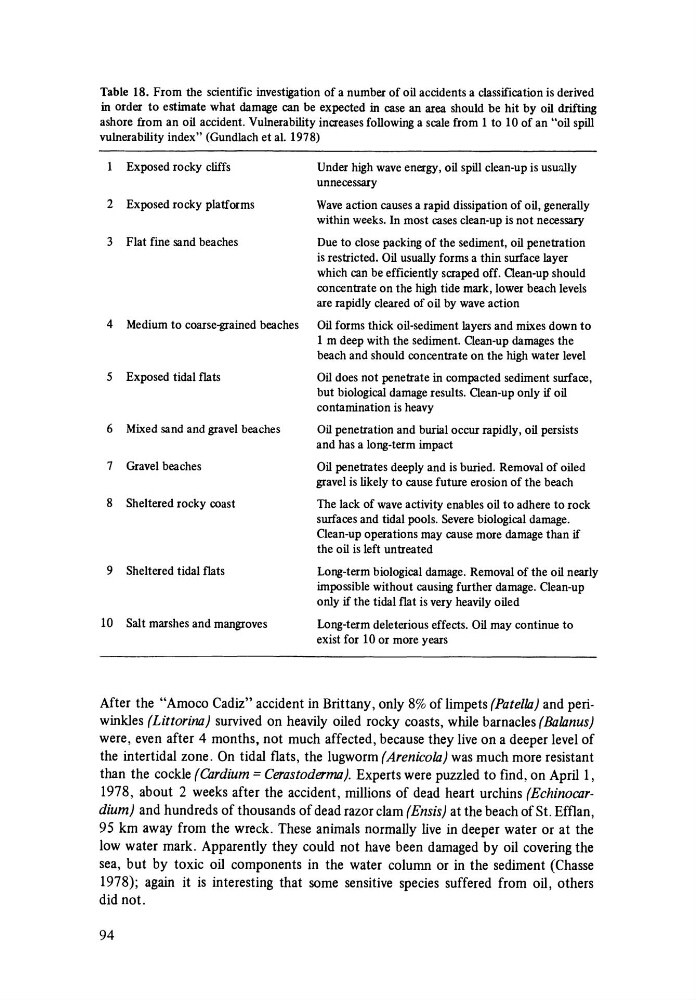
Table 18. From the scientific investigation of a number of oil accidents a classification is derived
in order to estimate what damage can be expected in case an area should be hit by oil drifting
ashore from an oil accident. Vulnerability increases following a scale from 1 to 10 of an "oil spill
vulnerability index" (Gundlach et a1. 1978)
1 Exposed rocky cliffs
Under high wave energy, oil spill clean-up is usually
unnecessary
2 Exposed rocky platforms
Wave action causes a rapid diSSipation of oil, generally
within weeks. In most cases clean-up is not necessary
3 Flat fine sand beaches
Due to close packing of the sediment, oil penetration
is restricted. Oil usually forms a thin surface layer
which can be efficiently scraped off. Oean-up should
concentrate on the high tide mark, lower beach levels
are rapidly cleared of oil by wave action
4 Medium to coarse-grained beaches Oil forms thick oil-sediment layers and mixes down to
1 m deep with the sediment. Oean-up damages the
beach and should concentrate on the high water level
5 Exposed tidal flats
Oil does not penetrate in compacted sediment surface,
but biological damage results. Oean-up only if oil
contamination is heavy
6 Mixed sand and gravel beaches
Oil penetration and burial occur rapidly, oil persists
and has a long-term impact
7 Gravel beaches
Oil penetrates deeply and is buried. Removal of oiled
gravel is likely to cause future erosion of the beach
8 Sheltered rocky coast
The lack of wave activity enables oil to adhere to rock
surfaces and tidal pools. Severe biological damage.
Oean-up operations may cause more damage than if
the oil is left untreated
9 Sheltered tidal flats
Long-term biological damage. Removal of the oil nearly
impossible without causing further damage. Oean-up
only if the tidal flat is very heavily oiled
10 Salt marshes and mangroves
Long-term deleterious effects. Oil may continue to
exist for 10 or more years
After the "Amoco Cadiz" accident in Brittany, only 8% of limpets (Patella) and periwinkles (Littorina) survived on heavily oiled rocky coasts, while barnacles (Balanus)
were, even after 4 months, not much affected, because they live on a deeper level of
the intertidal zone. On tidal flats, the lugworm (Arenicola) was much more resistant
than the cockle (Cardium = Cerastoderma). Experts were puzzled to find, on April 1 ,
1978, about 2 weeks after the accident, millions of dead heart urchins (Echinocardium) and hundreds of thousands of dead razor clam (Ensis) at the beach of St. Efflan,
95 km away from the wreck. These animals normally live in deeper water or at the
low water mark. Apparently they could not have been damaged by oil covering the
sea, but by toxic oil components in the water column or in the sediment (Chasse
1978); again it is interesting that some sensitive species suffered from oil, others
did not.
94
in order to estimate what damage can be expected in case an area should be hit by oil drifting
ashore from an oil accident. Vulnerability increases following a scale from 1 to 10 of an "oil spill
vulnerability index" (Gundlach et a1. 1978)
1 Exposed rocky cliffs
Under high wave energy, oil spill clean-up is usually
unnecessary
2 Exposed rocky platforms
Wave action causes a rapid diSSipation of oil, generally
within weeks. In most cases clean-up is not necessary
3 Flat fine sand beaches
Due to close packing of the sediment, oil penetration
is restricted. Oil usually forms a thin surface layer
which can be efficiently scraped off. Oean-up should
concentrate on the high tide mark, lower beach levels
are rapidly cleared of oil by wave action
4 Medium to coarse-grained beaches Oil forms thick oil-sediment layers and mixes down to
1 m deep with the sediment. Oean-up damages the
beach and should concentrate on the high water level
5 Exposed tidal flats
Oil does not penetrate in compacted sediment surface,
but biological damage results. Oean-up only if oil
contamination is heavy
6 Mixed sand and gravel beaches
Oil penetration and burial occur rapidly, oil persists
and has a long-term impact
7 Gravel beaches
Oil penetrates deeply and is buried. Removal of oiled
gravel is likely to cause future erosion of the beach
8 Sheltered rocky coast
The lack of wave activity enables oil to adhere to rock
surfaces and tidal pools. Severe biological damage.
Oean-up operations may cause more damage than if
the oil is left untreated
9 Sheltered tidal flats
Long-term biological damage. Removal of the oil nearly
impossible without causing further damage. Oean-up
only if the tidal flat is very heavily oiled
10 Salt marshes and mangroves
Long-term deleterious effects. Oil may continue to
exist for 10 or more years
After the "Amoco Cadiz" accident in Brittany, only 8% of limpets (Patella) and periwinkles (Littorina) survived on heavily oiled rocky coasts, while barnacles (Balanus)
were, even after 4 months, not much affected, because they live on a deeper level of
the intertidal zone. On tidal flats, the lugworm (Arenicola) was much more resistant
than the cockle (Cardium = Cerastoderma). Experts were puzzled to find, on April 1 ,
1978, about 2 weeks after the accident, millions of dead heart urchins (Echinocardium) and hundreds of thousands of dead razor clam (Ensis) at the beach of St. Efflan,
95 km away from the wreck. These animals normally live in deeper water or at the
low water mark. Apparently they could not have been damaged by oil covering the
sea, but by toxic oil components in the water column or in the sediment (Chasse
1978); again it is interesting that some sensitive species suffered from oil, others
did not.
94