

294
Wolfgang Wiltschko and Roswitha Wiltschko
Hs
• Hv
I
s
N
Is
»P«
»e«
»p<<
Hv.
H
I
Nl
s
N
s
»e«
H »?«
»?<<
?
? .
g
't
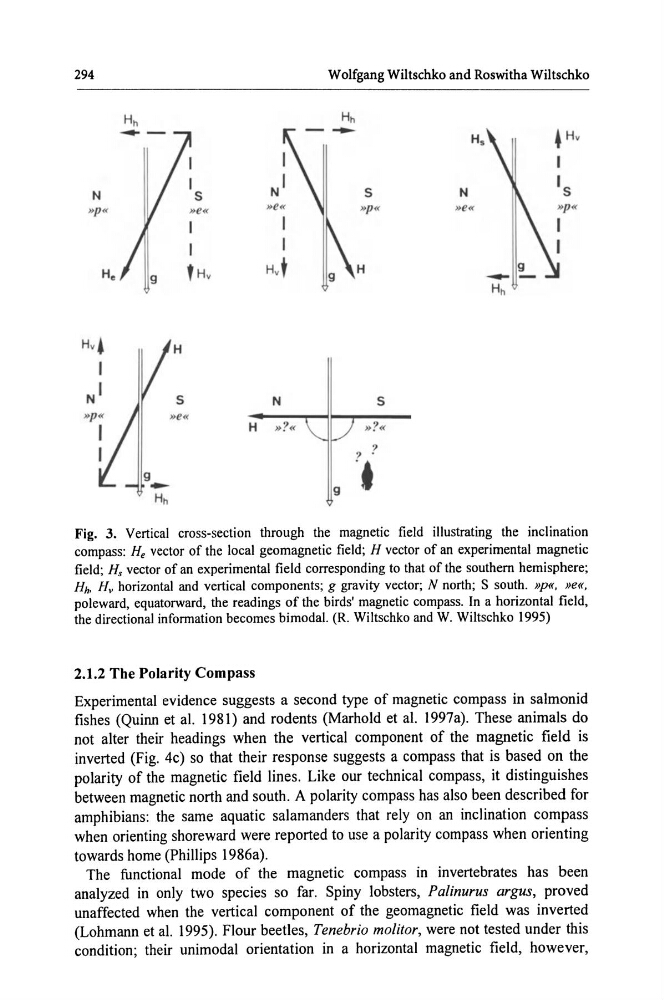
Fig. 3. Vertical cross-section through the magnetic field illustrating the inclination
compass: He vector of the local geomagnetic field; H vector of an experimental magnetic
field; H, vector of an experimental field corresponding to that of the southern hemisphere;
Hh. H,. horizontal and vertical components; g gravity vector; N north; S south. >>p rr, »err,
poleward, equatorward, the readings of the birds' magnetic compass. In a horizontal field,
the directional information becomes bimodal. (R. Wiltschko and W. Wiltschko 1995)
2.1.2 The Polarity Compass
Experimental evidence suggests a second type of magnetic compass in salmonid
fishes (Qui!Ul et al. 1981) and rodents (Marhold et al. 1997a). These animals do
not alter their headings when the vertical component of the magnetic field is
inverted (Fig. 4c) so that their response suggests a compass that is based on the
polarity of the magnetic field lines. Like our technical compass, it distinguishes
between magnetic north and south. A polarity compass has also been described for
amphibians: the same aquatic salamanders that rely on an inclination compass
when orienting shoreward were reported to use a polarity compass when orienting
towards home (Phillips 1986a).
The functional mode of the magnetic compass in invertebrates has been
analyzed in only two species so far. Spiny lobsters, Palinurus argus, proved
unaffected when the vertical component of the geomagnetic field was inverted
(Lohmann et al. 1995). Flour beetles, Tenebrio molitor, were not tested under this
condition; their unimodal orientation in a horizontal magnetic field, however,
Wolfgang Wiltschko and Roswitha Wiltschko
Hs
• Hv
I
s
N
Is
»P«
»e«
»p<<
Hv.
H
I
Nl
s
N
s
»e«
H »?«
»?<<
?
? .
g
't
Fig. 3. Vertical cross-section through the magnetic field illustrating the inclination
compass: He vector of the local geomagnetic field; H vector of an experimental magnetic
field; H, vector of an experimental field corresponding to that of the southern hemisphere;
Hh. H,. horizontal and vertical components; g gravity vector; N north; S south. >>p rr, »err,
poleward, equatorward, the readings of the birds' magnetic compass. In a horizontal field,
the directional information becomes bimodal. (R. Wiltschko and W. Wiltschko 1995)
2.1.2 The Polarity Compass
Experimental evidence suggests a second type of magnetic compass in salmonid
fishes (Qui!Ul et al. 1981) and rodents (Marhold et al. 1997a). These animals do
not alter their headings when the vertical component of the magnetic field is
inverted (Fig. 4c) so that their response suggests a compass that is based on the
polarity of the magnetic field lines. Like our technical compass, it distinguishes
between magnetic north and south. A polarity compass has also been described for
amphibians: the same aquatic salamanders that rely on an inclination compass
when orienting shoreward were reported to use a polarity compass when orienting
towards home (Phillips 1986a).
The functional mode of the magnetic compass in invertebrates has been
analyzed in only two species so far. Spiny lobsters, Palinurus argus, proved
unaffected when the vertical component of the geomagnetic field was inverted
(Lohmann et al. 1995). Flour beetles, Tenebrio molitor, were not tested under this
condition; their unimodal orientation in a horizontal magnetic field, however,