

Selectivity in Chemical Communication Systems of Arthropods
249
tSCH,1to
HO
CHO
OH 0
ro
OH
~
~ .... Qo 0
42
43
44
45
46
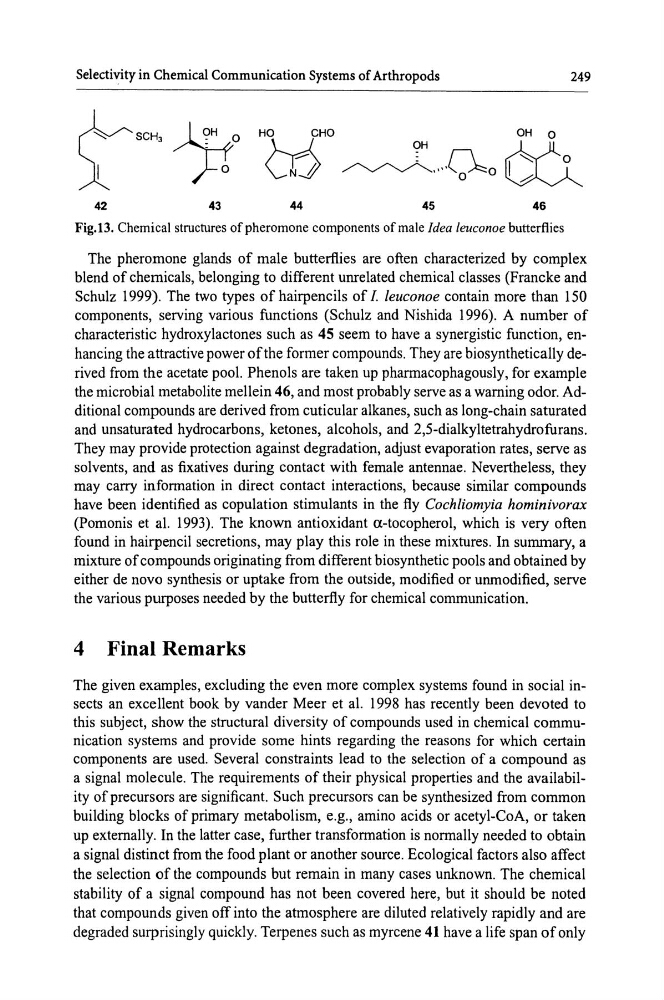
Fig.13. Chemical structures of pheromone components of male Idea /euconoe butterflies
The pheromone glands of male butterflies are often characterized by complex
blend of chemicals, belonging to different unrelated chemical classes (Francke and
Schulz 1999). The two types of hairpencils of I. leuconoe contain more than 150
components, serving various functions (Schulz and Nishida 1996). A number of
characteristic hydroxylactones such as 45 seem to have a synergistic function, enhancing the attractive power of the former compounds. They are biosynthetically derived from the acetate pool. Phenols are taken up pharmacophagously, for example
the microbial metabolite mellein 46, and most probably serve as a warning odor. Additional compounds are derived from cuticular alkanes, such as long-chain saturated
and unsaturated hydrocarbons, ketones, alcohols, and 2,5-dialkyltetrahydrofurans.
They may provide protection against degradation, adjust evaporation rates, serve as
solvents, and as fixatives during contact with female antennae. Nevertheless, they
may carry information in direct contact interactions, because similar compounds
have been identified as copulation stimulants in the fly Cochliomyia hominivorax
(Pomonis et al. 1993). The known antioxidant a-tocopherol, which is very often
found in hairpencil secretions, may play this role in these mixtures. In summary, a
mixture of compounds originating from different biosynthetic pools and obtained by
either de novo synthesis or uptake from the outside, modified or unmodified, serve
the various purposes needed by the butterfly for chemical communication.
4 Final Remarks
The given examples, excluding the even more complex systems found in social insects an excellent book by vander Meer et al. 1998 has recently been devoted to
this subject, show the structural diversity of compounds used in chemical communication systems and provide some hints regarding the reasons for which certain
components are used. Several constraints lead to the selection of a compound as
a signal molecule. The requirements of their physical properties and the availability of precursors are significant. Such precursors can be synthesized from common
building blocks of primary metabolism, e.g., amino acids or acetyl-CoA, or taken
up externally. In the latter case, further transformation is normally needed to obtain
a signal distinct from the food plant or another source. Ecological factors also affect
the selection of the compounds but remain in many cases unknown. The chemical
stability of a signal compound has not been covered here, but it should be noted
that compounds given off into the atmosphere are diluted relatively rapidly and are
degraded surprisingly quickly. Terpenes such as myrcene 41 have a life span of only
249
tSCH,1to
HO
CHO
OH 0
ro
OH
~
~ .... Qo 0
42
43
44
45
46
Fig.13. Chemical structures of pheromone components of male Idea /euconoe butterflies
The pheromone glands of male butterflies are often characterized by complex
blend of chemicals, belonging to different unrelated chemical classes (Francke and
Schulz 1999). The two types of hairpencils of I. leuconoe contain more than 150
components, serving various functions (Schulz and Nishida 1996). A number of
characteristic hydroxylactones such as 45 seem to have a synergistic function, enhancing the attractive power of the former compounds. They are biosynthetically derived from the acetate pool. Phenols are taken up pharmacophagously, for example
the microbial metabolite mellein 46, and most probably serve as a warning odor. Additional compounds are derived from cuticular alkanes, such as long-chain saturated
and unsaturated hydrocarbons, ketones, alcohols, and 2,5-dialkyltetrahydrofurans.
They may provide protection against degradation, adjust evaporation rates, serve as
solvents, and as fixatives during contact with female antennae. Nevertheless, they
may carry information in direct contact interactions, because similar compounds
have been identified as copulation stimulants in the fly Cochliomyia hominivorax
(Pomonis et al. 1993). The known antioxidant a-tocopherol, which is very often
found in hairpencil secretions, may play this role in these mixtures. In summary, a
mixture of compounds originating from different biosynthetic pools and obtained by
either de novo synthesis or uptake from the outside, modified or unmodified, serve
the various purposes needed by the butterfly for chemical communication.
4 Final Remarks
The given examples, excluding the even more complex systems found in social insects an excellent book by vander Meer et al. 1998 has recently been devoted to
this subject, show the structural diversity of compounds used in chemical communication systems and provide some hints regarding the reasons for which certain
components are used. Several constraints lead to the selection of a compound as
a signal molecule. The requirements of their physical properties and the availability of precursors are significant. Such precursors can be synthesized from common
building blocks of primary metabolism, e.g., amino acids or acetyl-CoA, or taken
up externally. In the latter case, further transformation is normally needed to obtain
a signal distinct from the food plant or another source. Ecological factors also affect
the selection of the compounds but remain in many cases unknown. The chemical
stability of a signal compound has not been covered here, but it should be noted
that compounds given off into the atmosphere are diluted relatively rapidly and are
degraded surprisingly quickly. Terpenes such as myrcene 41 have a life span of only