

Part A | 4.7
42 Part A Marine Flora and Fauna
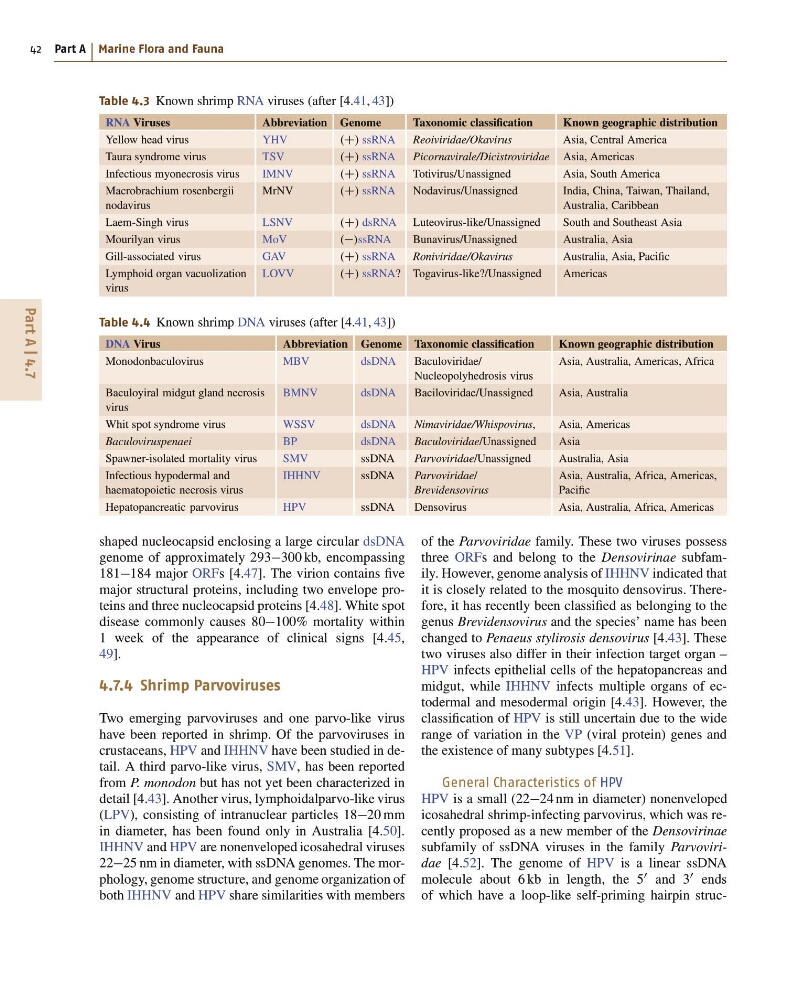
Table 4.3 Known shrimp RNA viruses (after [4.41, 43])
RNA Viruses
Abbreviation Genome
Taxonomic classification
Known geographic distribution
Yellow head virus
YHV
.C/ ssRNA
Reoiviridae/Okavirus
Asia, Central America
Taura syndrome virus
TSV
.C/ ssRNA
Picornavirale/Dicistroviridae Asia, Americas
Infectious myonecrosis virus
IMNV
.C/ ssRNA
Totivirus/Unassigned
Asia, South America
Macrobrachium rosenbergii
nodavirus
MrNV
.C/ ssRNA
Nodavirus/Unassigned
India, China, Taiwan, Thailand,
Australia, Caribbean
Laem-Singh virus
LSNV
.C/ dsRNA Luteovirus-like/Unassigned
South and Southeast Asia
Mourilyan virus
MoV
./ssRNA
Bunavirus/Unassigned
Australia, Asia
Gill-associated virus
GAV
.C/ ssRNA
Roniviridae/Okavirus
Australia, Asia, Pacific
Lymphoid organ vacuolization
virus
LOVV
.C/ ssRNA? Togavirus-like?/Unassigned
Americas
Table 4.4 Known shrimp DNA viruses (after [4.41, 43])
DNA Virus
Abbreviation Genome Taxonomic classification
Known geographic distribution
Monodonbaculovirus
MBV
dsDNA
Baculoviridae/
Nucleopolyhedrosis virus
Asia, Australia, Americas, Africa
Baculoyiral midgut gland necrosis
virus
BMNV
dsDNA
Baciloviridae/Unassigned
Asia, Australia
Whit spot syndrome virus
WSSV
dsDNA
Nimaviridae/Whispovirus,
Asia, Americas
Baculoviruspenaei
BP
dsDNA
Baculoviridae/Unassigned
Asia
Spawner-isolated mortality virus
SMV
ssDNA
Parvoviridae/Unassigned
Australia, Asia
Infectious hypodermal and
haematopoietic necrosis virus
IHHNV
ssDNA
Parvoviridae/
Brevidensovirus
Asia, Australia, Africa, Americas,
Pacific
Hepatopancreatic parvovirus
HPV
ssDNA
Densovirus
Asia, Australia, Africa, Americas
shaped nucleocapsid enclosing a large circular dsDNA
genome of approximately 293300 kb, encompassing
181184 major ORFs [4.47]. The virion contains five
major structural proteins, including two envelope proteins and three nucleocapsid proteins [4.48]. White spot
disease commonly causes 80100% mortality within
1 week of the appearance of clinical signs [4.45,
49].
4.7.4 Shrimp Parvoviruses
Two emerging parvoviruses and one parvo-like virus
have been reported in shrimp. Of the parvoviruses in
crustaceans, HPV and IHHNV have been studied in detail. A third parvo-like virus, SMV, has been reported
from P. monodon but has not yet been characterized in
detail [4.43]. Another virus, lymphoidalparvo-like virus
(LPV), consisting of intranuclear particles 1820 mm
in diameter, has been found only in Australia [4.50].
IHHNV and HPV are nonenveloped icosahedral viruses
2225 nm in diameter, with ssDNA genomes. The morphology, genome structure, and genome organization of
both IHHNV and HPV share similarities with members
of the Parvoviridae family. These two viruses possess
three ORFs and belong to the Densovirinae subfamily. However, genome analysis of IHHNV indicated that
it is closely related to the mosquito densovirus. Therefore, it has recently been classified as belonging to the
genus Brevidensovirus and the species’ name has been
changed to Penaeus stylirosis densovirus [4.43]. These
two viruses also differ in their infection target organ –
HPV infects epithelial cells of the hepatopancreas and
midgut, while IHHNV infects multiple organs of ectodermal and mesodermal origin [4.43]. However, the
classification of HPV is still uncertain due to the wide
range of variation in the VP (viral protein) genes and
the existence of many subtypes [4.51].
General Characteristics of HPV
HPV is a small (2224 nm in diameter) nonenveloped
icosahedral shrimp-infecting parvovirus, which was recently proposed as a new member of the Densovirinae
subfamily of ssDNA viruses in the family Parvoviridae [4.52]. The genome of HPV is a linear ssDNA
molecule about 6 kb in length, the 5
0 and 3
0 ends
of which have a loop-like self-priming hairpin struc-
42 Part A Marine Flora and Fauna
Table 4.3 Known shrimp RNA viruses (after [4.41, 43])
RNA Viruses
Abbreviation Genome
Taxonomic classification
Known geographic distribution
Yellow head virus
YHV
.C/ ssRNA
Reoiviridae/Okavirus
Asia, Central America
Taura syndrome virus
TSV
.C/ ssRNA
Picornavirale/Dicistroviridae Asia, Americas
Infectious myonecrosis virus
IMNV
.C/ ssRNA
Totivirus/Unassigned
Asia, South America
Macrobrachium rosenbergii
nodavirus
MrNV
.C/ ssRNA
Nodavirus/Unassigned
India, China, Taiwan, Thailand,
Australia, Caribbean
Laem-Singh virus
LSNV
.C/ dsRNA Luteovirus-like/Unassigned
South and Southeast Asia
Mourilyan virus
MoV
./ssRNA
Bunavirus/Unassigned
Australia, Asia
Gill-associated virus
GAV
.C/ ssRNA
Roniviridae/Okavirus
Australia, Asia, Pacific
Lymphoid organ vacuolization
virus
LOVV
.C/ ssRNA? Togavirus-like?/Unassigned
Americas
Table 4.4 Known shrimp DNA viruses (after [4.41, 43])
DNA Virus
Abbreviation Genome Taxonomic classification
Known geographic distribution
Monodonbaculovirus
MBV
dsDNA
Baculoviridae/
Nucleopolyhedrosis virus
Asia, Australia, Americas, Africa
Baculoyiral midgut gland necrosis
virus
BMNV
dsDNA
Baciloviridae/Unassigned
Asia, Australia
Whit spot syndrome virus
WSSV
dsDNA
Nimaviridae/Whispovirus,
Asia, Americas
Baculoviruspenaei
BP
dsDNA
Baculoviridae/Unassigned
Asia
Spawner-isolated mortality virus
SMV
ssDNA
Parvoviridae/Unassigned
Australia, Asia
Infectious hypodermal and
haematopoietic necrosis virus
IHHNV
ssDNA
Parvoviridae/
Brevidensovirus
Asia, Australia, Africa, Americas,
Pacific
Hepatopancreatic parvovirus
HPV
ssDNA
Densovirus
Asia, Australia, Africa, Americas
shaped nucleocapsid enclosing a large circular dsDNA
genome of approximately 293300 kb, encompassing
181184 major ORFs [4.47]. The virion contains five
major structural proteins, including two envelope proteins and three nucleocapsid proteins [4.48]. White spot
disease commonly causes 80100% mortality within
1 week of the appearance of clinical signs [4.45,
49].
4.7.4 Shrimp Parvoviruses
Two emerging parvoviruses and one parvo-like virus
have been reported in shrimp. Of the parvoviruses in
crustaceans, HPV and IHHNV have been studied in detail. A third parvo-like virus, SMV, has been reported
from P. monodon but has not yet been characterized in
detail [4.43]. Another virus, lymphoidalparvo-like virus
(LPV), consisting of intranuclear particles 1820 mm
in diameter, has been found only in Australia [4.50].
IHHNV and HPV are nonenveloped icosahedral viruses
2225 nm in diameter, with ssDNA genomes. The morphology, genome structure, and genome organization of
both IHHNV and HPV share similarities with members
of the Parvoviridae family. These two viruses possess
three ORFs and belong to the Densovirinae subfamily. However, genome analysis of IHHNV indicated that
it is closely related to the mosquito densovirus. Therefore, it has recently been classified as belonging to the
genus Brevidensovirus and the species’ name has been
changed to Penaeus stylirosis densovirus [4.43]. These
two viruses also differ in their infection target organ –
HPV infects epithelial cells of the hepatopancreas and
midgut, while IHHNV infects multiple organs of ectodermal and mesodermal origin [4.43]. However, the
classification of HPV is still uncertain due to the wide
range of variation in the VP (viral protein) genes and
the existence of many subtypes [4.51].
General Characteristics of HPV
HPV is a small (2224 nm in diameter) nonenveloped
icosahedral shrimp-infecting parvovirus, which was recently proposed as a new member of the Densovirinae
subfamily of ssDNA viruses in the family Parvoviridae [4.52]. The genome of HPV is a linear ssDNA
molecule about 6 kb in length, the 5
0 and 3
0 ends
of which have a loop-like self-priming hairpin struc-