

Marine Viruses 4.7 Marine Viruses and Shrimp Aquaculture 41
Part A | 4.7
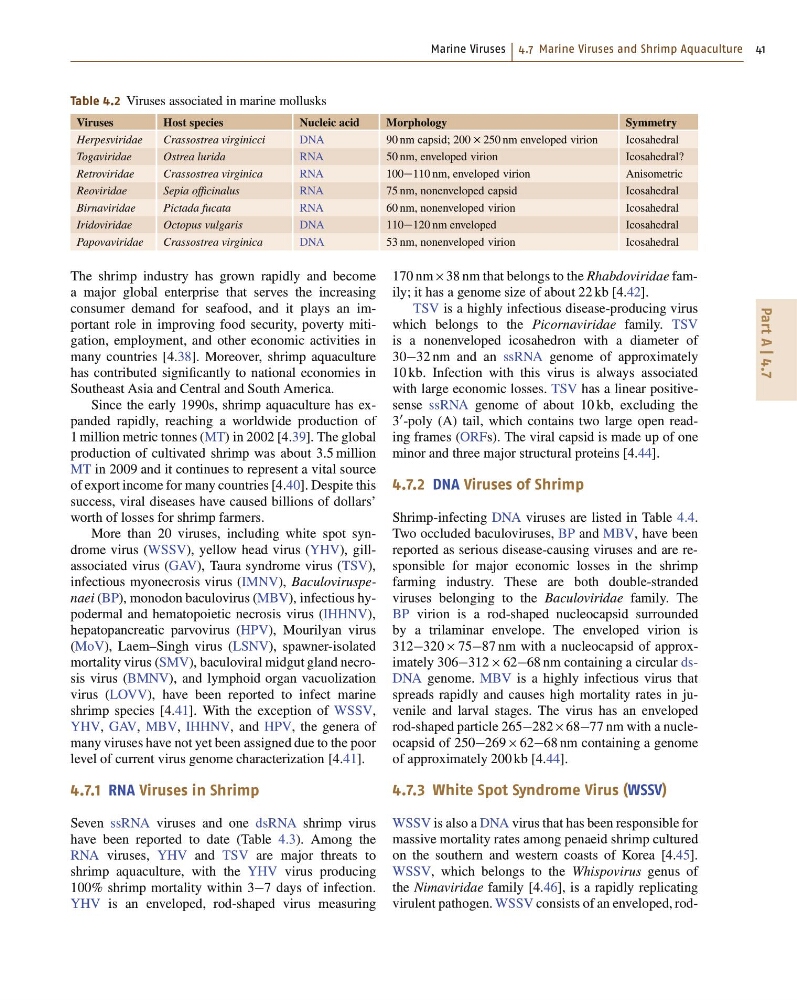
Table 4.2 Viruses associated in marine mollusks
Viruses
Host species
Nucleic acid
Morphology
Symmetry
Herpesviridae
Crassostrea virginicci
DNA
90 nm capsid; 200 250 nm enveloped virion
Icosahedral
Togaviridae
Ostrea lurida
RNA
50 nm, enveloped virion
Icosahedral?
Retroviridae
Crassostrea virginica
RNA
100110 nm, enveloped virion
Anisometric
Reoviridae
Sepia officinalus
RNA
75 nm, nonenveloped capsid
Icosahedral
Birnaviridae
Pictada fucata
RNA
60 nm, nonenveloped virion
Icosahedral
Iridoviridae
Octopus vulgaris
DNA
110120 nm enveloped
Icosahedral
Papovaviridae
Crassostrea virginica
DNA
53 nm, nonenveloped virion
Icosahedral
The shrimp industry has grown rapidly and become
a major global enterprise that serves the increasing
consumer demand for seafood, and it plays an important role in improving food security, poverty mitigation, employment, and other economic activities in
many countries [4.38]. Moreover, shrimp aquaculture
has contributed significantly to national economies in
Southeast Asia and Central and South America.
Since the early 1990s, shrimp aquaculture has expanded rapidly, reaching a worldwide production of
1 million metric tonnes (MT) in 2002 [4.39]. The global
production of cultivated shrimp was about 3:5 million
MT in 2009 and it continues to represent a vital source
of export income for many countries [4.40]. Despite this
success, viral diseases have caused billions of dollars’
worth of losses for shrimp farmers.
More than 20 viruses, including white spot syndrome virus (WSSV), yellow head virus (YHV), gillassociated virus (GAV), Taura syndrome virus (TSV),
infectious myonecrosis virus (IMNV), Baculoviruspenaei (BP), monodon baculovirus (MBV), infectious hypodermal and hematopoietic necrosis virus (IHHNV),
hepatopancreatic parvovirus (HPV), Mourilyan virus
(MoV), Laem–Singh virus (LSNV), spawner-isolated
mortality virus (SMV), baculoviral midgut gland necrosis virus (BMNV), and lymphoid organ vacuolization
virus (LOVV), have been reported to infect marine
shrimp species [4.41]. With the exception of WSSV,
YHV, GAV, MBV, IHHNV, and HPV, the genera of
many viruses have not yet been assigned due to the poor
level of current virus genome characterization [4.41].
4.7.1 RNA Viruses in Shrimp
Seven ssRNA viruses and one dsRNA shrimp virus
have been reported to date (Table 4.3). Among the
RNA viruses, YHV and TSV are major threats to
shrimp aquaculture, with the YHV virus producing
100% shrimp mortality within 37 days of infection.
YHV is an enveloped, rod-shaped virus measuring
170 nm 38 nm that belongs to the Rhabdoviridae family; it has a genome size of about 22 kb [4.42].
TSV is a highly infectious disease-producing virus
which belongs to the Picornaviridae family. TSV
is a nonenveloped icosahedron with a diameter of
3032 nm and an ssRNA genome of approximately
10 kb. Infection with this virus is always associated
with large economic losses. TSV has a linear positivesense ssRNA genome of about 10 kb, excluding the
3
0 -poly (A) tail, which contains two large open reading frames (ORFs). The viral capsid is made up of one
minor and three major structural proteins [4.44].
4.7.2 DNA Viruses of Shrimp
Shrimp-infecting DNA viruses are listed in Table 4.4.
Two occluded baculoviruses, BP and MBV, have been
reported as serious disease-causing viruses and are responsible for major economic losses in the shrimp
farming industry. These are both double-stranded
viruses belonging to the Baculoviridae family. The
BP virion is a rod-shaped nucleocapsid surrounded
by a trilaminar envelope. The enveloped virion is
312320 7587 nm with a nucleocapsid of approximately 306312 6268 nm containing a circular dsDNA genome. MBV is a highly infectious virus that
spreads rapidly and causes high mortality rates in juvenile and larval stages. The virus has an enveloped
rod-shaped particle 265282 6877 nm with a nucleocapsid of 250269 6268 nm containing a genome
of approximately 200 kb [4.44].
4.7.3 White Spot Syndrome Virus (WSSV)
WSSV is also a DNA virus that has been responsible for
massive mortality rates among penaeid shrimp cultured
on the southern and western coasts of Korea [4.45].
WSSV, which belongs to the Whispovirus genus of
the Nimaviridae family [4.46], is a rapidly replicating
virulent pathogen. WSSV consists of an enveloped, rod-
Part A | 4.7
Table 4.2 Viruses associated in marine mollusks
Viruses
Host species
Nucleic acid
Morphology
Symmetry
Herpesviridae
Crassostrea virginicci
DNA
90 nm capsid; 200 250 nm enveloped virion
Icosahedral
Togaviridae
Ostrea lurida
RNA
50 nm, enveloped virion
Icosahedral?
Retroviridae
Crassostrea virginica
RNA
100110 nm, enveloped virion
Anisometric
Reoviridae
Sepia officinalus
RNA
75 nm, nonenveloped capsid
Icosahedral
Birnaviridae
Pictada fucata
RNA
60 nm, nonenveloped virion
Icosahedral
Iridoviridae
Octopus vulgaris
DNA
110120 nm enveloped
Icosahedral
Papovaviridae
Crassostrea virginica
DNA
53 nm, nonenveloped virion
Icosahedral
The shrimp industry has grown rapidly and become
a major global enterprise that serves the increasing
consumer demand for seafood, and it plays an important role in improving food security, poverty mitigation, employment, and other economic activities in
many countries [4.38]. Moreover, shrimp aquaculture
has contributed significantly to national economies in
Southeast Asia and Central and South America.
Since the early 1990s, shrimp aquaculture has expanded rapidly, reaching a worldwide production of
1 million metric tonnes (MT) in 2002 [4.39]. The global
production of cultivated shrimp was about 3:5 million
MT in 2009 and it continues to represent a vital source
of export income for many countries [4.40]. Despite this
success, viral diseases have caused billions of dollars’
worth of losses for shrimp farmers.
More than 20 viruses, including white spot syndrome virus (WSSV), yellow head virus (YHV), gillassociated virus (GAV), Taura syndrome virus (TSV),
infectious myonecrosis virus (IMNV), Baculoviruspenaei (BP), monodon baculovirus (MBV), infectious hypodermal and hematopoietic necrosis virus (IHHNV),
hepatopancreatic parvovirus (HPV), Mourilyan virus
(MoV), Laem–Singh virus (LSNV), spawner-isolated
mortality virus (SMV), baculoviral midgut gland necrosis virus (BMNV), and lymphoid organ vacuolization
virus (LOVV), have been reported to infect marine
shrimp species [4.41]. With the exception of WSSV,
YHV, GAV, MBV, IHHNV, and HPV, the genera of
many viruses have not yet been assigned due to the poor
level of current virus genome characterization [4.41].
4.7.1 RNA Viruses in Shrimp
Seven ssRNA viruses and one dsRNA shrimp virus
have been reported to date (Table 4.3). Among the
RNA viruses, YHV and TSV are major threats to
shrimp aquaculture, with the YHV virus producing
100% shrimp mortality within 37 days of infection.
YHV is an enveloped, rod-shaped virus measuring
170 nm 38 nm that belongs to the Rhabdoviridae family; it has a genome size of about 22 kb [4.42].
TSV is a highly infectious disease-producing virus
which belongs to the Picornaviridae family. TSV
is a nonenveloped icosahedron with a diameter of
3032 nm and an ssRNA genome of approximately
10 kb. Infection with this virus is always associated
with large economic losses. TSV has a linear positivesense ssRNA genome of about 10 kb, excluding the
3
0 -poly (A) tail, which contains two large open reading frames (ORFs). The viral capsid is made up of one
minor and three major structural proteins [4.44].
4.7.2 DNA Viruses of Shrimp
Shrimp-infecting DNA viruses are listed in Table 4.4.
Two occluded baculoviruses, BP and MBV, have been
reported as serious disease-causing viruses and are responsible for major economic losses in the shrimp
farming industry. These are both double-stranded
viruses belonging to the Baculoviridae family. The
BP virion is a rod-shaped nucleocapsid surrounded
by a trilaminar envelope. The enveloped virion is
312320 7587 nm with a nucleocapsid of approximately 306312 6268 nm containing a circular dsDNA genome. MBV is a highly infectious virus that
spreads rapidly and causes high mortality rates in juvenile and larval stages. The virus has an enveloped
rod-shaped particle 265282 6877 nm with a nucleocapsid of 250269 6268 nm containing a genome
of approximately 200 kb [4.44].
4.7.3 White Spot Syndrome Virus (WSSV)
WSSV is also a DNA virus that has been responsible for
massive mortality rates among penaeid shrimp cultured
on the southern and western coasts of Korea [4.45].
WSSV, which belongs to the Whispovirus genus of
the Nimaviridae family [4.46], is a rapidly replicating
virulent pathogen. WSSV consists of an enveloped, rod-