

Biocatalysts from Aplysia 30.4 Glycoside Hydrolases Present in the Genus Aplysia 739
Part F | 30.4
The synthesis of interesting and potentially useful
˛-oligoglucosides of 2-hydroxymethyl-2,5,7,8 tetramethylchroman-6-ol, 3, Fig. 30.4 can be effectively
achieved by using the polyglycosylating ˛-glucosidase
from the marine mollusc Aplysia fasciata. The conversion of the acceptor is almost total at moderate concentration of maltose (150 mM), at a molar excess of 30. At
the beginning of the enzymatic reaction (20% conversion achieved in 1 h), only (S)-diastereomer of the glucoside of 3 (R D ˛-D-Glc) Fig. 30.4 was obtained. This
is an intriguing result in that chemoenzymatic routes
to enantiopure (R) and (S)-2-hydroxymethyl-2,5,7,8tetramethylchroman-6-ol are of current interest [30.47].
At the end of the polyglycosylation reaction, a number of oligoglucosides possessing different structures
were observed in the reaction mixture. The percentage composition of the reaction mixture at 24 h was
as follows: monosaccharide, 47%; two disaccharides,
42%; three trisaccharides, 9:4%; and a tetrasaccharide,
1:6%. The isomaltoside, the most abundant disaccharide produced, showed a radical scavenging activity
similar to that of the aglycone 3 (RDH) Fig. 30.4, so
that it can be proposed as a new hydrosoluble antioxidant agent. The green-based methodology by which
it is synthesized allows the inclusion of various technological fields (cosmetics, the food industry, etc.) for
exploitation. Furthermore, an intriguing correlation between the nature of the interglycosidic linkage and
scavenging activity was noticed both in disaccharides
and in trisaccharides. This structure–activity relationship deserves further investigation and the synthesis
of pure diastereomeric material will be of fundamental
importance [30.48].
An efficient enzymatic two-step procedure for the
synthesis of hydroxytyrosol and tyrosol ˛-glucosidic
derivatives based on ˛-glucosidase from Aplysia fasciata and a commercial tyrosinase from mushrooms,
was described very recently [30.49]. Considering the
entire double enzymatic process for the formation of
these glycosidic derivatives of hydroxytyrosol from tyrosol, it was possible to glycosylate regioselectively
only the alcoholic primary position for producing hydroxytyrosol mono and disaccharidic derivatives, with
a reaction total yield which was of ca. 20% for each
product obtained at final concentrations of 9:35 and
10:8 g L
1 of reaction, respectively. Their antioxidant
activity was evaluated by a DPPH test. However, in
the first part of this work, the ability of ˛-D-glucosidase from Aplysia fasciata to glycosylate an array of naturally occurring phenolic compounds with
alcoholic and/or phenolic hydroxyl groups in their
R = –α–(Glc) 3
R = –α–(Glc)-1,6-Glc
R = –α–(Glc)-1,4-Glc
R = –α–Glc
O
O
O
AG series
O R
NH
R = –α–(Glc)-1,6-Glc
R = –α–(Glc)-1,4-Glc
R = –α–Glc
O
O
O
MG series
O
R
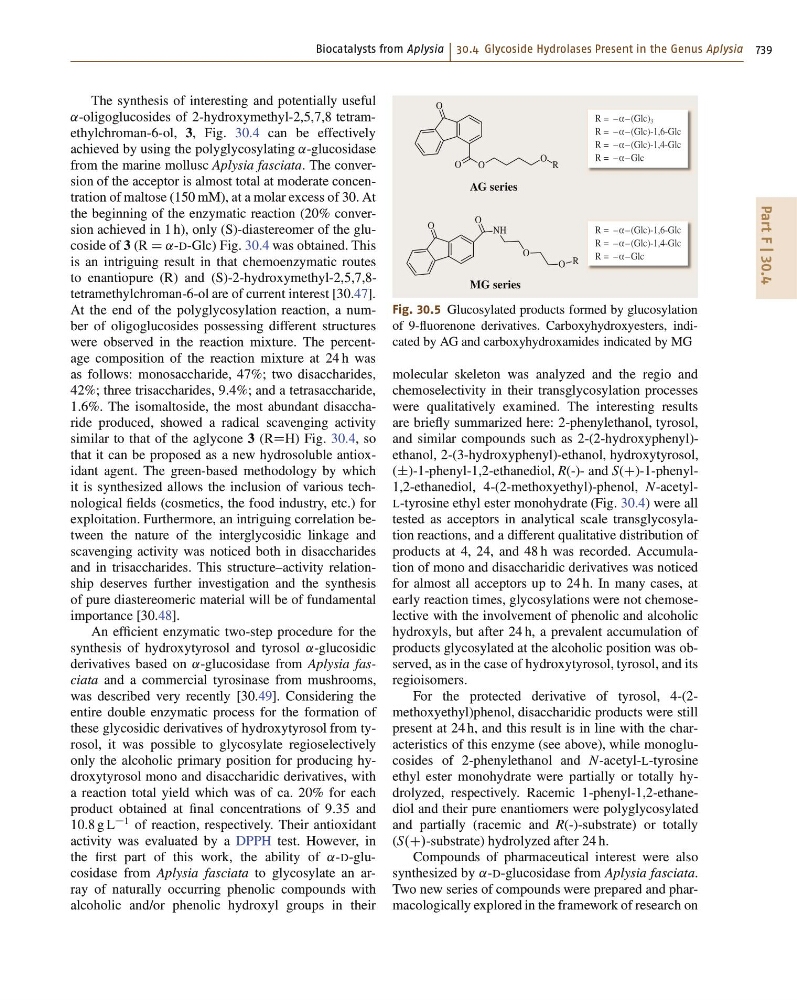
Fig. 30.5 Glucosylated products formed by glucosylation
of 9-fluorenone derivatives. Carboxyhydroxyesters, indicated by AG and carboxyhydroxamides indicated by MG
molecular skeleton was analyzed and the regio and
chemoselectivity in their transglycosylation processes
were qualitatively examined. The interesting results
are briefly summarized here: 2-phenylethanol, tyrosol,
and similar compounds such as 2-(2-hydroxyphenyl)ethanol, 2-(3-hydroxyphenyl)-ethanol, hydroxytyrosol,
(˙)-1-phenyl-1,2-ethanediol, R(-)- and S(C)-1-phenyl1,2-ethanediol, 4-(2-methoxyethyl)-phenol, N-acetylL-tyrosine ethyl ester monohydrate (Fig. 30.4) were all
tested as acceptors in analytical scale transglycosylation reactions, and a different qualitative distribution of
products at 4, 24, and 48 h was recorded. Accumulation of mono and disaccharidic derivatives was noticed
for almost all acceptors up to 24 h. In many cases, at
early reaction times, glycosylations were not chemoselective with the involvement of phenolic and alcoholic
hydroxyls, but after 24 h, a prevalent accumulation of
products glycosylated at the alcoholic position was observed, as in the case of hydroxytyrosol, tyrosol, and its
regioisomers.
For the protected derivative of tyrosol, 4-(2methoxyethyl)phenol, disaccharidic products were still
present at 24 h, and this result is in line with the characteristics of this enzyme (see above), while monoglucosides of 2-phenylethanol and N-acetyl-L-tyrosine
ethyl ester monohydrate were partially or totally hydrolyzed, respectively. Racemic 1-phenyl-1,2-ethanediol and their pure enantiomers were polyglycosylated
and partially (racemic and R(-)-substrate) or totally
(S.C/-substrate) hydrolyzed after 24 h.
Compounds of pharmaceutical interest were also
synthesized by ˛-D-glucosidase from Aplysia fasciata.
Two new series of compounds were prepared and pharmacologically explored in the framework of research on