

Part A | 3.7
32 Part A Marine Flora and Fauna
ATP
ATP
synthetase
Light
ADP+Pi
Cytoplasmic
membrane
Periplasmic space
H
+
O 2
ADP+Pi
ATP
Light
Thylakoid
membrane
NADPH
Stroma
(cytoplasm)
Lumen
2H 2 O
4H
+
Cytoplasm
ATP
synthetase
a)
b)
H
+
H
+
H
+
H
+
H
+
H
+
H
+
H
+
H
+
H
+
H
+
H
+
H
+
H
+
H
+
H
+
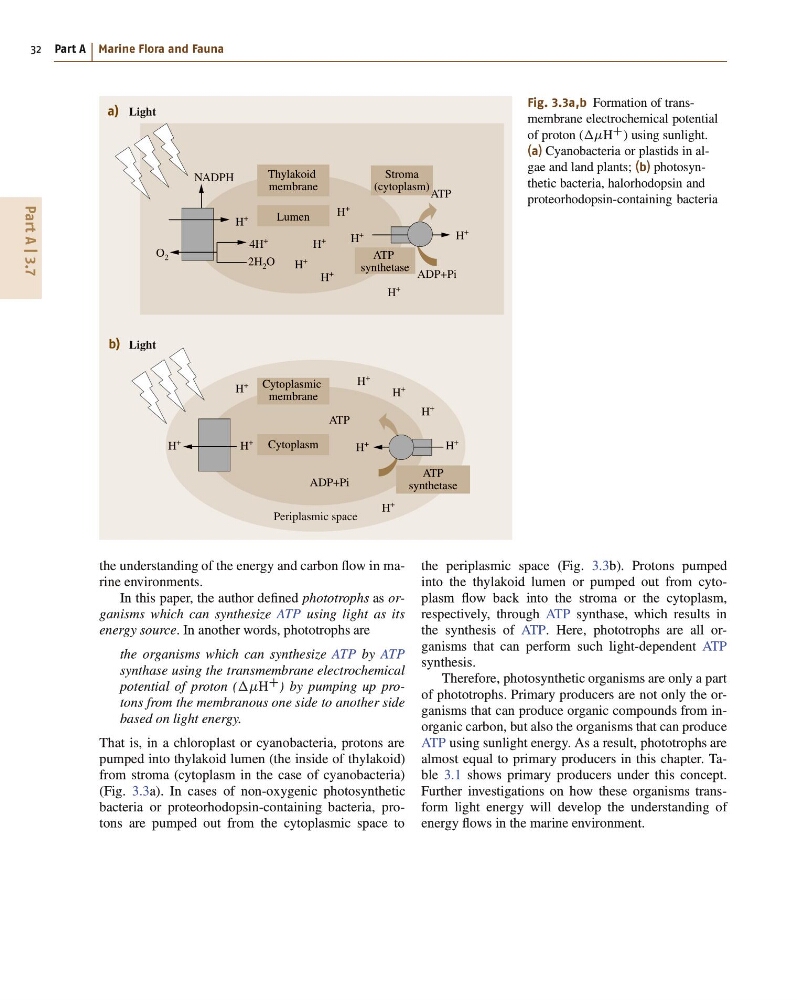
Fig. 3.3a,b Formation of transmembrane electrochemical potential
of proton (H
C ) using sunlight.
(a) Cyanobacteria or plastids in algae and land plants; (b) photosynthetic bacteria, halorhodopsin and
proteorhodopsin-containing bacteria
the understanding of the energy and carbon flow in marine environments.
In this paper, the author defined phototrophs as organisms which can synthesize ATP using light as its
energy source. In another words, phototrophs are
the organisms which can synthesize ATP by ATP
synthase using the transmembrane electrochemical
potential of proton (H
C ) by pumping up protons from the membranous one side to another side
based on light energy.
That is, in a chloroplast or cyanobacteria, protons are
pumped into thylakoid lumen (the inside of thylakoid)
from stroma (cytoplasm in the case of cyanobacteria)
(Fig. 3.3a). In cases of non-oxygenic photosynthetic
bacteria or proteorhodopsin-containing bacteria, protons are pumped out from the cytoplasmic space to
the periplasmic space (Fig. 3.3b). Protons pumped
into the thylakoid lumen or pumped out from cytoplasm flow back into the stroma or the cytoplasm,
respectively, through ATP synthase, which results in
the synthesis of ATP. Here, phototrophs are all organisms that can perform such light-dependent ATP
synthesis.
Therefore, photosynthetic organisms are only a part
of phototrophs. Primary producers are not only the organisms that can produce organic compounds from inorganic carbon, but also the organisms that can produce
ATP using sunlight energy. As a result, phototrophs are
almost equal to primary producers in this chapter. Table 3.1 shows primary producers under this concept.
Further investigations on how these organisms transform light energy will develop the understanding of
energy flows in the marine environment.
32 Part A Marine Flora and Fauna
ATP
ATP
synthetase
Light
ADP+Pi
Cytoplasmic
membrane
Periplasmic space
H
+
O 2
ADP+Pi
ATP
Light
Thylakoid
membrane
NADPH
Stroma
(cytoplasm)
Lumen
2H 2 O
4H
+
Cytoplasm
ATP
synthetase
a)
b)
H
+
H
+
H
+
H
+
H
+
H
+
H
+
H
+
H
+
H
+
H
+
H
+
H
+
H
+
H
+
H
+
Fig. 3.3a,b Formation of transmembrane electrochemical potential
of proton (H
C ) using sunlight.
(a) Cyanobacteria or plastids in algae and land plants; (b) photosynthetic bacteria, halorhodopsin and
proteorhodopsin-containing bacteria
the understanding of the energy and carbon flow in marine environments.
In this paper, the author defined phototrophs as organisms which can synthesize ATP using light as its
energy source. In another words, phototrophs are
the organisms which can synthesize ATP by ATP
synthase using the transmembrane electrochemical
potential of proton (H
C ) by pumping up protons from the membranous one side to another side
based on light energy.
That is, in a chloroplast or cyanobacteria, protons are
pumped into thylakoid lumen (the inside of thylakoid)
from stroma (cytoplasm in the case of cyanobacteria)
(Fig. 3.3a). In cases of non-oxygenic photosynthetic
bacteria or proteorhodopsin-containing bacteria, protons are pumped out from the cytoplasmic space to
the periplasmic space (Fig. 3.3b). Protons pumped
into the thylakoid lumen or pumped out from cytoplasm flow back into the stroma or the cytoplasm,
respectively, through ATP synthase, which results in
the synthesis of ATP. Here, phototrophs are all organisms that can perform such light-dependent ATP
synthesis.
Therefore, photosynthetic organisms are only a part
of phototrophs. Primary producers are not only the organisms that can produce organic compounds from inorganic carbon, but also the organisms that can produce
ATP using sunlight energy. As a result, phototrophs are
almost equal to primary producers in this chapter. Table 3.1 shows primary producers under this concept.
Further investigations on how these organisms transform light energy will develop the understanding of
energy flows in the marine environment.