

Marine Algae Biomass for Removal of Heavy Metal Ions 25.4 Influence of Experimental Parameters 623
Part D | 25.4
2
6
10
14
18
22
a) q (mg/g)
R (%)
Algae biomass (g/l)
30
25
20
15
10
5
0
100
80
60
40
20
0
3
6
9
12
15
18
21
b) q (mg/g)
R (%)
Algae biomass (g/l)
7
6
5
4
3
2
1
0
80
78
76
74
72
70
68
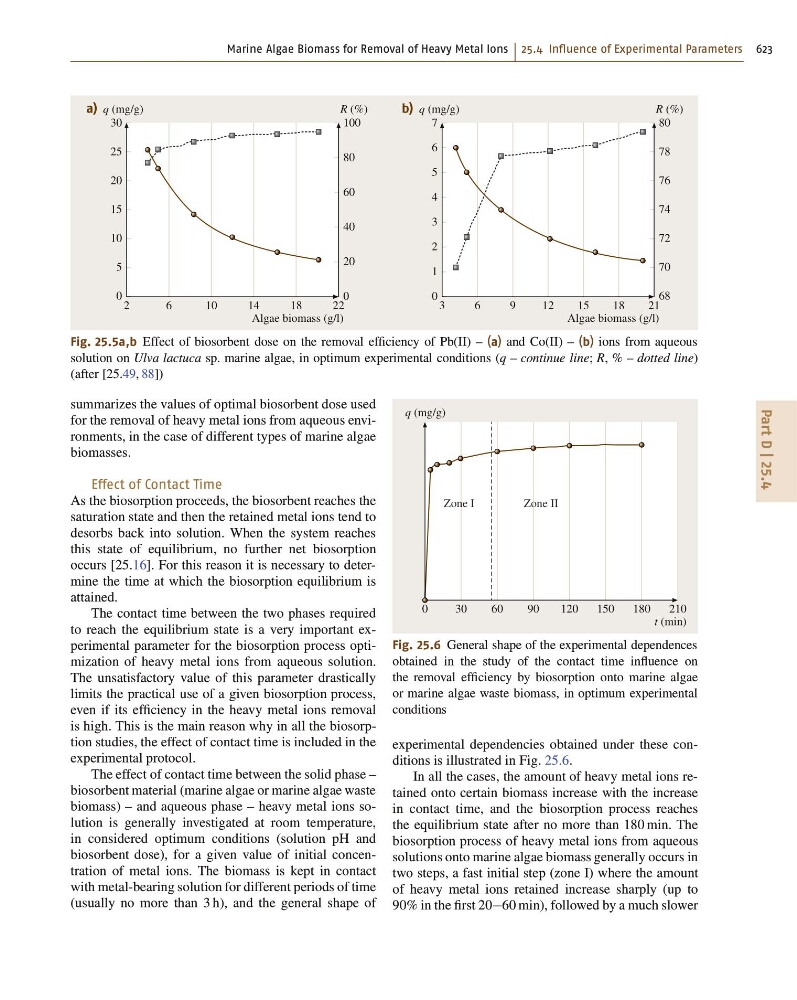
Fig. 25.5a,b Effect of biosorbent dose on the removal efficiency of Pb(II) – (a) and Co(II) – (b) ions from aqueous
solution on Ulva lactuca sp. marine algae, in optimum experimental conditions (q – continue line; R, % – dotted line)
(after [25.49, 88])
summarizes the values of optimal biosorbent dose used
for the removal of heavy metal ions from aqueous environments, in the case of different types of marine algae
biomasses.
Effect of Contact Time
As the biosorption proceeds, the biosorbent reaches the
saturation state and then the retained metal ions tend to
desorbs back into solution. When the system reaches
this state of equilibrium, no further net biosorption
occurs [25.16]. For this reason it is necessary to determine the time at which the biosorption equilibrium is
attained.
The contact time between the two phases required
to reach the equilibrium state is a very important experimental parameter for the biosorption process optimization of heavy metal ions from aqueous solution.
The unsatisfactory value of this parameter drastically
limits the practical use of a given biosorption process,
even if its efficiency in the heavy metal ions removal
is high. This is the main reason why in all the biosorption studies, the effect of contact time is included in the
experimental protocol.
The effect of contact time between the solid phase –
biosorbent material (marine algae or marine algae waste
biomass) – and aqueous phase – heavy metal ions solution is generally investigated at room temperature,
in considered optimum conditions (solution pH and
biosorbent dose), for a given value of initial concentration of metal ions. The biomass is kept in contact
with metal-bearing solution for different periods of time
(usually no more than 3 h), and the general shape of
0
30
Zone I
Zone II
60
90
120
150
180
210
q (mg/g)
t (min)
Fig. 25.6 General shape of the experimental dependences
obtained in the study of the contact time influence on
the removal efficiency by biosorption onto marine algae
or marine algae waste biomass, in optimum experimental
conditions
experimental dependencies obtained under these conditions is illustrated in Fig. 25.6.
In all the cases, the amount of heavy metal ions retained onto certain biomass increase with the increase
in contact time, and the biosorption process reaches
the equilibrium state after no more than 180 min. The
biosorption process of heavy metal ions from aqueous
solutions onto marine algae biomass generally occurs in
two steps, a fast initial step (zone I) where the amount
of heavy metal ions retained increase sharply (up to
90% in the first 2060 min), followed by a much slower