

Part D | 24.1
598 Part D Marine Algal Biotechnology
sity, different groups of algae exhibit striking differences in terms of morphology, ultrastructure, ecology,
biochemistry, and physiology.
The benthic macroalgae, or seaweeds, are the most
common macrophytes on marine shores where stable
substrata exist (natural rock, artificial reefs, concrete,
or wood pillars). They belong to three different groups,
empirically recognized on the basis of thallus color: the
red algae (phylum Rhodophyta), the brown algae (phylum Heterokontophyta, class Phaeophyceae), and the
green algae (phylum Chlorophyta, class Ulvophyceae).
Although they co-exist in the same coastal habitats,
these three groups are phylogenetically distinct and are
characterized by different biochemical and physiological traits. This has important implications with regard
to their biosorption properties.
24.1.2 Marine Benthic Green Algae
(Chlorophyta, Ulvophyceae)
The Viridaeplantae, formed by the embryophyte plants
and the complex of algae generally called green algae, is one of the most diverse evolutionary lineages
within the eukaryotic supergroup Archaeplastida [24.3,
4]. Molecular and ultrastructural studies conducted in
the last 20 years suggest that the Viridaeplantae evolved
from a unicellular flagellate ancestor, from which an
early separation in two lineages took place [24.3, 4].
One of these, the Streptophyta, radiated in freshwater environments and eventually gave rise to terrestrial
embryophyte plants. The other, the Chlorophyta, had
a more complex evolutionary history and gave rise to
several different groups of green algae. The class Ulvophyceae is the most diverse of these groups in terms
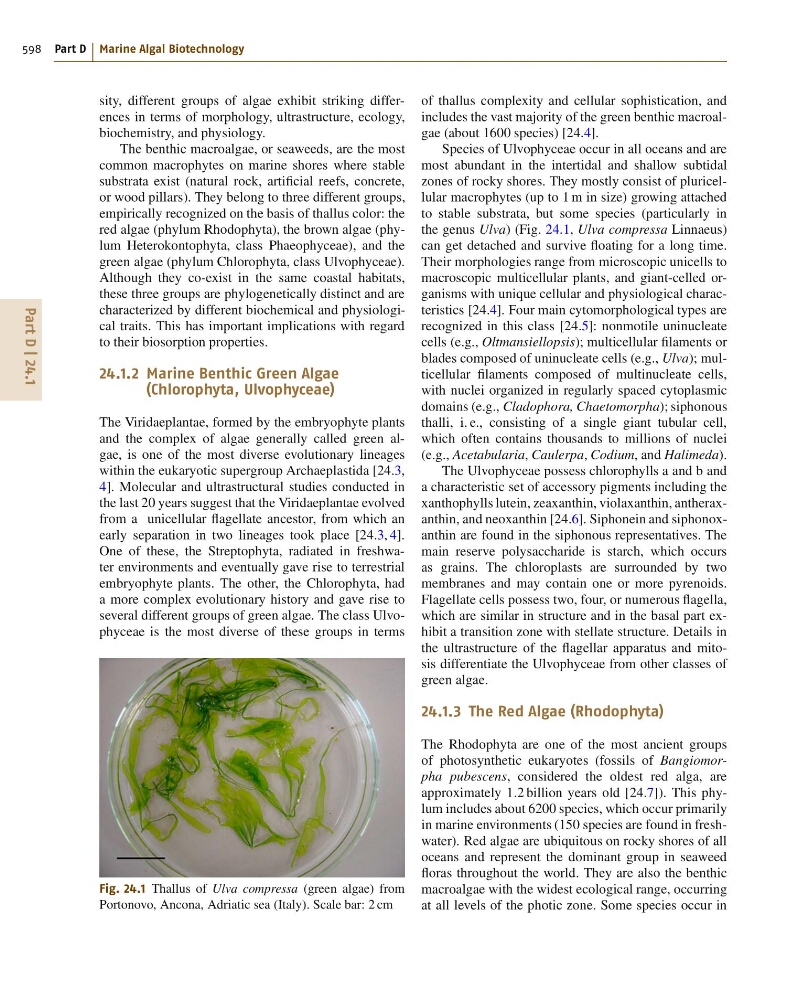
Fig. 24.1 Thallus of Ulva compressa (green algae) from
Portonovo, Ancona, Adriatic sea (Italy). Scale bar: 2 cm
of thallus complexity and cellular sophistication, and
includes the vast majority of the green benthic macroalgae (about 1600 species) [24.4].
Species of Ulvophyceae occur in all oceans and are
most abundant in the intertidal and shallow subtidal
zones of rocky shores. They mostly consist of pluricellular macrophytes (up to 1 m in size) growing attached
to stable substrata, but some species (particularly in
the genus Ulva) (Fig. 24.1, Ulva compressa Linnaeus)
can get detached and survive floating for a long time.
Their morphologies range from microscopic unicells to
macroscopic multicellular plants, and giant-celled organisms with unique cellular and physiological characteristics [24.4]. Four main cytomorphological types are
recognized in this class [24.5]: nonmotile uninucleate
cells (e.g., Oltmansiellopsis); multicellular filaments or
blades composed of uninucleate cells (e.g., Ulva); multicellular filaments composed of multinucleate cells,
with nuclei organized in regularly spaced cytoplasmic
domains (e.g., Cladophora, Chaetomorpha); siphonous
thalli, i. e., consisting of a single giant tubular cell,
which often contains thousands to millions of nuclei
(e.g., Acetabularia, Caulerpa, Codium, and Halimeda).
The Ulvophyceae possess chlorophylls a and b and
a characteristic set of accessory pigments including the
xanthophylls lutein, zeaxanthin, violaxanthin, antheraxanthin, and neoxanthin [24.6]. Siphonein and siphonoxanthin are found in the siphonous representatives. The
main reserve polysaccharide is starch, which occurs
as grains. The chloroplasts are surrounded by two
membranes and may contain one or more pyrenoids.
Flagellate cells possess two, four, or numerous flagella,
which are similar in structure and in the basal part exhibit a transition zone with stellate structure. Details in
the ultrastructure of the flagellar apparatus and mitosis differentiate the Ulvophyceae from other classes of
green algae.
24.1.3 The Red Algae (Rhodophyta)
The Rhodophyta are one of the most ancient groups
of photosynthetic eukaryotes (fossils of Bangiomorpha pubescens, considered the oldest red alga, are
approximately 1:2 billion years old [24.7]). This phylum includes about 6200 species, which occur primarily
in marine environments (150 species are found in freshwater). Red algae are ubiquitous on rocky shores of all
oceans and represent the dominant group in seaweed
floras throughout the world. They are also the benthic
macroalgae with the widest ecological range, occurring
at all levels of the photic zone. Some species occur in