

Cell Wall Polysaccharides of Marine Algae 22.3 Isolation from Algal Raw Material 557
Part D | 22.3
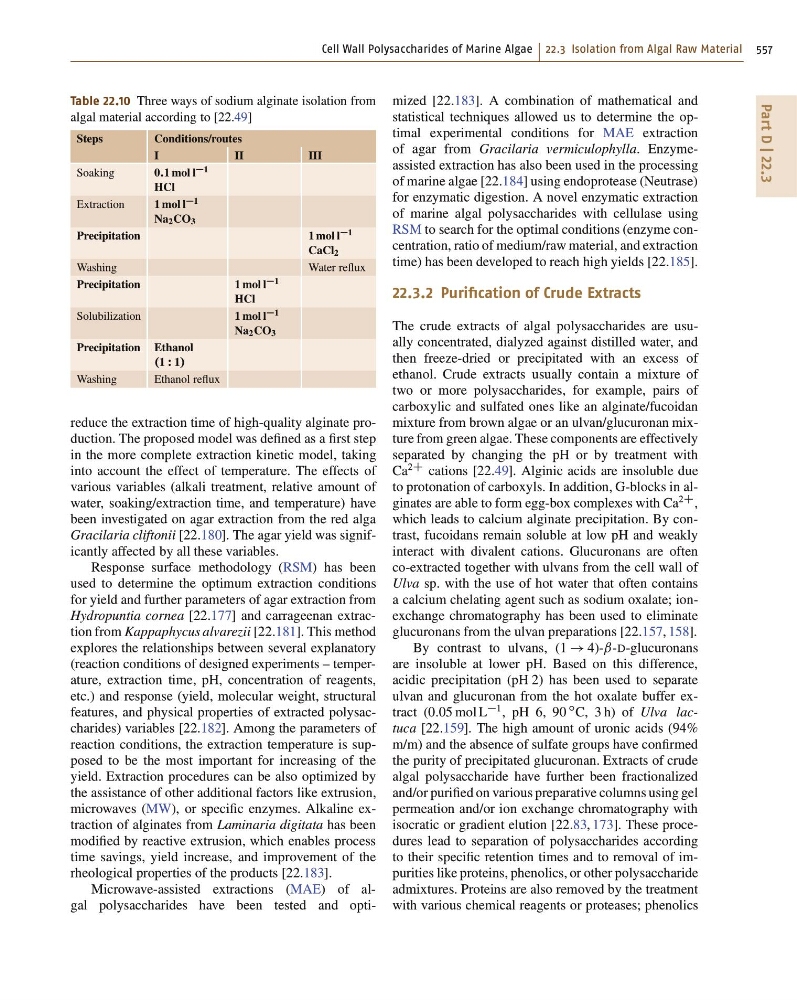
Table 22.10 Three ways of sodium alginate isolation from
algal material according to [22.49]
Steps
Conditions/routes
I
II
III
Soaking
0:1 mol l 1
HCl
Extraction
1 mol l 1
Na 2 CO 3
Precipitation
1 mol l 1
CaCl 2
Washing
Water reflux
Precipitation
1 mol l 1
HCl
Solubilization
1 mol l 1
Na 2 CO 3
Precipitation Ethanol
.1 W 1/
Washing
Ethanol reflux
reduce the extraction time of high-quality alginate production. The proposed model was defined as a first step
in the more complete extraction kinetic model, taking
into account the effect of temperature. The effects of
various variables (alkali treatment, relative amount of
water, soaking/extraction time, and temperature) have
been investigated on agar extraction from the red alga
Gracilaria cliftonii [22.180]. The agar yield was significantly affected by all these variables.
Response surface methodology (RSM) has been
used to determine the optimum extraction conditions
for yield and further parameters of agar extraction from
Hydropuntia cornea [22.177] and carrageenan extraction from Kappaphycus alvarezii [22.181]. This method
explores the relationships between several explanatory
(reaction conditions of designed experiments – temperature, extraction time, pH, concentration of reagents,
etc.) and response (yield, molecular weight, structural
features, and physical properties of extracted polysaccharides) variables [22.182]. Among the parameters of
reaction conditions, the extraction temperature is supposed to be the most important for increasing of the
yield. Extraction procedures can be also optimized by
the assistance of other additional factors like extrusion,
microwaves (MW), or specific enzymes. Alkaline extraction of alginates from Laminaria digitata has been
modified by reactive extrusion, which enables process
time savings, yield increase, and improvement of the
rheological properties of the products [22.183].
Microwave-assisted extractions (MAE) of algal polysaccharides have been tested and optimized [22.183]. A combination of mathematical and
statistical techniques allowed us to determine the optimal experimental conditions for MAE extraction
of agar from Gracilaria vermiculophylla. Enzymeassisted extraction has also been used in the processing
of marine algae [22.184] using endoprotease (Neutrase)
for enzymatic digestion. A novel enzymatic extraction
of marine algal polysaccharides with cellulase using
RSM to search for the optimal conditions (enzyme concentration, ratio of medium/raw material, and extraction
time) has been developed to reach high yields [22.185].
22.3.2 Purification of Crude Extracts
The crude extracts of algal polysaccharides are usually concentrated, dialyzed against distilled water, and
then freeze-dried or precipitated with an excess of
ethanol. Crude extracts usually contain a mixture of
two or more polysaccharides, for example, pairs of
carboxylic and sulfated ones like an alginate/fucoidan
mixture from brown algae or an ulvan/glucuronan mixture from green algae. These components are effectively
separated by changing the pH or by treatment with
Ca
2C cations [22.49]. Alginic acids are insoluble due
to protonation of carboxyls. In addition, G-blocks in alginates are able to form egg-box complexes with Ca
2C ,
which leads to calcium alginate precipitation. By contrast, fucoidans remain soluble at low pH and weakly
interact with divalent cations. Glucuronans are often
co-extracted together with ulvans from the cell wall of
Ulva sp. with the use of hot water that often contains
a calcium chelating agent such as sodium oxalate; ionexchange chromatography has been used to eliminate
glucuronans from the ulvan preparations [22.157, 158].
By contrast to ulvans, (1 ! 4)-ˇ-D-glucuronans
are insoluble at lower pH. Based on this difference,
acidic precipitation (pH 2) has been used to separate
ulvan and glucuronan from the hot oxalate buffer extract (0:05 mol L
1 , pH 6, 90
ı C, 3 h) of Ulva lactuca [22.159]. The high amount of uronic acids (94%
m/m) and the absence of sulfate groups have confirmed
the purity of precipitated glucuronan. Extracts of crude
algal polysaccharide have further been fractionalized
and/or purified on various preparative columns using gel
permeation and/or ion exchange chromatography with
isocratic or gradient elution [22.83, 173]. These procedures lead to separation of polysaccharides according
to their specific retention times and to removal of impurities like proteins, phenolics, or other polysaccharide
admixtures. Proteins are also removed by the treatment
with various chemical reagents or proteases; phenolics
Part D | 22.3
Table 22.10 Three ways of sodium alginate isolation from
algal material according to [22.49]
Steps
Conditions/routes
I
II
III
Soaking
0:1 mol l 1
HCl
Extraction
1 mol l 1
Na 2 CO 3
Precipitation
1 mol l 1
CaCl 2
Washing
Water reflux
Precipitation
1 mol l 1
HCl
Solubilization
1 mol l 1
Na 2 CO 3
Precipitation Ethanol
.1 W 1/
Washing
Ethanol reflux
reduce the extraction time of high-quality alginate production. The proposed model was defined as a first step
in the more complete extraction kinetic model, taking
into account the effect of temperature. The effects of
various variables (alkali treatment, relative amount of
water, soaking/extraction time, and temperature) have
been investigated on agar extraction from the red alga
Gracilaria cliftonii [22.180]. The agar yield was significantly affected by all these variables.
Response surface methodology (RSM) has been
used to determine the optimum extraction conditions
for yield and further parameters of agar extraction from
Hydropuntia cornea [22.177] and carrageenan extraction from Kappaphycus alvarezii [22.181]. This method
explores the relationships between several explanatory
(reaction conditions of designed experiments – temperature, extraction time, pH, concentration of reagents,
etc.) and response (yield, molecular weight, structural
features, and physical properties of extracted polysaccharides) variables [22.182]. Among the parameters of
reaction conditions, the extraction temperature is supposed to be the most important for increasing of the
yield. Extraction procedures can be also optimized by
the assistance of other additional factors like extrusion,
microwaves (MW), or specific enzymes. Alkaline extraction of alginates from Laminaria digitata has been
modified by reactive extrusion, which enables process
time savings, yield increase, and improvement of the
rheological properties of the products [22.183].
Microwave-assisted extractions (MAE) of algal polysaccharides have been tested and optimized [22.183]. A combination of mathematical and
statistical techniques allowed us to determine the optimal experimental conditions for MAE extraction
of agar from Gracilaria vermiculophylla. Enzymeassisted extraction has also been used in the processing
of marine algae [22.184] using endoprotease (Neutrase)
for enzymatic digestion. A novel enzymatic extraction
of marine algal polysaccharides with cellulase using
RSM to search for the optimal conditions (enzyme concentration, ratio of medium/raw material, and extraction
time) has been developed to reach high yields [22.185].
22.3.2 Purification of Crude Extracts
The crude extracts of algal polysaccharides are usually concentrated, dialyzed against distilled water, and
then freeze-dried or precipitated with an excess of
ethanol. Crude extracts usually contain a mixture of
two or more polysaccharides, for example, pairs of
carboxylic and sulfated ones like an alginate/fucoidan
mixture from brown algae or an ulvan/glucuronan mixture from green algae. These components are effectively
separated by changing the pH or by treatment with
Ca
2C cations [22.49]. Alginic acids are insoluble due
to protonation of carboxyls. In addition, G-blocks in alginates are able to form egg-box complexes with Ca
2C ,
which leads to calcium alginate precipitation. By contrast, fucoidans remain soluble at low pH and weakly
interact with divalent cations. Glucuronans are often
co-extracted together with ulvans from the cell wall of
Ulva sp. with the use of hot water that often contains
a calcium chelating agent such as sodium oxalate; ionexchange chromatography has been used to eliminate
glucuronans from the ulvan preparations [22.157, 158].
By contrast to ulvans, (1 ! 4)-ˇ-D-glucuronans
are insoluble at lower pH. Based on this difference,
acidic precipitation (pH 2) has been used to separate
ulvan and glucuronan from the hot oxalate buffer extract (0:05 mol L
1 , pH 6, 90
ı C, 3 h) of Ulva lactuca [22.159]. The high amount of uronic acids (94%
m/m) and the absence of sulfate groups have confirmed
the purity of precipitated glucuronan. Extracts of crude
algal polysaccharide have further been fractionalized
and/or purified on various preparative columns using gel
permeation and/or ion exchange chromatography with
isocratic or gradient elution [22.83, 173]. These procedures lead to separation of polysaccharides according
to their specific retention times and to removal of impurities like proteins, phenolics, or other polysaccharide
admixtures. Proteins are also removed by the treatment
with various chemical reagents or proteases; phenolics