

Part C | 19.2
504 Part C Marine Genomics
Secondary metabolites
from marine sponges
Environmental
bacterial microflora
Single-cell sort
Standard molecular biology techniques
FACSAria II system
(BD bioscience)
Whole
genome
amplification
Correlation of
target genes
with producers
via PCR
Single-cell analysis (flow cytometric approach)
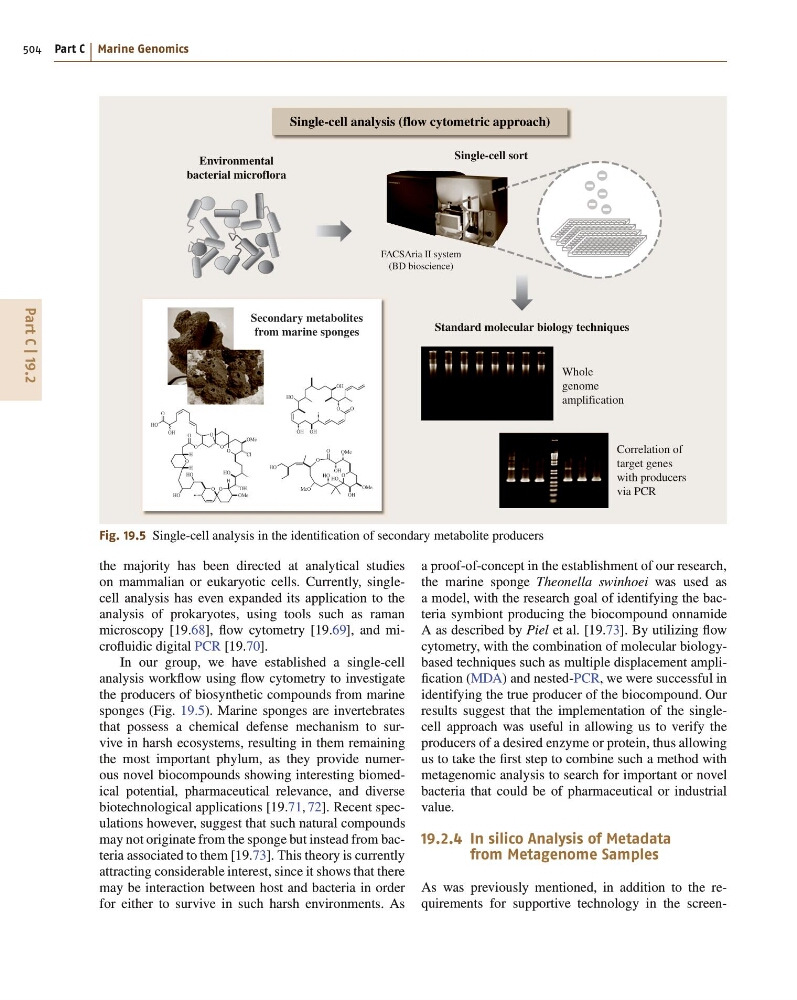
Fig. 19.5 Single-cell analysis in the identification of secondary metabolite producers
the majority has been directed at analytical studies
on mammalian or eukaryotic cells. Currently, singlecell analysis has even expanded its application to the
analysis of prokaryotes, using tools such as raman
microscopy [19.68], flow cytometry [19.69], and microfluidic digital PCR [19.70].
In our group, we have established a single-cell
analysis workflow using flow cytometry to investigate
the producers of biosynthetic compounds from marine
sponges (Fig. 19.5). Marine sponges are invertebrates
that possess a chemical defense mechanism to survive in harsh ecosystems, resulting in them remaining
the most important phylum, as they provide numerous novel biocompounds showing interesting biomedical potential, pharmaceutical relevance, and diverse
biotechnological applications [19.71, 72]. Recent speculations however, suggest that such natural compounds
may not originate from the sponge but instead from bacteria associated to them [19.73]. This theory is currently
attracting considerable interest, since it shows that there
may be interaction between host and bacteria in order
for either to survive in such harsh environments. As
a proof-of-concept in the establishment of our research,
the marine sponge Theonella swinhoei was used as
a model, with the research goal of identifying the bacteria symbiont producing the biocompound onnamide
A as described by Piel et al. [19.73]. By utilizing flow
cytometry, with the combination of molecular biologybased techniques such as multiple displacement amplification (MDA) and nested-PCR, we were successful in
identifying the true producer of the biocompound. Our
results suggest that the implementation of the singlecell approach was useful in allowing us to verify the
producers of a desired enzyme or protein, thus allowing
us to take the first step to combine such a method with
metagenomic analysis to search for important or novel
bacteria that could be of pharmaceutical or industrial
value.
19.2.4 In silico Analysis of Metadata
from Metagenome Samples
As was previously mentioned, in addition to the requirements for supportive technology in the screen-
504 Part C Marine Genomics
Secondary metabolites
from marine sponges
Environmental
bacterial microflora
Single-cell sort
Standard molecular biology techniques
FACSAria II system
(BD bioscience)
Whole
genome
amplification
Correlation of
target genes
with producers
via PCR
Single-cell analysis (flow cytometric approach)
Fig. 19.5 Single-cell analysis in the identification of secondary metabolite producers
the majority has been directed at analytical studies
on mammalian or eukaryotic cells. Currently, singlecell analysis has even expanded its application to the
analysis of prokaryotes, using tools such as raman
microscopy [19.68], flow cytometry [19.69], and microfluidic digital PCR [19.70].
In our group, we have established a single-cell
analysis workflow using flow cytometry to investigate
the producers of biosynthetic compounds from marine
sponges (Fig. 19.5). Marine sponges are invertebrates
that possess a chemical defense mechanism to survive in harsh ecosystems, resulting in them remaining
the most important phylum, as they provide numerous novel biocompounds showing interesting biomedical potential, pharmaceutical relevance, and diverse
biotechnological applications [19.71, 72]. Recent speculations however, suggest that such natural compounds
may not originate from the sponge but instead from bacteria associated to them [19.73]. This theory is currently
attracting considerable interest, since it shows that there
may be interaction between host and bacteria in order
for either to survive in such harsh environments. As
a proof-of-concept in the establishment of our research,
the marine sponge Theonella swinhoei was used as
a model, with the research goal of identifying the bacteria symbiont producing the biocompound onnamide
A as described by Piel et al. [19.73]. By utilizing flow
cytometry, with the combination of molecular biologybased techniques such as multiple displacement amplification (MDA) and nested-PCR, we were successful in
identifying the true producer of the biocompound. Our
results suggest that the implementation of the singlecell approach was useful in allowing us to verify the
producers of a desired enzyme or protein, thus allowing
us to take the first step to combine such a method with
metagenomic analysis to search for important or novel
bacteria that could be of pharmaceutical or industrial
value.
19.2.4 In silico Analysis of Metadata
from Metagenome Samples
As was previously mentioned, in addition to the requirements for supportive technology in the screen-