

Novel Bioreactors for Culturing Marine Organisms 12.8 High-Temperature and/or High-Pressure Bioreactors (HP-/HTBR) 381
Part B | 12.8
PG: Pressure gage
M: Motor
S:
Safety valve
SP: Sampling port
F:
Filter
BPR: Back Pressure Regulator
Liquid inlet
Gas
inlet
Conditioning
vessel
Self flushing
High-pressure
pump
Incubation
vessel
PG
PG
M
S
S
F
BPR
SP
SP
PG
PG
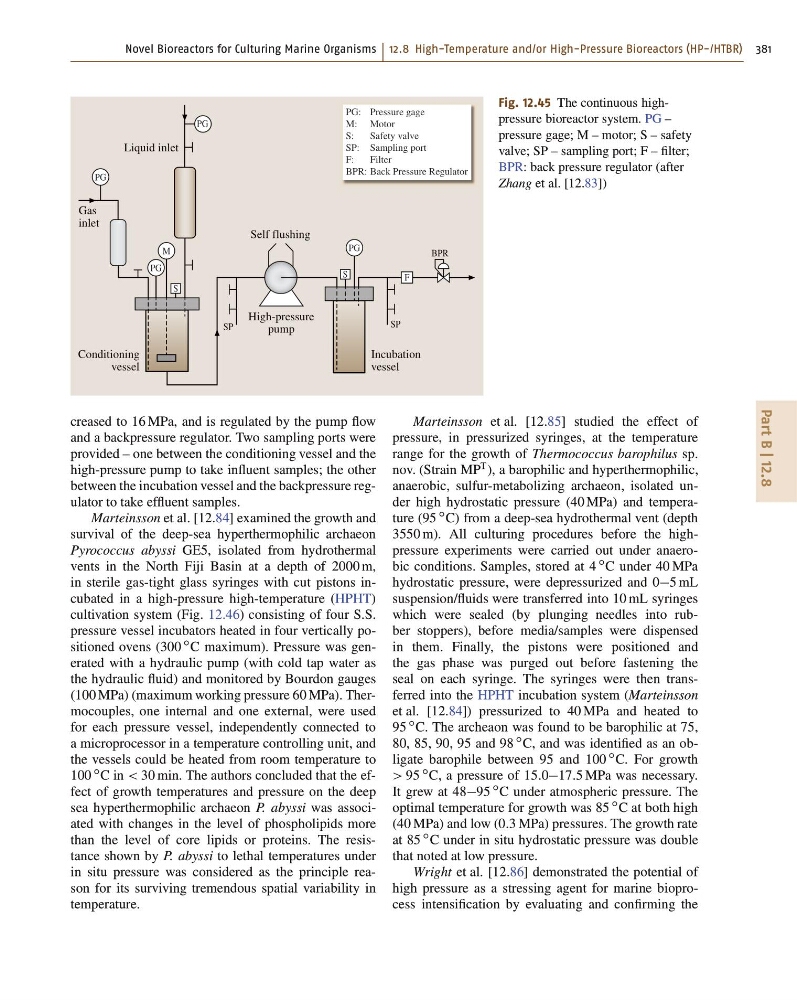
Fig. 12.45 The continuous highpressure bioreactor system. PG –
pressure gage; M – motor; S – safety
valve; SP – sampling port; F – filter;
BPR: back pressure regulator (after
Zhang et al. [12.83])
creased to 16 MPa, and is regulated by the pump flow
and a backpressure regulator. Two sampling ports were
provided – one between the conditioning vessel and the
high-pressure pump to take influent samples; the other
between the incubation vessel and the backpressure regulator to take effluent samples.
Marteinsson et al. [12.84] examined the growth and
survival of the deep-sea hyperthermophilic archaeon
Pyrococcus abyssi GE5, isolated from hydrothermal
vents in the North Fiji Basin at a depth of 2000 m,
in sterile gas-tight glass syringes with cut pistons incubated in a high-pressure high-temperature (HPHT)
cultivation system (Fig. 12.46) consisting of four S.S.
pressure vessel incubators heated in four vertically positioned ovens (300
ı C maximum). Pressure was generated with a hydraulic pump (with cold tap water as
the hydraulic fluid) and monitored by Bourdon gauges
(100 MPa) (maximum working pressure 60 MPa). Thermocouples, one internal and one external, were used
for each pressure vessel, independently connected to
a microprocessor in a temperature controlling unit, and
the vessels could be heated from room temperature to
100
ı C in < 30 min. The authors concluded that the effect of growth temperatures and pressure on the deep
sea hyperthermophilic archaeon P. abyssi was associated with changes in the level of phospholipids more
than the level of core lipids or proteins. The resistance shown by P. abyssi to lethal temperatures under
in situ pressure was considered as the principle reason for its surviving tremendous spatial variability in
temperature.
Marteinsson et al. [12.85] studied the effect of
pressure, in pressurized syringes, at the temperature
range for the growth of Thermococcus barophilus sp.
nov. (Strain MP
T ), a barophilic and hyperthermophilic,
anaerobic, sulfur-metabolizing archaeon, isolated under high hydrostatic pressure (40 MPa) and temperature (95
ı C) from a deep-sea hydrothermal vent (depth
3550 m). All culturing procedures before the highpressure experiments were carried out under anaerobic conditions. Samples, stored at 4
ı C under 40 MPa
hydrostatic pressure, were depressurized and 05 mL
suspension/fluids were transferred into 10 mL syringes
which were sealed (by plunging needles into rubber stoppers), before media/samples were dispensed
in them. Finally, the pistons were positioned and
the gas phase was purged out before fastening the
seal on each syringe. The syringes were then transferred into the HPHT incubation system (Marteinsson
et al. [12.84]) pressurized to 40 MPa and heated to
95
ı C. The archeaon was found to be barophilic at 75,
80, 85, 90, 95 and 98
ı C, and was identified as an obligate barophile between 95 and 100
ı C. For growth
> 95
ı C, a pressure of 15:017:5 MPa was necessary.
It grew at 4895
ı C under atmospheric pressure. The
optimal temperature for growth was 85
ı C at both high
(40 MPa) and low (0:3 MPa) pressures. The growth rate
at 85
ı C under in situ hydrostatic pressure was double
that noted at low pressure.
Wright et al. [12.86] demonstrated the potential of
high pressure as a stressing agent for marine bioprocess intensification by evaluating and confirming the
Part B | 12.8
PG: Pressure gage
M: Motor
S:
Safety valve
SP: Sampling port
F:
Filter
BPR: Back Pressure Regulator
Liquid inlet
Gas
inlet
Conditioning
vessel
Self flushing
High-pressure
pump
Incubation
vessel
PG
PG
M
S
S
F
BPR
SP
SP
PG
PG
Fig. 12.45 The continuous highpressure bioreactor system. PG –
pressure gage; M – motor; S – safety
valve; SP – sampling port; F – filter;
BPR: back pressure regulator (after
Zhang et al. [12.83])
creased to 16 MPa, and is regulated by the pump flow
and a backpressure regulator. Two sampling ports were
provided – one between the conditioning vessel and the
high-pressure pump to take influent samples; the other
between the incubation vessel and the backpressure regulator to take effluent samples.
Marteinsson et al. [12.84] examined the growth and
survival of the deep-sea hyperthermophilic archaeon
Pyrococcus abyssi GE5, isolated from hydrothermal
vents in the North Fiji Basin at a depth of 2000 m,
in sterile gas-tight glass syringes with cut pistons incubated in a high-pressure high-temperature (HPHT)
cultivation system (Fig. 12.46) consisting of four S.S.
pressure vessel incubators heated in four vertically positioned ovens (300
ı C maximum). Pressure was generated with a hydraulic pump (with cold tap water as
the hydraulic fluid) and monitored by Bourdon gauges
(100 MPa) (maximum working pressure 60 MPa). Thermocouples, one internal and one external, were used
for each pressure vessel, independently connected to
a microprocessor in a temperature controlling unit, and
the vessels could be heated from room temperature to
100
ı C in < 30 min. The authors concluded that the effect of growth temperatures and pressure on the deep
sea hyperthermophilic archaeon P. abyssi was associated with changes in the level of phospholipids more
than the level of core lipids or proteins. The resistance shown by P. abyssi to lethal temperatures under
in situ pressure was considered as the principle reason for its surviving tremendous spatial variability in
temperature.
Marteinsson et al. [12.85] studied the effect of
pressure, in pressurized syringes, at the temperature
range for the growth of Thermococcus barophilus sp.
nov. (Strain MP
T ), a barophilic and hyperthermophilic,
anaerobic, sulfur-metabolizing archaeon, isolated under high hydrostatic pressure (40 MPa) and temperature (95
ı C) from a deep-sea hydrothermal vent (depth
3550 m). All culturing procedures before the highpressure experiments were carried out under anaerobic conditions. Samples, stored at 4
ı C under 40 MPa
hydrostatic pressure, were depressurized and 05 mL
suspension/fluids were transferred into 10 mL syringes
which were sealed (by plunging needles into rubber stoppers), before media/samples were dispensed
in them. Finally, the pistons were positioned and
the gas phase was purged out before fastening the
seal on each syringe. The syringes were then transferred into the HPHT incubation system (Marteinsson
et al. [12.84]) pressurized to 40 MPa and heated to
95
ı C. The archeaon was found to be barophilic at 75,
80, 85, 90, 95 and 98
ı C, and was identified as an obligate barophile between 95 and 100
ı C. For growth
> 95
ı C, a pressure of 15:017:5 MPa was necessary.
It grew at 4895
ı C under atmospheric pressure. The
optimal temperature for growth was 85
ı C at both high
(40 MPa) and low (0:3 MPa) pressures. The growth rate
at 85
ı C under in situ hydrostatic pressure was double
that noted at low pressure.
Wright et al. [12.86] demonstrated the potential of
high pressure as a stressing agent for marine bioprocess intensification by evaluating and confirming the