

Novel Bioreactors for Culturing Marine Organisms 12.3 Airlift Bioreactors (ALBR) and Bubble Column Bioreactors (BCBR) 343
Part B | 12.3
Sampling port
6 W
lamp
Air humidifier
Air pump
Air
rotameter
Air filter
Sparger
assembly
Illumination stage
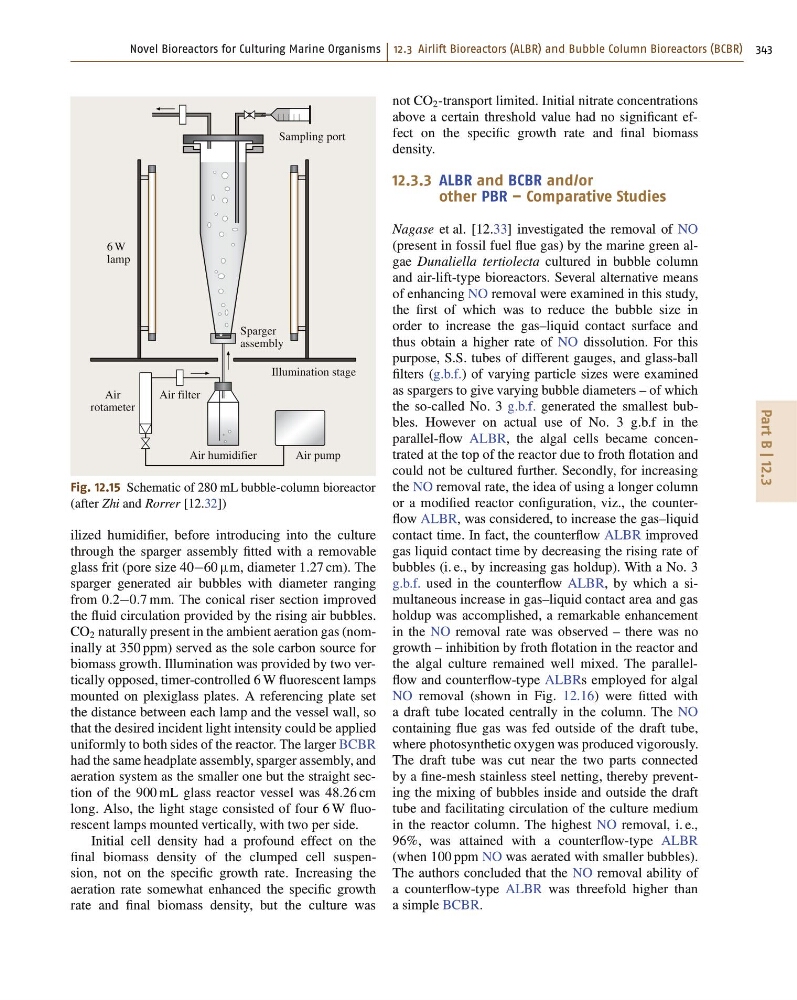
Fig. 12.15 Schematic of 280 mL bubble-column bioreactor
(after Zhi and Rorrer [12.32])
ilized humidifier, before introducing into the culture
through the sparger assembly fitted with a removable
glass frit (pore size 4060 m, diameter 1:27 cm). The
sparger generated air bubbles with diameter ranging
from 0:20:7 mm. The conical riser section improved
the fluid circulation provided by the rising air bubbles.
CO 2 naturally present in the ambient aeration gas (nominally at 350 ppm) served as the sole carbon source for
biomass growth. Illumination was provided by two vertically opposed, timer-controlled 6 W fluorescent lamps
mounted on plexiglass plates. A referencing plate set
the distance between each lamp and the vessel wall, so
that the desired incident light intensity could be applied
uniformly to both sides of the reactor. The larger BCBR
had the same headplate assembly, sparger assembly, and
aeration system as the smaller one but the straight section of the 900 mL glass reactor vessel was 48:26 cm
long. Also, the light stage consisted of four 6 W fluorescent lamps mounted vertically, with two per side.
Initial cell density had a profound effect on the
final biomass density of the clumped cell suspension, not on the specific growth rate. Increasing the
aeration rate somewhat enhanced the specific growth
rate and final biomass density, but the culture was
not CO 2 -transport limited. Initial nitrate concentrations
above a certain threshold value had no significant effect on the specific growth rate and final biomass
density.
12.3.3 ALBR and BCBR and/or
other PBR – Comparative Studies
Nagase et al. [12.33] investigated the removal of NO
(present in fossil fuel flue gas) by the marine green algae Dunaliella tertiolecta cultured in bubble column
and air-lift-type bioreactors. Several alternative means
of enhancing NO removal were examined in this study,
the first of which was to reduce the bubble size in
order to increase the gas–liquid contact surface and
thus obtain a higher rate of NO dissolution. For this
purpose, S.S. tubes of different gauges, and glass-ball
filters (g.b.f.) of varying particle sizes were examined
as spargers to give varying bubble diameters – of which
the so-called No. 3 g.b.f. generated the smallest bubbles. However on actual use of No. 3 g.b.f in the
parallel-flow ALBR, the algal cells became concentrated at the top of the reactor due to froth flotation and
could not be cultured further. Secondly, for increasing
the NO removal rate, the idea of using a longer column
or a modified reactor configuration, viz., the counterflow ALBR, was considered, to increase the gas–liquid
contact time. In fact, the counterflow ALBR improved
gas liquid contact time by decreasing the rising rate of
bubbles (i. e., by increasing gas holdup). With a No. 3
g.b.f. used in the counterflow ALBR, by which a simultaneous increase in gas–liquid contact area and gas
holdup was accomplished, a remarkable enhancement
in the NO removal rate was observed – there was no
growth – inhibition by froth flotation in the reactor and
the algal culture remained well mixed. The parallelflow and counterflow-type ALBRs employed for algal
NO removal (shown in Fig. 12.16) were fitted with
a draft tube located centrally in the column. The NO
containing flue gas was fed outside of the draft tube,
where photosynthetic oxygen was produced vigorously.
The draft tube was cut near the two parts connected
by a fine-mesh stainless steel netting, thereby preventing the mixing of bubbles inside and outside the draft
tube and facilitating circulation of the culture medium
in the reactor column. The highest NO removal, i. e.,
96%, was attained with a counterflow-type ALBR
(when 100 ppm NO was aerated with smaller bubbles).
The authors concluded that the NO removal ability of
a counterflow-type ALBR was threefold higher than
a simple BCBR.
Part B | 12.3
Sampling port
6 W
lamp
Air humidifier
Air pump
Air
rotameter
Air filter
Sparger
assembly
Illumination stage
Fig. 12.15 Schematic of 280 mL bubble-column bioreactor
(after Zhi and Rorrer [12.32])
ilized humidifier, before introducing into the culture
through the sparger assembly fitted with a removable
glass frit (pore size 4060 m, diameter 1:27 cm). The
sparger generated air bubbles with diameter ranging
from 0:20:7 mm. The conical riser section improved
the fluid circulation provided by the rising air bubbles.
CO 2 naturally present in the ambient aeration gas (nominally at 350 ppm) served as the sole carbon source for
biomass growth. Illumination was provided by two vertically opposed, timer-controlled 6 W fluorescent lamps
mounted on plexiglass plates. A referencing plate set
the distance between each lamp and the vessel wall, so
that the desired incident light intensity could be applied
uniformly to both sides of the reactor. The larger BCBR
had the same headplate assembly, sparger assembly, and
aeration system as the smaller one but the straight section of the 900 mL glass reactor vessel was 48:26 cm
long. Also, the light stage consisted of four 6 W fluorescent lamps mounted vertically, with two per side.
Initial cell density had a profound effect on the
final biomass density of the clumped cell suspension, not on the specific growth rate. Increasing the
aeration rate somewhat enhanced the specific growth
rate and final biomass density, but the culture was
not CO 2 -transport limited. Initial nitrate concentrations
above a certain threshold value had no significant effect on the specific growth rate and final biomass
density.
12.3.3 ALBR and BCBR and/or
other PBR – Comparative Studies
Nagase et al. [12.33] investigated the removal of NO
(present in fossil fuel flue gas) by the marine green algae Dunaliella tertiolecta cultured in bubble column
and air-lift-type bioreactors. Several alternative means
of enhancing NO removal were examined in this study,
the first of which was to reduce the bubble size in
order to increase the gas–liquid contact surface and
thus obtain a higher rate of NO dissolution. For this
purpose, S.S. tubes of different gauges, and glass-ball
filters (g.b.f.) of varying particle sizes were examined
as spargers to give varying bubble diameters – of which
the so-called No. 3 g.b.f. generated the smallest bubbles. However on actual use of No. 3 g.b.f in the
parallel-flow ALBR, the algal cells became concentrated at the top of the reactor due to froth flotation and
could not be cultured further. Secondly, for increasing
the NO removal rate, the idea of using a longer column
or a modified reactor configuration, viz., the counterflow ALBR, was considered, to increase the gas–liquid
contact time. In fact, the counterflow ALBR improved
gas liquid contact time by decreasing the rising rate of
bubbles (i. e., by increasing gas holdup). With a No. 3
g.b.f. used in the counterflow ALBR, by which a simultaneous increase in gas–liquid contact area and gas
holdup was accomplished, a remarkable enhancement
in the NO removal rate was observed – there was no
growth – inhibition by froth flotation in the reactor and
the algal culture remained well mixed. The parallelflow and counterflow-type ALBRs employed for algal
NO removal (shown in Fig. 12.16) were fitted with
a draft tube located centrally in the column. The NO
containing flue gas was fed outside of the draft tube,
where photosynthetic oxygen was produced vigorously.
The draft tube was cut near the two parts connected
by a fine-mesh stainless steel netting, thereby preventing the mixing of bubbles inside and outside the draft
tube and facilitating circulation of the culture medium
in the reactor column. The highest NO removal, i. e.,
96%, was attained with a counterflow-type ALBR
(when 100 ppm NO was aerated with smaller bubbles).
The authors concluded that the NO removal ability of
a counterflow-type ALBR was threefold higher than
a simple BCBR.