

Part B | 10.5
298 Part B Tools and Methods in Marine Biotechnology
tion system occurring in higher animals and plants
is through airborne volatile odorous molecules (olfaction). The evolutionary origins of olfaction are interesting, although unclear. Yeast cells, and more recently
also bacteria, have been showed to respond physiologically to airborne odorous molecules produced by other
bacteria, representing a new category of cell–cell communication in prokaryotes. The ability to quickly detect
nearby competing life forms and/or nutrient sources
by sensing of odorous molecules (unlike, for example,
oxygen or carbon dioxide, which are not directly indicative of other life forms, which is probably why they do
not have an odor) would have been an essential ability for survival even in the first bacterial cells to have
evolved. In addition, a molecule of ammonia gas is one
of the simplest molecules to be indicative of other living
cells and would, therefore, have been a good candidate
molecule for the first olfactory systems to sense and respond to. Indeed, sensing of ammonia by bacteria also
appears to be connected not just to nitrogen metabolism
but as a general signal which regulates a number of
physiological responses such as biofilm formation and
antibiotic resistance and chemotaxis. This, therefore,
raises the question as to the use of new and powerful analytical techniques for detecting and analyzing
volatile molecule production and function in interbacterial systems. Methods such as targeted metabolomics
with mass spectrometry are increasingly being used not
only to understand these volatile compounds but to develop artificial olfactory systems of the future.
10.5 Bioinformatics Resources
The sequencing value is realized only through its annotation, which expresses a scientific understanding of the
raw data. Currently, a range of annotation systems exists for single-genome analysis. These systems support
Microbial community
BAC
library
Genome
Genome
sequencing
Cloning of PR
in E. coli
PR
PR
16 rRNA
PR2
PR1
PRn
B
G
F
D
E
F
A
C
Shotgun clone
library
Pure
culture
Physiological
experiments
PR gene
expression
Photochemistry
of PR
Pigment
analysis by HPLC
Regulation
Absorption
spectrum
E. coli clone
with PR genes
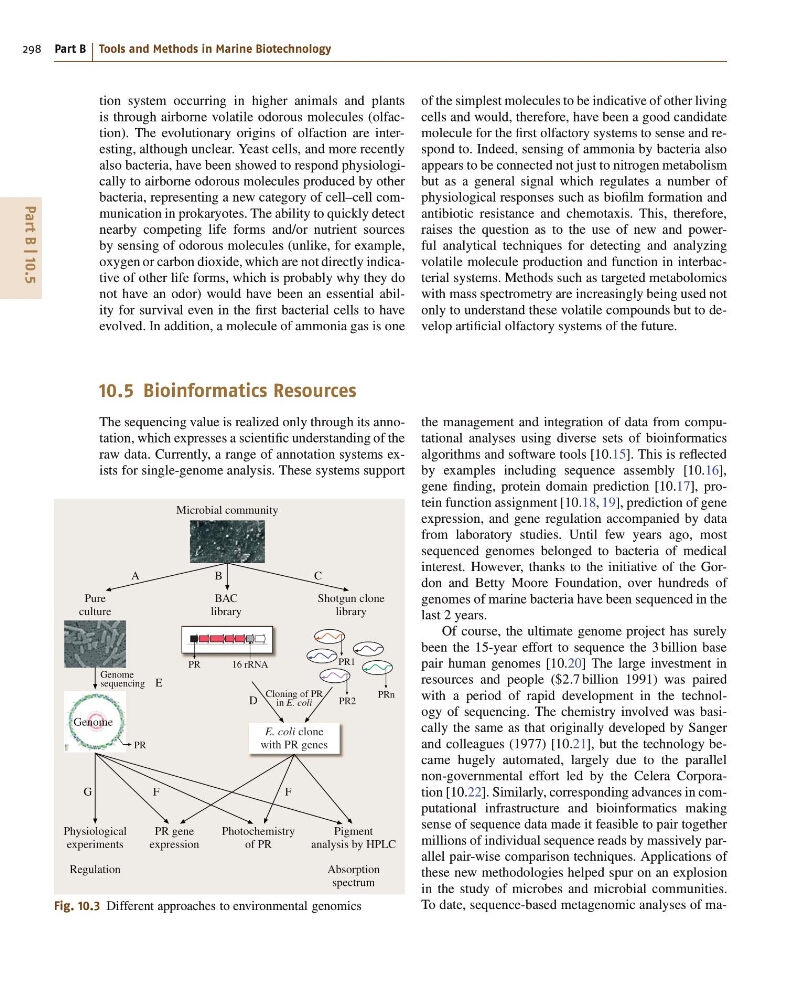
Fig. 10.3 Different approaches to environmental genomics
the management and integration of data from computational analyses using diverse sets of bioinformatics
algorithms and software tools [10.15]. This is reflected
by examples including sequence assembly [10.16],
gene finding, protein domain prediction [10.17], protein function assignment [10.18, 19], prediction of gene
expression, and gene regulation accompanied by data
from laboratory studies. Until few years ago, most
sequenced genomes belonged to bacteria of medical
interest. However, thanks to the initiative of the Gordon and Betty Moore Foundation, over hundreds of
genomes of marine bacteria have been sequenced in the
last 2 years.
Of course, the ultimate genome project has surely
been the 15-year effort to sequence the 3 billion base
pair human genomes [10.20] The large investment in
resources and people ($2:7 billion 1991) was paired
with a period of rapid development in the technology of sequencing. The chemistry involved was basically the same as that originally developed by Sanger
and colleagues (1977) [10.21], but the technology became hugely automated, largely due to the parallel
non-governmental effort led by the Celera Corporation [10.22]. Similarly, corresponding advances in computational infrastructure and bioinformatics making
sense of sequence data made it feasible to pair together
millions of individual sequence reads by massively parallel pair-wise comparison techniques. Applications of
these new methodologies helped spur on an explosion
in the study of microbes and microbial communities.
To date, sequence-based metagenomic analyses of ma-
298 Part B Tools and Methods in Marine Biotechnology
tion system occurring in higher animals and plants
is through airborne volatile odorous molecules (olfaction). The evolutionary origins of olfaction are interesting, although unclear. Yeast cells, and more recently
also bacteria, have been showed to respond physiologically to airborne odorous molecules produced by other
bacteria, representing a new category of cell–cell communication in prokaryotes. The ability to quickly detect
nearby competing life forms and/or nutrient sources
by sensing of odorous molecules (unlike, for example,
oxygen or carbon dioxide, which are not directly indicative of other life forms, which is probably why they do
not have an odor) would have been an essential ability for survival even in the first bacterial cells to have
evolved. In addition, a molecule of ammonia gas is one
of the simplest molecules to be indicative of other living
cells and would, therefore, have been a good candidate
molecule for the first olfactory systems to sense and respond to. Indeed, sensing of ammonia by bacteria also
appears to be connected not just to nitrogen metabolism
but as a general signal which regulates a number of
physiological responses such as biofilm formation and
antibiotic resistance and chemotaxis. This, therefore,
raises the question as to the use of new and powerful analytical techniques for detecting and analyzing
volatile molecule production and function in interbacterial systems. Methods such as targeted metabolomics
with mass spectrometry are increasingly being used not
only to understand these volatile compounds but to develop artificial olfactory systems of the future.
10.5 Bioinformatics Resources
The sequencing value is realized only through its annotation, which expresses a scientific understanding of the
raw data. Currently, a range of annotation systems exists for single-genome analysis. These systems support
Microbial community
BAC
library
Genome
Genome
sequencing
Cloning of PR
in E. coli
PR
PR
16 rRNA
PR2
PR1
PRn
B
G
F
D
E
F
A
C
Shotgun clone
library
Pure
culture
Physiological
experiments
PR gene
expression
Photochemistry
of PR
Pigment
analysis by HPLC
Regulation
Absorption
spectrum
E. coli clone
with PR genes
Fig. 10.3 Different approaches to environmental genomics
the management and integration of data from computational analyses using diverse sets of bioinformatics
algorithms and software tools [10.15]. This is reflected
by examples including sequence assembly [10.16],
gene finding, protein domain prediction [10.17], protein function assignment [10.18, 19], prediction of gene
expression, and gene regulation accompanied by data
from laboratory studies. Until few years ago, most
sequenced genomes belonged to bacteria of medical
interest. However, thanks to the initiative of the Gordon and Betty Moore Foundation, over hundreds of
genomes of marine bacteria have been sequenced in the
last 2 years.
Of course, the ultimate genome project has surely
been the 15-year effort to sequence the 3 billion base
pair human genomes [10.20] The large investment in
resources and people ($2:7 billion 1991) was paired
with a period of rapid development in the technology of sequencing. The chemistry involved was basically the same as that originally developed by Sanger
and colleagues (1977) [10.21], but the technology became hugely automated, largely due to the parallel
non-governmental effort led by the Celera Corporation [10.22]. Similarly, corresponding advances in computational infrastructure and bioinformatics making
sense of sequence data made it feasible to pair together
millions of individual sequence reads by massively parallel pair-wise comparison techniques. Applications of
these new methodologies helped spur on an explosion
in the study of microbes and microbial communities.
To date, sequence-based metagenomic analyses of ma-