

Bioprocess Engineering of Phototrophic Marine Organisms 9.2 Growth Characteristics of Phototrophic Suspension Cultures 263
Part B | 9.2
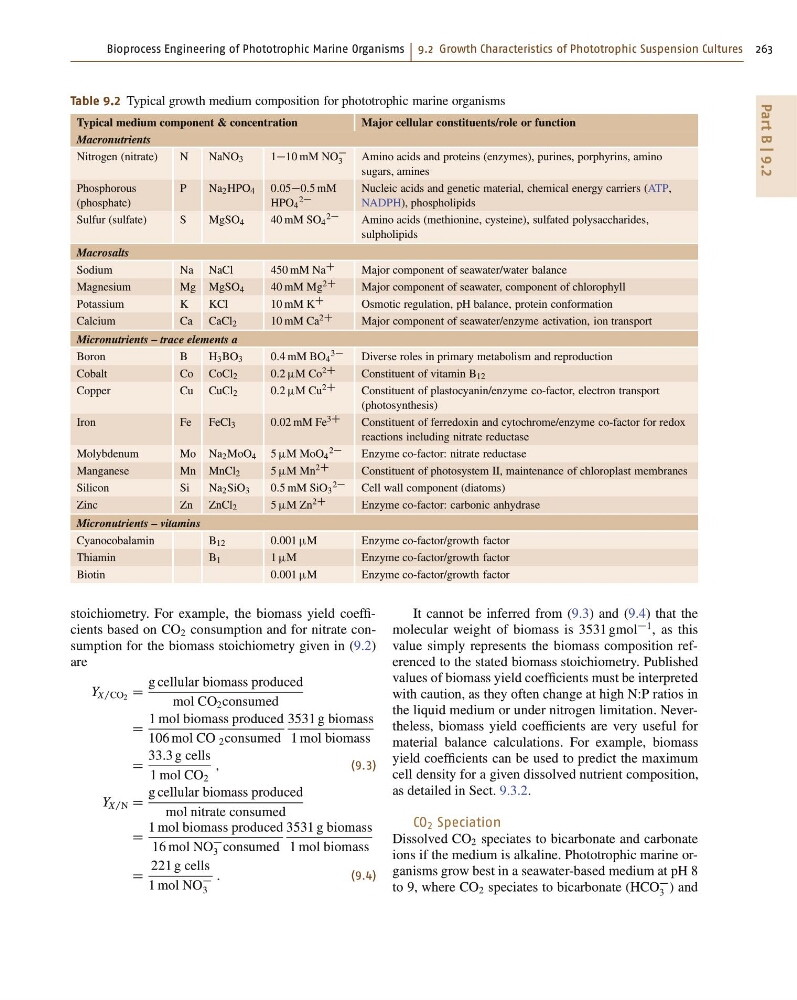
Table 9.2 Typical growth medium composition for phototrophic marine organisms
Typical medium component & concentration
Major cellular constituents/role or function
Macronutrients
Nitrogen (nitrate)
N
NaNO 3
110 mM NO
3
Amino acids and proteins (enzymes), purines, porphyrins, amino
sugars, amines
Phosphorous
(phosphate)
P
Na 2 HPO 4 0:050:5 mM
HPO 4
2
Nucleic acids and genetic material, chemical energy carriers (ATP,
NADPH), phospholipids
Sulfur (sulfate)
S
MgSO 4
40 mM SO 4
2
Amino acids (methionine, cysteine), sulfated polysaccharides,
sulpholipids
Macrosalts
Sodium
Na NaCl
450 mM Na C
Major component of seawater/water balance
Magnesium
Mg MgSO 4
40 mM Mg 2C
Major component of seawater, component of chlorophyll
Potassium
K
KCl
10 mM K
C
Osmotic regulation, pH balance, protein conformation
Calcium
Ca CaCl 2
10 mM Ca 2C
Major component of seawater/enzyme activation, ion transport
Micronutrients – trace elements a
Boron
B
H 3 BO 3
0:4 mM BO 4
3
Diverse roles in primary metabolism and reproduction
Cobalt
Co CoCl 2
0:2 M Co 2C
Constituent of vitamin B 12
Copper
Cu CuCl 2
0:2 M Cu 2C
Constituent of plastocyanin/enzyme co-factor, electron transport
(photosynthesis)
Iron
Fe FeCl 3
0:02 mM Fe 3C
Constituent of ferredoxin and cytochrome/enzyme co-factor for redox
reactions including nitrate reductase
Molybdenum
Mo Na 2 MoO 4 5 M MoO 4
2
Enzyme co-factor: nitrate reductase
Manganese
Mn MnCl 2
5 M Mn
2C
Constituent of photosystem II, maintenance of chloroplast membranes
Silicon
Si
Na 2 SiO 3
0:5 mM SiO 3
2
Cell wall component (diatoms)
Zinc
Zn ZnCl 2
5 M Zn 2C
Enzyme co-factor: carbonic anhydrase
Micronutrients – vitamins
Cyanocobalamin
B 12
0:001 M
Enzyme co-factor/growth factor
Thiamin
B 1
1 M
Enzyme co-factor/growth factor
Biotin
0:001 M
Enzyme co-factor/growth factor
stoichiometry. For example, the biomass yield coefficients based on CO 2 consumption and for nitrate consumption for the biomass stoichiometry given in (9.2)
are
Y X=CO2 D
g cellular biomass produced
mol CO 2 consumed
D
1 mol biomass produced
106 mol CO 2 consumed
3531 g biomass
1 mol biomass
D
33.3 g cells
1 mol CO 2
;
(9.3)
Y X=N D
g cellular biomass produced
mol nitrate consumed
D
1 mol biomass produced
16 mol NO
3 consumed
3531 g biomass
1 mol biomass
D
221 g cells
1 mol NO
3
:
(9.4)
It cannot be inferred from (9.3) and (9.4) that the
molecular weight of biomass is 3531 gmol
1 , as this
value simply represents the biomass composition referenced to the stated biomass stoichiometry. Published
values of biomass yield coefficients must be interpreted
with caution, as they often change at high N:P ratios in
the liquid medium or under nitrogen limitation. Nevertheless, biomass yield coefficients are very useful for
material balance calculations. For example, biomass
yield coefficients can be used to predict the maximum
cell density for a given dissolved nutrient composition,
as detailed in Sect. 9.3.2.
CO 2 Speciation
Dissolved CO 2 speciates to bicarbonate and carbonate
ions if the medium is alkaline. Phototrophic marine organisms grow best in a seawater-based medium at pH 8
to 9, where CO 2 speciates to bicarbonate (HCO
3 ) and
Part B | 9.2
Table 9.2 Typical growth medium composition for phototrophic marine organisms
Typical medium component & concentration
Major cellular constituents/role or function
Macronutrients
Nitrogen (nitrate)
N
NaNO 3
110 mM NO
3
Amino acids and proteins (enzymes), purines, porphyrins, amino
sugars, amines
Phosphorous
(phosphate)
P
Na 2 HPO 4 0:050:5 mM
HPO 4
2
Nucleic acids and genetic material, chemical energy carriers (ATP,
NADPH), phospholipids
Sulfur (sulfate)
S
MgSO 4
40 mM SO 4
2
Amino acids (methionine, cysteine), sulfated polysaccharides,
sulpholipids
Macrosalts
Sodium
Na NaCl
450 mM Na C
Major component of seawater/water balance
Magnesium
Mg MgSO 4
40 mM Mg 2C
Major component of seawater, component of chlorophyll
Potassium
K
KCl
10 mM K
C
Osmotic regulation, pH balance, protein conformation
Calcium
Ca CaCl 2
10 mM Ca 2C
Major component of seawater/enzyme activation, ion transport
Micronutrients – trace elements a
Boron
B
H 3 BO 3
0:4 mM BO 4
3
Diverse roles in primary metabolism and reproduction
Cobalt
Co CoCl 2
0:2 M Co 2C
Constituent of vitamin B 12
Copper
Cu CuCl 2
0:2 M Cu 2C
Constituent of plastocyanin/enzyme co-factor, electron transport
(photosynthesis)
Iron
Fe FeCl 3
0:02 mM Fe 3C
Constituent of ferredoxin and cytochrome/enzyme co-factor for redox
reactions including nitrate reductase
Molybdenum
Mo Na 2 MoO 4 5 M MoO 4
2
Enzyme co-factor: nitrate reductase
Manganese
Mn MnCl 2
5 M Mn
2C
Constituent of photosystem II, maintenance of chloroplast membranes
Silicon
Si
Na 2 SiO 3
0:5 mM SiO 3
2
Cell wall component (diatoms)
Zinc
Zn ZnCl 2
5 M Zn 2C
Enzyme co-factor: carbonic anhydrase
Micronutrients – vitamins
Cyanocobalamin
B 12
0:001 M
Enzyme co-factor/growth factor
Thiamin
B 1
1 M
Enzyme co-factor/growth factor
Biotin
0:001 M
Enzyme co-factor/growth factor
stoichiometry. For example, the biomass yield coefficients based on CO 2 consumption and for nitrate consumption for the biomass stoichiometry given in (9.2)
are
Y X=CO2 D
g cellular biomass produced
mol CO 2 consumed
D
1 mol biomass produced
106 mol CO 2 consumed
3531 g biomass
1 mol biomass
D
33.3 g cells
1 mol CO 2
;
(9.3)
Y X=N D
g cellular biomass produced
mol nitrate consumed
D
1 mol biomass produced
16 mol NO
3 consumed
3531 g biomass
1 mol biomass
D
221 g cells
1 mol NO
3
:
(9.4)
It cannot be inferred from (9.3) and (9.4) that the
molecular weight of biomass is 3531 gmol
1 , as this
value simply represents the biomass composition referenced to the stated biomass stoichiometry. Published
values of biomass yield coefficients must be interpreted
with caution, as they often change at high N:P ratios in
the liquid medium or under nitrogen limitation. Nevertheless, biomass yield coefficients are very useful for
material balance calculations. For example, biomass
yield coefficients can be used to predict the maximum
cell density for a given dissolved nutrient composition,
as detailed in Sect. 9.3.2.
CO 2 Speciation
Dissolved CO 2 speciates to bicarbonate and carbonate
ions if the medium is alkaline. Phototrophic marine organisms grow best in a seawater-based medium at pH 8
to 9, where CO 2 speciates to bicarbonate (HCO
3 ) and