

Bioprocess Engineering of Phototrophic Marine Organisms 9.1 Introduction to Marine Process Engineering 259
Part B | 9.1
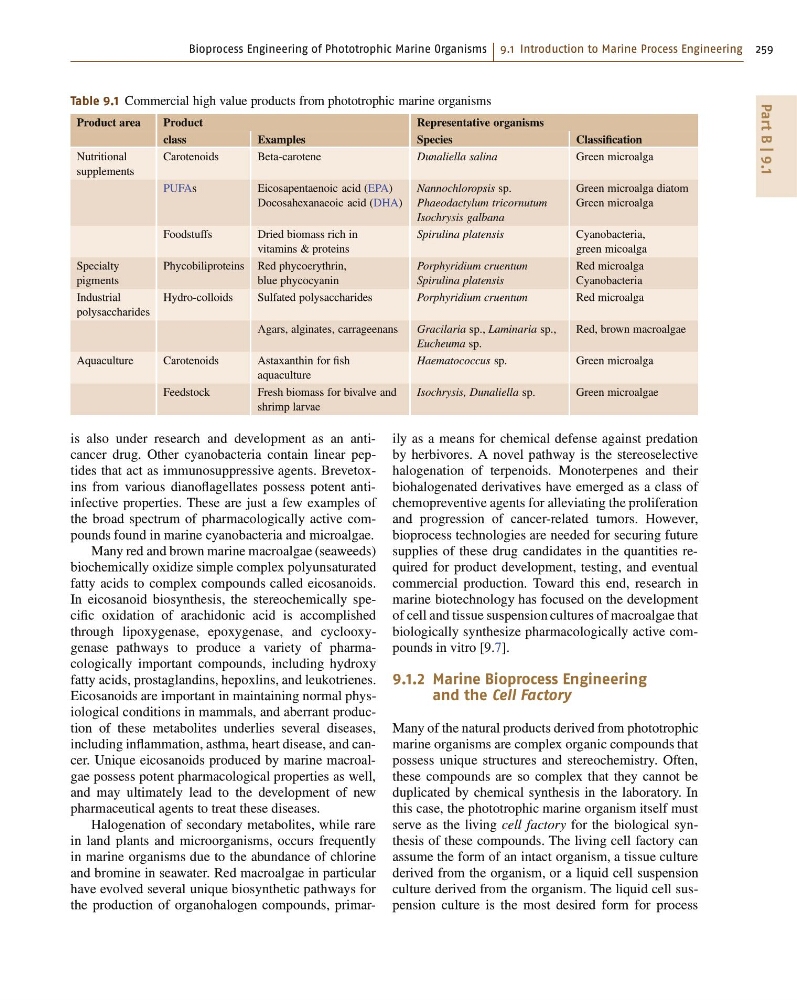
Table 9.1 Commercial high value products from phototrophic marine organisms
Product area
Product
Representative organisms
class
Examples
Species
Classification
Nutritional
supplements
Carotenoids
Beta-carotene
Dunaliella salina
Green microalga
PUFAs
Eicosapentaenoic acid (EPA)
Docosahexanaeoic acid (DHA)
Nannochloropsis sp.
Phaeodactylum tricornutum
Isochrysis galbana
Green microalga diatom
Green microalga
Foodstuffs
Dried biomass rich in
vitamins & proteins
Spirulina platensis
Cyanobacteria,
green micoalga
Specialty
pigments
Phycobiliproteins Red phycoerythrin,
blue phycocyanin
Porphyridium cruentum
Spirulina platensis
Red microalga
Cyanobacteria
Industrial
polysaccharides
Hydro-colloids
Sulfated polysaccharides
Porphyridium cruentum
Red microalga
Agars, alginates, carrageenans
Gracilaria sp., Laminaria sp.,
Eucheuma sp.
Red, brown macroalgae
Aquaculture
Carotenoids
Astaxanthin for fish
aquaculture
Haematococcus sp.
Green microalga
Feedstock
Fresh biomass for bivalve and
shrimp larvae
Isochrysis, Dunaliella sp.
Green microalgae
is also under research and development as an anticancer drug. Other cyanobacteria contain linear peptides that act as immunosuppressive agents. Brevetoxins from various dianoflagellates possess potent antiinfective properties. These are just a few examples of
the broad spectrum of pharmacologically active compounds found in marine cyanobacteria and microalgae.
Many red and brown marine macroalgae (seaweeds)
biochemically oxidize simple complex polyunsaturated
fatty acids to complex compounds called eicosanoids.
In eicosanoid biosynthesis, the stereochemically specific oxidation of arachidonic acid is accomplished
through lipoxygenase, epoxygenase, and cyclooxygenase pathways to produce a variety of pharmacologically important compounds, including hydroxy
fatty acids, prostaglandins, hepoxlins, and leukotrienes.
Eicosanoids are important in maintaining normal physiological conditions in mammals, and aberrant production of these metabolites underlies several diseases,
including inflammation, asthma, heart disease, and cancer. Unique eicosanoids produced by marine macroalgae possess potent pharmacological properties as well,
and may ultimately lead to the development of new
pharmaceutical agents to treat these diseases.
Halogenation of secondary metabolites, while rare
in land plants and microorganisms, occurs frequently
in marine organisms due to the abundance of chlorine
and bromine in seawater. Red macroalgae in particular
have evolved several unique biosynthetic pathways for
the production of organohalogen compounds, primarily as a means for chemical defense against predation
by herbivores. A novel pathway is the stereoselective
halogenation of terpenoids. Monoterpenes and their
biohalogenated derivatives have emerged as a class of
chemopreventive agents for alleviating the proliferation
and progression of cancer-related tumors. However,
bioprocess technologies are needed for securing future
supplies of these drug candidates in the quantities required for product development, testing, and eventual
commercial production. Toward this end, research in
marine biotechnology has focused on the development
of cell and tissue suspension cultures of macroalgae that
biologically synthesize pharmacologically active compounds in vitro [9.7].
9.1.2 Marine Bioprocess Engineering
and the Cell Factory
Many of the natural products derived from phototrophic
marine organisms are complex organic compounds that
possess unique structures and stereochemistry. Often,
these compounds are so complex that they cannot be
duplicated by chemical synthesis in the laboratory. In
this case, the phototrophic marine organism itself must
serve as the living cell factory for the biological synthesis of these compounds. The living cell factory can
assume the form of an intact organism, a tissue culture
derived from the organism, or a liquid cell suspension
culture derived from the organism. The liquid cell suspension culture is the most desired form for process
Part B | 9.1
Table 9.1 Commercial high value products from phototrophic marine organisms
Product area
Product
Representative organisms
class
Examples
Species
Classification
Nutritional
supplements
Carotenoids
Beta-carotene
Dunaliella salina
Green microalga
PUFAs
Eicosapentaenoic acid (EPA)
Docosahexanaeoic acid (DHA)
Nannochloropsis sp.
Phaeodactylum tricornutum
Isochrysis galbana
Green microalga diatom
Green microalga
Foodstuffs
Dried biomass rich in
vitamins & proteins
Spirulina platensis
Cyanobacteria,
green micoalga
Specialty
pigments
Phycobiliproteins Red phycoerythrin,
blue phycocyanin
Porphyridium cruentum
Spirulina platensis
Red microalga
Cyanobacteria
Industrial
polysaccharides
Hydro-colloids
Sulfated polysaccharides
Porphyridium cruentum
Red microalga
Agars, alginates, carrageenans
Gracilaria sp., Laminaria sp.,
Eucheuma sp.
Red, brown macroalgae
Aquaculture
Carotenoids
Astaxanthin for fish
aquaculture
Haematococcus sp.
Green microalga
Feedstock
Fresh biomass for bivalve and
shrimp larvae
Isochrysis, Dunaliella sp.
Green microalgae
is also under research and development as an anticancer drug. Other cyanobacteria contain linear peptides that act as immunosuppressive agents. Brevetoxins from various dianoflagellates possess potent antiinfective properties. These are just a few examples of
the broad spectrum of pharmacologically active compounds found in marine cyanobacteria and microalgae.
Many red and brown marine macroalgae (seaweeds)
biochemically oxidize simple complex polyunsaturated
fatty acids to complex compounds called eicosanoids.
In eicosanoid biosynthesis, the stereochemically specific oxidation of arachidonic acid is accomplished
through lipoxygenase, epoxygenase, and cyclooxygenase pathways to produce a variety of pharmacologically important compounds, including hydroxy
fatty acids, prostaglandins, hepoxlins, and leukotrienes.
Eicosanoids are important in maintaining normal physiological conditions in mammals, and aberrant production of these metabolites underlies several diseases,
including inflammation, asthma, heart disease, and cancer. Unique eicosanoids produced by marine macroalgae possess potent pharmacological properties as well,
and may ultimately lead to the development of new
pharmaceutical agents to treat these diseases.
Halogenation of secondary metabolites, while rare
in land plants and microorganisms, occurs frequently
in marine organisms due to the abundance of chlorine
and bromine in seawater. Red macroalgae in particular
have evolved several unique biosynthetic pathways for
the production of organohalogen compounds, primarily as a means for chemical defense against predation
by herbivores. A novel pathway is the stereoselective
halogenation of terpenoids. Monoterpenes and their
biohalogenated derivatives have emerged as a class of
chemopreventive agents for alleviating the proliferation
and progression of cancer-related tumors. However,
bioprocess technologies are needed for securing future
supplies of these drug candidates in the quantities required for product development, testing, and eventual
commercial production. Toward this end, research in
marine biotechnology has focused on the development
of cell and tissue suspension cultures of macroalgae that
biologically synthesize pharmacologically active compounds in vitro [9.7].
9.1.2 Marine Bioprocess Engineering
and the Cell Factory
Many of the natural products derived from phototrophic
marine organisms are complex organic compounds that
possess unique structures and stereochemistry. Often,
these compounds are so complex that they cannot be
duplicated by chemical synthesis in the laboratory. In
this case, the phototrophic marine organism itself must
serve as the living cell factory for the biological synthesis of these compounds. The living cell factory can
assume the form of an intact organism, a tissue culture
derived from the organism, or a liquid cell suspension
culture derived from the organism. The liquid cell suspension culture is the most desired form for process