

Part A | 8.6
230 Part A Marine Flora and Fauna
0
500
1000
1500
2000
2500
3000
3500
4000
4500
5000
Number of Natural Products
1990
1995
2000
2005
2009
Cnidaria
Porifera
Year
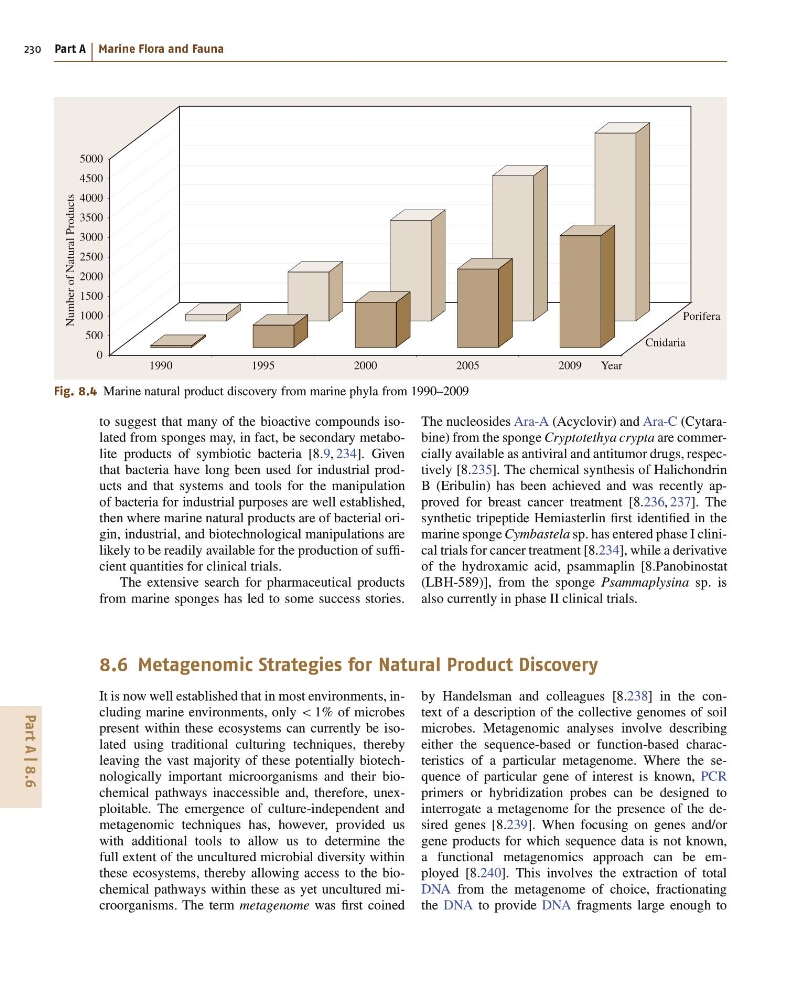
Fig. 8.4 Marine natural product discovery from marine phyla from 1990–2009
to suggest that many of the bioactive compounds isolated from sponges may, in fact, be secondary metabolite products of symbiotic bacteria [8.9, 234]. Given
that bacteria have long been used for industrial products and that systems and tools for the manipulation
of bacteria for industrial purposes are well established,
then where marine natural products are of bacterial origin, industrial, and biotechnological manipulations are
likely to be readily available for the production of sufficient quantities for clinical trials.
The extensive search for pharmaceutical products
from marine sponges has led to some success stories.
The nucleosides Ara-A (Acyclovir) and Ara-C (Cytarabine) from the sponge Cryptotethya crypta are commercially available as antiviral and antitumor drugs, respectively [8.235]. The chemical synthesis of Halichondrin
B (Eribulin) has been achieved and was recently approved for breast cancer treatment [8.236, 237]. The
synthetic tripeptide Hemiasterlin first identified in the
marine sponge Cymbastela sp. has entered phase I clinical trials for cancer treatment [8.234], while a derivative
of the hydroxamic acid, psammaplin [8.Panobinostat
(LBH-589)], from the sponge Psammaplysina sp. is
also currently in phase II clinical trials.
8.6 Metagenomic Strategies for Natural Product Discovery
It is now well established that in most environments, including marine environments, only < 1% of microbes
present within these ecosystems can currently be isolated using traditional culturing techniques, thereby
leaving the vast majority of these potentially biotechnologically important microorganisms and their biochemical pathways inaccessible and, therefore, unexploitable. The emergence of culture-independent and
metagenomic techniques has, however, provided us
with additional tools to allow us to determine the
full extent of the uncultured microbial diversity within
these ecosystems, thereby allowing access to the biochemical pathways within these as yet uncultured microorganisms. The term metagenome was first coined
by Handelsman and colleagues [8.238] in the context of a description of the collective genomes of soil
microbes. Metagenomic analyses involve describing
either the sequence-based or function-based characteristics of a particular metagenome. Where the sequence of particular gene of interest is known, PCR
primers or hybridization probes can be designed to
interrogate a metagenome for the presence of the desired genes [8.239]. When focusing on genes and/or
gene products for which sequence data is not known,
a functional metagenomics approach can be employed [8.240]. This involves the extraction of total
DNA from the metagenome of choice, fractionating
the DNA to provide DNA fragments large enough to
230 Part A Marine Flora and Fauna
0
500
1000
1500
2000
2500
3000
3500
4000
4500
5000
Number of Natural Products
1990
1995
2000
2005
2009
Cnidaria
Porifera
Year
Fig. 8.4 Marine natural product discovery from marine phyla from 1990–2009
to suggest that many of the bioactive compounds isolated from sponges may, in fact, be secondary metabolite products of symbiotic bacteria [8.9, 234]. Given
that bacteria have long been used for industrial products and that systems and tools for the manipulation
of bacteria for industrial purposes are well established,
then where marine natural products are of bacterial origin, industrial, and biotechnological manipulations are
likely to be readily available for the production of sufficient quantities for clinical trials.
The extensive search for pharmaceutical products
from marine sponges has led to some success stories.
The nucleosides Ara-A (Acyclovir) and Ara-C (Cytarabine) from the sponge Cryptotethya crypta are commercially available as antiviral and antitumor drugs, respectively [8.235]. The chemical synthesis of Halichondrin
B (Eribulin) has been achieved and was recently approved for breast cancer treatment [8.236, 237]. The
synthetic tripeptide Hemiasterlin first identified in the
marine sponge Cymbastela sp. has entered phase I clinical trials for cancer treatment [8.234], while a derivative
of the hydroxamic acid, psammaplin [8.Panobinostat
(LBH-589)], from the sponge Psammaplysina sp. is
also currently in phase II clinical trials.
8.6 Metagenomic Strategies for Natural Product Discovery
It is now well established that in most environments, including marine environments, only < 1% of microbes
present within these ecosystems can currently be isolated using traditional culturing techniques, thereby
leaving the vast majority of these potentially biotechnologically important microorganisms and their biochemical pathways inaccessible and, therefore, unexploitable. The emergence of culture-independent and
metagenomic techniques has, however, provided us
with additional tools to allow us to determine the
full extent of the uncultured microbial diversity within
these ecosystems, thereby allowing access to the biochemical pathways within these as yet uncultured microorganisms. The term metagenome was first coined
by Handelsman and colleagues [8.238] in the context of a description of the collective genomes of soil
microbes. Metagenomic analyses involve describing
either the sequence-based or function-based characteristics of a particular metagenome. Where the sequence of particular gene of interest is known, PCR
primers or hybridization probes can be designed to
interrogate a metagenome for the presence of the desired genes [8.239]. When focusing on genes and/or
gene products for which sequence data is not known,
a functional metagenomics approach can be employed [8.240]. This involves the extraction of total
DNA from the metagenome of choice, fractionating
the DNA to provide DNA fragments large enough to